Compare commits
1 Commits
v1.11.41-r
...
luke/css-s
| Author | SHA1 | Date | |
|---|---|---|---|

|
3d56247ef3 |
4
.babelrc
Normal file
@@ -0,0 +1,4 @@
|
||||
{
|
||||
"presets": ["react", "es2015", "es2016"],
|
||||
"plugins": ["transform-class-properties", "transform-object-rest-spread", "transform-async-to-generator", "transform-runtime", "add-module-exports"]
|
||||
}
|
||||
@@ -1,9 +0,0 @@
|
||||
# Exclude a bunch of stuff which can make the build context a larger than it needs to be
|
||||
test/
|
||||
webapp/
|
||||
lib/
|
||||
node_modules/
|
||||
karma-reports/
|
||||
.idea/
|
||||
.tmp/
|
||||
config.json*
|
||||
@@ -1,29 +0,0 @@
|
||||
# Copyright 2017 Aviral Dasgupta
|
||||
#
|
||||
# Licensed under the Apache License, Version 2.0 (the "License");
|
||||
# you may not use this file except in compliance with the License.
|
||||
# You may obtain a copy of the License at
|
||||
#
|
||||
# http://www.apache.org/licenses/LICENSE-2.0
|
||||
#
|
||||
# Unless required by applicable law or agreed to in writing, software
|
||||
# distributed under the License is distributed on an "AS IS" BASIS,
|
||||
# WITHOUT WARRANTIES OR CONDITIONS OF ANY KIND, either express or implied.
|
||||
# See the License for the specific language governing permissions and
|
||||
# limitations under the License.
|
||||
|
||||
root = true
|
||||
|
||||
[*]
|
||||
charset=utf-8
|
||||
end_of_line = lf
|
||||
insert_final_newline = true
|
||||
indent_style = space
|
||||
indent_size = 4
|
||||
trim_trailing_whitespace = true
|
||||
|
||||
[*.{yml,yaml}]
|
||||
indent_size = 4
|
||||
|
||||
[package.json]
|
||||
indent_size = 2
|
||||
16
.env.example
@@ -1,16 +0,0 @@
|
||||
# To enable CSS hot-reload, set the following variable to 1.
|
||||
CSS_HOT_RELOAD=1
|
||||
# To use the full page error dialog, set this to 1. Please report false positives to
|
||||
# the issue tracker for handling.
|
||||
FULL_PAGE_ERRORS=0
|
||||
# To use a single theme, uncomment the line with the theme you want to hot-reload.
|
||||
MATRIX_THEMES='light'
|
||||
#MATRIX_THEMES='dark'
|
||||
#MATRIX_THEMES='legacy-light'
|
||||
#MATRIX_THEMES='legacy-dark'
|
||||
#MATRIX_THEMES='light-custom'
|
||||
#MATRIX_THEMES='dark-custom'
|
||||
# You can also enable multiple themes by using a comma-separated list.
|
||||
# When multiple themes are enabled, switching between them may require a full page reload.
|
||||
# Note that compilation times are proportional to the number of enabled themes.
|
||||
#MATRIX_THEMES='light,dark'
|
||||
@@ -1,5 +1,2 @@
|
||||
src/vector/modernizr.js
|
||||
# Legacy skinning file that some people might still have
|
||||
src/component-index.js
|
||||
# Auto-generated file
|
||||
src/modules.ts
|
||||
|
||||
@@ -1,72 +0,0 @@
|
||||
module.exports = {
|
||||
plugins: ["matrix-org"],
|
||||
extends: ["./.eslintrc.js"],
|
||||
parserOptions: {
|
||||
project: ["./tsconfig.module_system.json"],
|
||||
},
|
||||
overrides: [
|
||||
{
|
||||
files: ["module_system/**/*.{ts,tsx}"],
|
||||
extends: ["plugin:matrix-org/typescript", "plugin:matrix-org/react"],
|
||||
// NOTE: These rules are frozen and new rules should not be added here.
|
||||
// New changes belong in https://github.com/matrix-org/eslint-plugin-matrix-org/
|
||||
rules: {
|
||||
// Things we do that break the ideal style
|
||||
"prefer-promise-reject-errors": "off",
|
||||
"quotes": "off",
|
||||
|
||||
// We disable this while we're transitioning
|
||||
"@typescript-eslint/no-explicit-any": "off",
|
||||
// We're okay with assertion errors when we ask for them
|
||||
"@typescript-eslint/no-non-null-assertion": "off",
|
||||
|
||||
// Ban matrix-js-sdk/src imports in favour of matrix-js-sdk/src/matrix imports to prevent unleashing hell.
|
||||
"no-restricted-imports": [
|
||||
"error",
|
||||
{
|
||||
paths: [
|
||||
{
|
||||
name: "matrix-js-sdk",
|
||||
message: "Please use matrix-js-sdk/src/matrix instead",
|
||||
},
|
||||
{
|
||||
name: "matrix-js-sdk/",
|
||||
message: "Please use matrix-js-sdk/src/matrix instead",
|
||||
},
|
||||
{
|
||||
name: "matrix-js-sdk/src",
|
||||
message: "Please use matrix-js-sdk/src/matrix instead",
|
||||
},
|
||||
{
|
||||
name: "matrix-js-sdk/src/",
|
||||
message: "Please use matrix-js-sdk/src/matrix instead",
|
||||
},
|
||||
{
|
||||
name: "matrix-js-sdk/src/index",
|
||||
message: "Please use matrix-js-sdk/src/matrix instead",
|
||||
},
|
||||
{
|
||||
name: "matrix-react-sdk",
|
||||
message: "Please use matrix-react-sdk/src/index instead",
|
||||
},
|
||||
{
|
||||
name: "matrix-react-sdk/",
|
||||
message: "Please use matrix-react-sdk/src/index instead",
|
||||
},
|
||||
],
|
||||
patterns: [
|
||||
{
|
||||
group: ["matrix-js-sdk/lib", "matrix-js-sdk/lib/", "matrix-js-sdk/lib/**"],
|
||||
message: "Please use matrix-js-sdk/src/* instead",
|
||||
},
|
||||
{
|
||||
group: ["matrix-react-sdk/lib", "matrix-react-sdk/lib/", "matrix-react-sdk/lib/**"],
|
||||
message: "Please use matrix-react-sdk/src/* instead",
|
||||
},
|
||||
],
|
||||
},
|
||||
],
|
||||
},
|
||||
},
|
||||
],
|
||||
};
|
||||
95
.eslintrc.js
@@ -1,94 +1,3 @@
|
||||
module.exports = {
|
||||
plugins: ["matrix-org"],
|
||||
extends: ["plugin:matrix-org/babel", "plugin:matrix-org/react"],
|
||||
parserOptions: {
|
||||
project: ["./tsconfig.json"],
|
||||
},
|
||||
env: {
|
||||
browser: true,
|
||||
node: true,
|
||||
},
|
||||
rules: {
|
||||
// Things we do that break the ideal style
|
||||
quotes: "off",
|
||||
},
|
||||
settings: {
|
||||
react: {
|
||||
version: "detect",
|
||||
},
|
||||
},
|
||||
overrides: [
|
||||
{
|
||||
files: ["src/**/*.{ts,tsx}", "test/**/*.{ts,tsx}"],
|
||||
extends: ["plugin:matrix-org/typescript", "plugin:matrix-org/react"],
|
||||
// NOTE: These rules are frozen and new rules should not be added here.
|
||||
// New changes belong in https://github.com/matrix-org/eslint-plugin-matrix-org/
|
||||
rules: {
|
||||
// Things we do that break the ideal style
|
||||
"prefer-promise-reject-errors": "off",
|
||||
"quotes": "off",
|
||||
|
||||
// We disable this while we're transitioning
|
||||
"@typescript-eslint/no-explicit-any": "off",
|
||||
// We're okay with assertion errors when we ask for them
|
||||
"@typescript-eslint/no-non-null-assertion": "off",
|
||||
|
||||
// Ban matrix-js-sdk/src imports in favour of matrix-js-sdk/src/matrix imports to prevent unleashing hell.
|
||||
"no-restricted-imports": [
|
||||
"error",
|
||||
{
|
||||
paths: [
|
||||
{
|
||||
name: "matrix-js-sdk",
|
||||
message: "Please use matrix-js-sdk/src/matrix instead",
|
||||
},
|
||||
{
|
||||
name: "matrix-js-sdk/",
|
||||
message: "Please use matrix-js-sdk/src/matrix instead",
|
||||
},
|
||||
{
|
||||
name: "matrix-js-sdk/src",
|
||||
message: "Please use matrix-js-sdk/src/matrix instead",
|
||||
},
|
||||
{
|
||||
name: "matrix-js-sdk/src/",
|
||||
message: "Please use matrix-js-sdk/src/matrix instead",
|
||||
},
|
||||
{
|
||||
name: "matrix-js-sdk/src/index",
|
||||
message: "Please use matrix-js-sdk/src/matrix instead",
|
||||
},
|
||||
{
|
||||
name: "matrix-react-sdk",
|
||||
message: "Please use matrix-react-sdk/src/index instead",
|
||||
},
|
||||
{
|
||||
name: "matrix-react-sdk/",
|
||||
message: "Please use matrix-react-sdk/src/index instead",
|
||||
},
|
||||
],
|
||||
patterns: [
|
||||
{
|
||||
group: ["matrix-js-sdk/lib", "matrix-js-sdk/lib/", "matrix-js-sdk/lib/**"],
|
||||
message: "Please use matrix-js-sdk/src/* instead",
|
||||
},
|
||||
{
|
||||
group: ["matrix-react-sdk/lib", "matrix-react-sdk/lib/", "matrix-react-sdk/lib/**"],
|
||||
message: "Please use matrix-react-sdk/src/* instead",
|
||||
},
|
||||
],
|
||||
},
|
||||
],
|
||||
},
|
||||
},
|
||||
{
|
||||
files: ["test/**/*.{ts,tsx}"],
|
||||
rules: {
|
||||
// We don't need super strict typing in test utilities
|
||||
"@typescript-eslint/explicit-function-return-type": "off",
|
||||
"@typescript-eslint/explicit-member-accessibility": "off",
|
||||
"@typescript-eslint/ban-ts-comment": "off",
|
||||
},
|
||||
},
|
||||
],
|
||||
};
|
||||
extends: ["./node_modules/matrix-react-sdk/.eslintrc.js"],
|
||||
}
|
||||
|
||||
@@ -1,2 +0,0 @@
|
||||
# prettier
|
||||
7921a6cbf86b035d2b0c1daecb4c24beaf5a5abc
|
||||
4
.github/CODEOWNERS
vendored
@@ -1,4 +0,0 @@
|
||||
* @vector-im/element-web
|
||||
/.github/workflows/** @vector-im/element-web-app-team
|
||||
/package.json @vector-im/element-web-app-team
|
||||
/yarn.lock @vector-im/element-web-app-team
|
||||
2
.github/FUNDING.yml
vendored
@@ -1,2 +0,0 @@
|
||||
patreon: matrixdotorg
|
||||
liberapay: matrixdotorg
|
||||
44
.github/ISSUE_TEMPLATE.md
vendored
Normal file
@@ -0,0 +1,44 @@
|
||||
<!-- This is a bug report template. By following the instructions below and
|
||||
filling out the sections with your information, you will help the us to get all
|
||||
the necessary data to fix your issue.
|
||||
|
||||
You can also preview your report before submitting it. You may remove sections
|
||||
that aren't relevant to your particular case.
|
||||
|
||||
Text between <!-- and --> marks will be invisible in the report.
|
||||
-->
|
||||
|
||||
### Description
|
||||
|
||||
Describe here the problem that you are experiencing, or the feature you are requesting.
|
||||
|
||||
### Steps to reproduce
|
||||
|
||||
- For bugs, list the steps
|
||||
- that reproduce the bug
|
||||
- using hyphens as bullet points
|
||||
|
||||
Describe how what happens differs from what you expected.
|
||||
|
||||
Log: sent/not sent? <!-- You can send us the app's logs via the 'Report bug'
|
||||
link on the 'Settings' page. Very important for hard-to-reproduce bugs. Please
|
||||
file a bug here too! -->
|
||||
|
||||
<!-- Include screenshots if possible: you can drag and drop images below. -->
|
||||
|
||||
### Version information
|
||||
|
||||
<!-- IMPORTANT: please answer the following questions, to help us narrow down the problem -->
|
||||
|
||||
- **Platform**: web (in-browser) or desktop?
|
||||
|
||||
For the web app:
|
||||
|
||||
- **Browser**: Chrome, Safari, Firefox? which version?
|
||||
- **OS**: Windows, macOS, Ubuntu, Arch Linux, etc?
|
||||
- **URL**: riot.im/develop / riot.im/app / somewhere else? If a private server, what version of riot-web?
|
||||
|
||||
For the desktop app:
|
||||
|
||||
- **OS**: Windows, macOS, Ubuntu, Arch Linux, etc?
|
||||
- **Version**: 0.x.y <!-- check the user settings panel if unsure -->
|
||||
76
.github/ISSUE_TEMPLATE/bug-desktop.yml
vendored
@@ -1,76 +0,0 @@
|
||||
name: Bug report for the Element desktop app (not in a browser)
|
||||
description: File a bug report if you are using the desktop Element application.
|
||||
labels: [T-Defect]
|
||||
body:
|
||||
- type: markdown
|
||||
attributes:
|
||||
value: |
|
||||
Thanks for taking the time to fill out this bug report!
|
||||
|
||||
Please report security issues by email to security@matrix.org
|
||||
- type: textarea
|
||||
id: reproduction-steps
|
||||
attributes:
|
||||
label: Steps to reproduce
|
||||
description: Please attach screenshots, videos or logs if you can.
|
||||
placeholder: Tell us what you see!
|
||||
value: |
|
||||
1. Where are you starting? What can you see?
|
||||
2. What do you click?
|
||||
3. More steps…
|
||||
validations:
|
||||
required: true
|
||||
- type: textarea
|
||||
id: result
|
||||
attributes:
|
||||
label: Outcome
|
||||
placeholder: Tell us what went wrong
|
||||
value: |
|
||||
#### What did you expect?
|
||||
|
||||
#### What happened instead?
|
||||
validations:
|
||||
required: true
|
||||
- type: input
|
||||
id: os
|
||||
attributes:
|
||||
label: Operating system
|
||||
placeholder: Windows, macOS, Ubuntu, Arch Linux…
|
||||
validations:
|
||||
required: false
|
||||
- type: input
|
||||
id: version
|
||||
attributes:
|
||||
label: Application version
|
||||
description: You can find the version information in Settings -> Help & About.
|
||||
placeholder: e.g. Element version 1.7.34, olm version 3.2.3
|
||||
validations:
|
||||
required: false
|
||||
- type: input
|
||||
id: source
|
||||
attributes:
|
||||
label: How did you install the app?
|
||||
description: Where did you install the app from? Please give a link or a description.
|
||||
placeholder: e.g. From https://element.io/get-started
|
||||
validations:
|
||||
required: false
|
||||
- type: input
|
||||
id: homeserver
|
||||
attributes:
|
||||
label: Homeserver
|
||||
description: |
|
||||
Which server is your account registered on? If it is a local or non-public homeserver, please tell us what is the homeserver implementation (ex: Synapse/Dendrite/etc.) and the version.
|
||||
placeholder: e.g. matrix.org or Synapse 1.50.0rc1
|
||||
validations:
|
||||
required: false
|
||||
- type: dropdown
|
||||
id: rageshake
|
||||
attributes:
|
||||
label: Will you send logs?
|
||||
description: |
|
||||
Did you know that you can send a /rageshake command from your application to submit logs for this issue? Trigger the defect, then type `/rageshake` into the message input area followed by a description of the problem and send the command. You will be able to add a link to this defect report and submit anonymous logs to the developers.
|
||||
options:
|
||||
- "Yes"
|
||||
- "No"
|
||||
validations:
|
||||
required: true
|
||||
84
.github/ISSUE_TEMPLATE/bug-web.yml
vendored
@@ -1,84 +0,0 @@
|
||||
name: Bug report for Element Web (in browser)
|
||||
description: File a bug report if you are using Element in a web browser like Firefox, Chrome, Edge, and so on.
|
||||
labels: [T-Defect]
|
||||
body:
|
||||
- type: markdown
|
||||
attributes:
|
||||
value: |
|
||||
Thanks for taking the time to fill out this bug report!
|
||||
|
||||
Please report security issues by email to security@matrix.org
|
||||
- type: textarea
|
||||
id: reproduction-steps
|
||||
attributes:
|
||||
label: Steps to reproduce
|
||||
description: Please attach screenshots, videos or logs if you can.
|
||||
placeholder: Tell us what you see!
|
||||
value: |
|
||||
1. Where are you starting? What can you see?
|
||||
2. What do you click?
|
||||
3. More steps…
|
||||
validations:
|
||||
required: true
|
||||
- type: textarea
|
||||
id: result
|
||||
attributes:
|
||||
label: Outcome
|
||||
placeholder: Tell us what went wrong
|
||||
value: |
|
||||
#### What did you expect?
|
||||
|
||||
#### What happened instead?
|
||||
validations:
|
||||
required: true
|
||||
- type: input
|
||||
id: os
|
||||
attributes:
|
||||
label: Operating system
|
||||
placeholder: Windows, macOS, Ubuntu, Arch Linux…
|
||||
validations:
|
||||
required: false
|
||||
- type: input
|
||||
id: browser
|
||||
attributes:
|
||||
label: Browser information
|
||||
description: Which browser are you using? Which version?
|
||||
placeholder: e.g. Chromium Version 92.0.4515.131
|
||||
validations:
|
||||
required: false
|
||||
- type: input
|
||||
id: webapp-url
|
||||
attributes:
|
||||
label: URL for webapp
|
||||
description: Which URL are you using to access the webapp? If a private server, tell us what version of Element Web you are using.
|
||||
placeholder: e.g. develop.element.io, app.element.io
|
||||
validations:
|
||||
required: false
|
||||
- type: input
|
||||
id: version
|
||||
attributes:
|
||||
label: Application version
|
||||
description: You can find the version information in Settings -> Help & About.
|
||||
placeholder: e.g. Element version 1.7.34, olm version 3.2.3
|
||||
validations:
|
||||
required: false
|
||||
- type: input
|
||||
id: homeserver
|
||||
attributes:
|
||||
label: Homeserver
|
||||
description: |
|
||||
Which server is your account registered on? If it is a local or non-public homeserver, please tell us what is the homeserver implementation (ex: Synapse/Dendrite/etc.) and the version.
|
||||
placeholder: e.g. matrix.org or Synapse 1.50.0rc1
|
||||
validations:
|
||||
required: false
|
||||
- type: dropdown
|
||||
id: rageshake
|
||||
attributes:
|
||||
label: Will you send logs?
|
||||
description: |
|
||||
Did you know that you can send a /rageshake command from the web application to submit logs for this issue? Trigger the defect, then type `/rageshake` into the message input area followed by a description of the problem and send the command. You will be able to add a link to this defect report and submit anonymous logs to the developers.
|
||||
options:
|
||||
- "Yes"
|
||||
- "No"
|
||||
validations:
|
||||
required: true
|
||||
5
.github/ISSUE_TEMPLATE/config.yml
vendored
@@ -1,5 +0,0 @@
|
||||
blank_issues_enabled: false
|
||||
contact_links:
|
||||
- name: Questions & support
|
||||
url: https://matrix.to/#/#element-web:matrix.org
|
||||
about: Please ask and answer questions here.
|
||||
36
.github/ISSUE_TEMPLATE/enhancement.yml
vendored
@@ -1,36 +0,0 @@
|
||||
name: Enhancement request
|
||||
description: Do you have a suggestion or feature request?
|
||||
labels: [T-Enhancement]
|
||||
body:
|
||||
- type: markdown
|
||||
attributes:
|
||||
value: |
|
||||
Thank you for taking the time to propose an enhancement to an existing feature. If you would like to propose a new feature or a major cross-platform change, please [start a discussion here](https://github.com/vector-im/element-meta/discussions/new?category=ideas).
|
||||
- type: textarea
|
||||
id: usecase
|
||||
attributes:
|
||||
label: Your use case
|
||||
description: What would you like to be able to do? Please feel welcome to include screenshots or mock ups.
|
||||
placeholder: Tell us what you would like to do!
|
||||
value: |
|
||||
#### What would you like to do?
|
||||
|
||||
#### Why would you like to do it?
|
||||
|
||||
#### How would you like to achieve it?
|
||||
validations:
|
||||
required: true
|
||||
- type: textarea
|
||||
id: alternative
|
||||
attributes:
|
||||
label: Have you considered any alternatives?
|
||||
placeholder: A clear and concise description of any alternative solutions or features you've considered.
|
||||
validations:
|
||||
required: false
|
||||
- type: textarea
|
||||
id: additional-context
|
||||
attributes:
|
||||
label: Additional context
|
||||
placeholder: Is there anything else you'd like to add?
|
||||
validations:
|
||||
required: false
|
||||
18
.github/PULL_REQUEST_TEMPLATE.md
vendored
@@ -1,18 +0,0 @@
|
||||
<!-- Thanks for submitting a PR! Please ensure the following requirements are met in order for us to review your PR -->
|
||||
|
||||
## Checklist
|
||||
|
||||
- [ ] Tests written for new code (and old code if feasible)
|
||||
- [ ] Linter and other CI checks pass
|
||||
- [ ] Sign-off given on the changes (see [CONTRIBUTING.md](https://github.com/vector-im/element-web/blob/develop/CONTRIBUTING.md))
|
||||
|
||||
<!--
|
||||
If you would like to specify text for the changelog entry other than your PR title, add the following:
|
||||
|
||||
Notes: Add super cool feature
|
||||
|
||||
For PRs which *only* affect the desktop version, please use:
|
||||
|
||||
Notes: none
|
||||
element-desktop notes: Add super cool feature
|
||||
-->
|
||||
13
.github/cfp_headers
vendored
@@ -1,13 +0,0 @@
|
||||
/*
|
||||
! Access-Control-Allow-Origin
|
||||
X-XSS-Protection: 1; mode=block
|
||||
X-Content-Type-Options: nosniff
|
||||
X-Frame-Options: SAMEORIGIN
|
||||
Content-Security-Policy: frame-ancestors 'self'
|
||||
Strict-Transport-Security: max-age=31536000; includeSubDomains; preload
|
||||
|
||||
/version
|
||||
Content-Type: text/plain
|
||||
|
||||
/apple-app-site-association
|
||||
Content-Type: application/json
|
||||
4
.github/renovate.json
vendored
@@ -1,4 +0,0 @@
|
||||
{
|
||||
"$schema": "https://docs.renovatebot.com/renovate-schema.json",
|
||||
"extends": ["github>matrix-org/renovate-config-element-web"]
|
||||
}
|
||||
30
.github/workflows/backport.yml
vendored
@@ -1,30 +0,0 @@
|
||||
name: Backport
|
||||
on:
|
||||
pull_request_target:
|
||||
types:
|
||||
- closed
|
||||
- labeled
|
||||
branches:
|
||||
- develop
|
||||
|
||||
jobs:
|
||||
backport:
|
||||
name: Backport
|
||||
runs-on: ubuntu-latest
|
||||
# Only react to merged PRs for security reasons.
|
||||
# See https://docs.github.com/en/actions/using-workflows/events-that-trigger-workflows#pull_request_target.
|
||||
if: >
|
||||
github.event.pull_request.merged
|
||||
&& (
|
||||
github.event.action == 'closed'
|
||||
|| (
|
||||
github.event.action == 'labeled'
|
||||
&& contains(github.event.label.name, 'backport')
|
||||
)
|
||||
)
|
||||
steps:
|
||||
- uses: tibdex/backport@9565281eda0731b1d20c4025c43339fb0a23812e # v2
|
||||
with:
|
||||
labels_template: "<%= JSON.stringify([...labels, 'X-Release-Blocker']) %>"
|
||||
# We can't use GITHUB_TOKEN here or CI won't run on the new PR
|
||||
github_token: ${{ secrets.ELEMENT_BOT_TOKEN }}
|
||||
26
.github/workflows/build.yml
vendored
@@ -1,26 +0,0 @@
|
||||
name: Build
|
||||
on:
|
||||
pull_request: {}
|
||||
push:
|
||||
branches: [master]
|
||||
# develop pushes and repository_dispatch handled in build_develop.yaml
|
||||
env:
|
||||
# These must be set for fetchdep.sh to get the right branch
|
||||
REPOSITORY: ${{ github.repository }}
|
||||
PR_NUMBER: ${{ github.event.pull_request.number }}
|
||||
jobs:
|
||||
build:
|
||||
name: "Build"
|
||||
runs-on: ubuntu-latest
|
||||
steps:
|
||||
- uses: actions/checkout@v3
|
||||
|
||||
- uses: actions/setup-node@v3
|
||||
with:
|
||||
cache: "yarn"
|
||||
|
||||
- name: Install Dependencies
|
||||
run: "./scripts/layered.sh"
|
||||
|
||||
- name: Build
|
||||
run: "yarn build"
|
||||
56
.github/workflows/build_debian.yaml
vendored
@@ -1,56 +0,0 @@
|
||||
name: Build Debian package
|
||||
on:
|
||||
release:
|
||||
types: [published]
|
||||
concurrency: ${{ github.workflow }}
|
||||
jobs:
|
||||
build:
|
||||
name: Build package
|
||||
if: github.event.release.prerelease == false
|
||||
environment: packages.element.io
|
||||
runs-on: ubuntu-latest
|
||||
env:
|
||||
R2_INCOMING_BUCKET: ${{ vars.R2_INCOMING_BUCKET }}
|
||||
R2_URL: ${{ vars.CF_R2_S3_API }}
|
||||
steps:
|
||||
- uses: actions/checkout@v3
|
||||
|
||||
- name: Prepare
|
||||
run: |
|
||||
mkdir -p /tmp/element-web-debian/DEBIAN
|
||||
cp -R debian/ /tmp/element-web-debian/DEBIAN/
|
||||
mkdir -p /tmp/element-web-debian/usr/share/element-web/
|
||||
|
||||
wget https://github.com/vector-im/element-web/releases/download/$VERSION/element-$VERSION.tar.gz
|
||||
mv element-* /tmp/element-web-debian/usr/share/element-web
|
||||
mv debian/usr/share/element-web/config.sample.json /tmp/element-web-debian/usr/share/element-web/config.json
|
||||
env:
|
||||
VERSION: ${{ github.ref_name }}
|
||||
|
||||
- name: Build deb package
|
||||
run: |
|
||||
VERSION=$(cat package.json | jq -r .version)
|
||||
chmod -R u=rw,go=r /tmp/element-web-debian/usr/share/element-web/
|
||||
dpkg-deb -Zxz --root-owner-group -VVersion=$VERSION --build /tmp/element-web-debian element-web.deb
|
||||
|
||||
# For now just upload the artifact to github
|
||||
- uses: actions/upload-artifact@v3
|
||||
with:
|
||||
name: debs
|
||||
path: "*.deb"
|
||||
retention-days: 14
|
||||
|
||||
#- name: Upload incoming deb
|
||||
# run: aws s3 cp element-io-archive-keyring.deb "s3://$R2_INCOMING_BUCKET" --endpoint-url "$R2_URL" --region auto
|
||||
# env:
|
||||
# AWS_ACCESS_KEY_ID: ${{ secrets.CF_R2_ACCESS_KEY_ID }}
|
||||
# AWS_SECRET_ACCESS_KEY: ${{ secrets.CF_R2_TOKEN }}
|
||||
|
||||
#reprepro:
|
||||
# needs: build
|
||||
# name: Run reprepro
|
||||
# if: inputs.deploy && github.event.release.prerelease == false
|
||||
# uses: ./.github/workflows/reprepro.yaml
|
||||
# secrets: inherit
|
||||
# with:
|
||||
# incoming: element-web.deb
|
||||
118
.github/workflows/build_develop.yml
vendored
@@ -1,118 +0,0 @@
|
||||
# Separate to the main build workflow for access to develop
|
||||
# environment secrets, largely similar to build.yaml.
|
||||
name: Build and Deploy develop
|
||||
on:
|
||||
push:
|
||||
branches: [develop]
|
||||
repository_dispatch:
|
||||
types: [element-web-notify]
|
||||
concurrency:
|
||||
group: ${{ github.repository_owner }}-${{ github.workflow }}-${{ github.ref_name }}
|
||||
cancel-in-progress: true
|
||||
jobs:
|
||||
build:
|
||||
name: "Build & Deploy develop.element.io"
|
||||
# Only respect triggers from our develop branch, ignore that of forks
|
||||
if: github.repository == 'vector-im/element-web'
|
||||
runs-on: ubuntu-latest
|
||||
environment: develop
|
||||
env:
|
||||
R2_BUCKET: "element-web-develop"
|
||||
R2_URL: ${{ vars.CF_R2_S3_API }}
|
||||
R2_PUBLIC_URL: "https://element-web-develop.element.io"
|
||||
steps:
|
||||
- uses: actions/checkout@v3
|
||||
|
||||
- uses: actions/setup-node@v3
|
||||
with:
|
||||
cache: "yarn"
|
||||
|
||||
- name: Install Dependencies
|
||||
run: "./scripts/layered.sh"
|
||||
|
||||
- name: Build, Package & Upload sourcemaps
|
||||
run: "./scripts/ci_package.sh"
|
||||
env:
|
||||
SENTRY_AUTH_TOKEN: ${{ secrets.SENTRY_AUTH_TOKEN }}
|
||||
SENTRY_DSN: ${{ secrets.SENTRY_DSN }}
|
||||
SENTRY_URL: ${{ secrets.SENTRY_URL }}
|
||||
SENTRY_ORG: element
|
||||
SENTRY_PROJECT: riot-web
|
||||
# We only deploy the latest bundles to Cloudflare Pages and use _redirects to fallback to R2 for
|
||||
# older ones. This redirect means that 'self' is insufficient in the CSP,
|
||||
# and we have to add the R2 URL.
|
||||
# Once Cloudflare redirects support proxying mode we will be able to ditch this.
|
||||
# See Proxying in support table at https://developers.cloudflare.com/pages/platform/redirects
|
||||
CSP_EXTRA_SOURCE: ${{ env.R2_PUBLIC_URL }}
|
||||
|
||||
- run: mv dist/element-*.tar.gz dist/develop.tar.gz
|
||||
|
||||
- uses: actions/upload-artifact@v3
|
||||
with:
|
||||
name: webapp
|
||||
path: dist/develop.tar.gz
|
||||
retention-days: 1
|
||||
|
||||
- name: Extract webapp
|
||||
run: |
|
||||
mkdir _deploy
|
||||
tar xf dist/develop.tar.gz -C _deploy --strip-components=1
|
||||
|
||||
- name: Copy config
|
||||
run: cp element.io/develop/config.json _deploy/config.json
|
||||
|
||||
- name: Populate 404.html
|
||||
run: echo "404 Not Found" > _deploy/404.html
|
||||
|
||||
- name: Populate _headers
|
||||
run: cp .github/cfp_headers _deploy/_headers
|
||||
|
||||
# Redirect requests for the develop tarball and the historical bundles to R2
|
||||
# We find the latest 100 bundle.css files and add their bundles to the redirects file
|
||||
# S3 has no sane way to get the age of a directory as they don't really exist
|
||||
- name: Populate _redirects
|
||||
run: |
|
||||
{
|
||||
echo "/develop.tar.gz $R2_PUBLIC_URL/develop.tar.gz 301"
|
||||
aws s3api --region auto --endpoint-url $R2_URL list-objects-v2 --bucket $R2_BUCKET \
|
||||
--query "sort_by(Contents[?ends_with(Key, '/bundle.css')], &LastModified)[-100:].Key" \
|
||||
--prefix "bundles/" | jq -r '.[]' | grep -oE '[^\"].*\/\s*' | while read -r path ; do
|
||||
echo "/${path}* $R2_PUBLIC_URL/${path}:splat 301"
|
||||
done
|
||||
} | tee _deploy/_redirects
|
||||
env:
|
||||
AWS_ACCESS_KEY_ID: ${{ secrets.CF_R2_ACCESS_KEY_ID }}
|
||||
AWS_SECRET_ACCESS_KEY: ${{ secrets.CF_R2_TOKEN }}
|
||||
|
||||
- name: Wait for other steps to succeed
|
||||
uses: t3chguy/wait-on-check-action@05861d3a448898eb33dfce34153bd1ecb9422fb9 # fork
|
||||
with:
|
||||
ref: ${{ github.sha }}
|
||||
running-workflow-name: "Build & Deploy develop.element.io"
|
||||
repo-token: ${{ secrets.GITHUB_TOKEN }}
|
||||
wait-interval: 10
|
||||
check-regexp: ^((?!SonarCloud|SonarQube|issue|board|label).)*$
|
||||
|
||||
# We keep the latest develop.tar.gz on R2 instead of relying on the github artifact uploaded earlier
|
||||
# as the expires after 24h and requires auth to download.
|
||||
# Element Desktop's fetch script uses this tarball to fetch latest develop to build Nightlies.
|
||||
- name: Deploy to R2
|
||||
run: |
|
||||
aws s3 cp dist/develop.tar.gz s3://$R2_BUCKET/develop.tar.gz --endpoint-url $R2_URL --region=auto
|
||||
aws s3 cp _deploy/ s3://$R2_BUCKET/ --recursive --endpoint-url $R2_URL --region=auto
|
||||
env:
|
||||
AWS_ACCESS_KEY_ID: ${{ secrets.CF_R2_ACCESS_KEY_ID }}
|
||||
AWS_SECRET_ACCESS_KEY: ${{ secrets.CF_R2_TOKEN }}
|
||||
|
||||
- name: Deploy to Cloudflare Pages
|
||||
id: cfp
|
||||
uses: cloudflare/pages-action@f0a1cd58cd66095dee69bfa18fa5efd1dde93bca # v1
|
||||
with:
|
||||
apiToken: ${{ secrets.CF_PAGES_TOKEN }}
|
||||
accountId: ${{ secrets.CF_PAGES_ACCOUNT_ID }}
|
||||
projectName: element-web-develop
|
||||
directory: _deploy
|
||||
gitHubToken: ${{ secrets.GITHUB_TOKEN }}
|
||||
|
||||
- run: |
|
||||
echo "Deployed to ${{ steps.cfp.outputs.url }}" >> $GITHUB_STEP_SUMMARY
|
||||
61
.github/workflows/dockerhub.yaml
vendored
@@ -1,61 +0,0 @@
|
||||
name: Dockerhub
|
||||
on:
|
||||
workflow_dispatch: {}
|
||||
push:
|
||||
tags: [v*]
|
||||
schedule:
|
||||
# This job can take a while, and we have usage limits, so just publish develop only twice a day
|
||||
- cron: "0 7/12 * * *"
|
||||
concurrency: ${{ github.workflow }}-${{ github.ref_name }}
|
||||
jobs:
|
||||
buildx:
|
||||
name: Docker Buildx
|
||||
runs-on: ubuntu-latest
|
||||
environment: dockerhub
|
||||
steps:
|
||||
- uses: actions/checkout@v3
|
||||
with:
|
||||
fetch-depth: 0 # needed for docker-package to be able to calculate the version
|
||||
|
||||
- name: Set up QEMU
|
||||
uses: docker/setup-qemu-action@2b82ce82d56a2a04d2637cd93a637ae1b359c0a7 # v2
|
||||
|
||||
- name: Set up Docker Buildx
|
||||
uses: docker/setup-buildx-action@4c0219f9ac95b02789c1075625400b2acbff50b1 # v2
|
||||
with:
|
||||
install: true
|
||||
|
||||
- name: Login to Docker Hub
|
||||
uses: docker/login-action@465a07811f14bebb1938fbed4728c6a1ff8901fc # v2
|
||||
with:
|
||||
username: ${{ secrets.DOCKERHUB_USERNAME }}
|
||||
password: ${{ secrets.DOCKERHUB_TOKEN }}
|
||||
|
||||
- name: Docker meta
|
||||
id: meta
|
||||
uses: docker/metadata-action@818d4b7b91585d195f67373fd9cb0332e31a7175 # v4
|
||||
with:
|
||||
images: |
|
||||
vectorim/element-web
|
||||
tags: |
|
||||
type=ref,event=branch
|
||||
type=ref,event=tag
|
||||
flavor: |
|
||||
latest=${{ contains(github.ref_name, '-rc.') && 'false' || 'auto' }}
|
||||
|
||||
- name: Build and push
|
||||
uses: docker/build-push-action@2eb1c1961a95fc15694676618e422e8ba1d63825 # v4
|
||||
with:
|
||||
context: .
|
||||
push: true
|
||||
platforms: linux/amd64,linux/arm64
|
||||
tags: ${{ steps.meta.outputs.tags }}
|
||||
labels: ${{ steps.meta.outputs.labels }}
|
||||
|
||||
- name: Update repo description
|
||||
uses: peter-evans/dockerhub-description@dc67fad7001ef9e8e3c124cb7a64e16d0a63d864 # v3
|
||||
continue-on-error: true
|
||||
with:
|
||||
username: ${{ secrets.DOCKERHUB_USERNAME }}
|
||||
password: ${{ secrets.DOCKERHUB_TOKEN }}
|
||||
repository: vectorim/element-web
|
||||
156
.github/workflows/issue_closed.yml
vendored
@@ -1,156 +0,0 @@
|
||||
# For duplicate issues, ensure the close type is right (not planned), update it if not
|
||||
# For all closed (completed) issues, cascade the closure onto any referenced rageshakes
|
||||
# For all closed (not planned) issues, comment on rageshakes to move them into the canonical issue if one exists
|
||||
on:
|
||||
issues:
|
||||
types: [closed]
|
||||
jobs:
|
||||
tidy:
|
||||
name: Tidy closed issues
|
||||
runs-on: ubuntu-latest
|
||||
steps:
|
||||
- uses: actions/github-script@v6
|
||||
id: main
|
||||
with:
|
||||
# PAT needed as the GITHUB_TOKEN won't be able to see cross-references from other orgs (matrix-org)
|
||||
github-token: ${{ secrets.ELEMENT_BOT_TOKEN }}
|
||||
script: |
|
||||
const variables = {
|
||||
owner: context.repo.owner,
|
||||
name: context.repo.repo,
|
||||
number: context.issue.number,
|
||||
};
|
||||
|
||||
const query = `query($owner:String!, $name:String!, $number:Int!) {
|
||||
repository(owner: $owner, name: $name) {
|
||||
issue(number: $number) {
|
||||
stateReason,
|
||||
timelineItems(first: 100, itemTypes: [MARKED_AS_DUPLICATE_EVENT, UNMARKED_AS_DUPLICATE_EVENT, CROSS_REFERENCED_EVENT]) {
|
||||
edges {
|
||||
node {
|
||||
__typename
|
||||
... on MarkedAsDuplicateEvent {
|
||||
canonical {
|
||||
... on Issue {
|
||||
repository {
|
||||
nameWithOwner
|
||||
}
|
||||
number
|
||||
}
|
||||
... on PullRequest {
|
||||
repository {
|
||||
nameWithOwner
|
||||
}
|
||||
number
|
||||
}
|
||||
}
|
||||
}
|
||||
... on UnmarkedAsDuplicateEvent {
|
||||
canonical {
|
||||
... on Issue {
|
||||
repository {
|
||||
nameWithOwner
|
||||
}
|
||||
number
|
||||
}
|
||||
... on PullRequest {
|
||||
repository {
|
||||
nameWithOwner
|
||||
}
|
||||
number
|
||||
}
|
||||
}
|
||||
}
|
||||
... on CrossReferencedEvent {
|
||||
source {
|
||||
... on Issue {
|
||||
repository {
|
||||
nameWithOwner
|
||||
}
|
||||
number
|
||||
}
|
||||
... on PullRequest {
|
||||
repository {
|
||||
nameWithOwner
|
||||
}
|
||||
number
|
||||
}
|
||||
}
|
||||
}
|
||||
}
|
||||
}
|
||||
}
|
||||
}
|
||||
}
|
||||
}`;
|
||||
|
||||
const result = await github.graphql(query, variables);
|
||||
const { stateReason, timelineItems: { edges } } = result.repository.issue;
|
||||
|
||||
const RAGESHAKE_OWNER = "matrix-org";
|
||||
const RAGESHAKE_REPO = "element-web-rageshakes";
|
||||
const rageshakes = new Set();
|
||||
const duplicateOf = new Set();
|
||||
|
||||
console.log("Edges: ", JSON.stringify(edges));
|
||||
|
||||
for (const { node } of edges) {
|
||||
switch(node.__typename) {
|
||||
case "MarkedAsDuplicateEvent":
|
||||
duplicateOf.add(node.canonical.repository.nameWithOwner + "#" + node.canonical.number);
|
||||
break;
|
||||
case "UnmarkedAsDuplicateEvent":
|
||||
duplicateOf.remove(node.canonical.repository.nameWithOwner + "#" + node.canonical.number);
|
||||
break;
|
||||
case "CrossReferencedEvent":
|
||||
if (node.source.repository.nameWithOwner === (RAGESHAKE_OWNER + "/" + RAGESHAKE_REPO)) {
|
||||
rageshakes.add(node.source.number);
|
||||
}
|
||||
break;
|
||||
}
|
||||
}
|
||||
|
||||
console.log("Duplicate of: ", duplicateOf);
|
||||
console.log("Found rageshakes: ", rageshakes);
|
||||
|
||||
if (duplicateOf.size) {
|
||||
const body = Array.from(duplicateOf).join("\n");
|
||||
|
||||
// Comment on all rageshakes to create relationship to the issue this was closed as duplicate of
|
||||
for (const rageshake of rageshakes) {
|
||||
github.rest.issues.createComment({
|
||||
owner: RAGESHAKE_OWNER,
|
||||
repo: RAGESHAKE_REPO,
|
||||
issue_number: rageshake,
|
||||
body,
|
||||
});
|
||||
}
|
||||
|
||||
// Duplicate was closed with wrong reason, fix it
|
||||
if (stateReason === "COMPLETED") {
|
||||
core.setOutput("closeAsNotPlanned", "true");
|
||||
}
|
||||
} else {
|
||||
// This issue was closed, close all related rageshakes
|
||||
for (const rageshake of rageshakes) {
|
||||
github.rest.issues.update({
|
||||
owner: RAGESHAKE_OWNER,
|
||||
repo: RAGESHAKE_REPO,
|
||||
issue_number: rageshake,
|
||||
state: "closed",
|
||||
});
|
||||
}
|
||||
}
|
||||
- uses: actions/github-script@v6
|
||||
name: Close duplicate as Not Planned
|
||||
if: steps.main.outputs.closeAsNotPlanned
|
||||
with:
|
||||
# We do this step separately, and with the default token so as to not re-trigger this workflow when re-closing
|
||||
script: |
|
||||
await github.graphql(`mutation($id:ID!) {
|
||||
closeIssue(input: { issueId:$id, stateReason:NOT_PLANNED }) {
|
||||
clientMutationId
|
||||
}
|
||||
}`, {
|
||||
id: context.payload.issue.node_id,
|
||||
});
|
||||
90
.github/workflows/pending-reviews.yaml
vendored
@@ -1,90 +0,0 @@
|
||||
name: Pending reviews automation
|
||||
on:
|
||||
# We run it on a schedule instead of on pull_request_* events to not create confusing messaging in the PR
|
||||
schedule:
|
||||
- cron: "*/10 * * * *"
|
||||
concurrency: ${{ github.workflow }}
|
||||
jobs:
|
||||
bot:
|
||||
name: Pending reviews bot
|
||||
runs-on: ubuntu-latest
|
||||
environment: Matrix
|
||||
env:
|
||||
URL: "https://github.com/pulls?q=is%3Apr+is%3Aopen+repo%3Amatrix-org%2Fmatrix-js-sdk+repo%3Amatrix-org%2Fmatrix-react-sdk+repo%3Avector-im%2Felement-web+repo%3Avector-im%2Felement-desktop+review-requested%3A%40me+sort%3Aupdated-desc+"
|
||||
RELEASE_BLOCKERS_URL: "https://github.com/pulls?q=is%3Aopen+repo%3Amatrix-org%2Fmatrix-js-sdk+repo%3Amatrix-org%2Fmatrix-react-sdk+repo%3Avector-im%2Felement-web+repo%3Avector-im%2Felement-desktop+sort%3Aupdated-desc+label%3AX-Release-Blocker+"
|
||||
steps:
|
||||
- uses: actions/github-script@v6
|
||||
env:
|
||||
HS_URL: ${{ secrets.BETABOT_HS_URL }}
|
||||
ROOM_ID: ${{ secrets.ROOM_ID }}
|
||||
TOKEN: ${{ secrets.BETABOT_ACCESS_TOKEN }}
|
||||
with:
|
||||
# PAT needed as the GITHUB_TOKEN won't be able to see cross-references from other orgs (matrix-org)
|
||||
github-token: ${{ secrets.ELEMENT_BOT_TOKEN }}
|
||||
script: |
|
||||
const { HS_URL, ROOM_ID, TOKEN, URL, RELEASE_BLOCKERS_URL } = process.env;
|
||||
|
||||
async function updateCounter(counter, link, severity, title, value, clearOnZero) {
|
||||
const apiUrl = `${HS_URL}/_matrix/client/v3/rooms/${ROOM_ID}/state/re.jki.counter/${counter}`;
|
||||
const headers = {
|
||||
"Content-Type": "application/json",
|
||||
"Authorization": `Bearer ${TOKEN}`,
|
||||
};
|
||||
const res = await fetch(apiUrl, {
|
||||
method: "GET",
|
||||
headers,
|
||||
});
|
||||
|
||||
const data = await res.json();
|
||||
|
||||
if (data.value === issueCount) {
|
||||
console.log("Pending review count already correct");
|
||||
return;
|
||||
}
|
||||
|
||||
let body = {};
|
||||
if (issueCount || !clearOnZero) {
|
||||
body = JSON.stringify({
|
||||
link,
|
||||
severity,
|
||||
title,
|
||||
value,
|
||||
});
|
||||
}
|
||||
|
||||
await fetch(apiUrl, {
|
||||
method: "PUT",
|
||||
body,
|
||||
headers,
|
||||
});
|
||||
}
|
||||
|
||||
const repos = [
|
||||
"vector-im/element-desktop",
|
||||
"vector-im/element-web",
|
||||
"matrix-org/matrix-react-sdk",
|
||||
"matrix-org/matrix-js-sdk",
|
||||
];
|
||||
const teams = [
|
||||
"matrix-org/element-web-app-team",
|
||||
"matrix-org/element-web",
|
||||
"vector-im/element-web-app-team",
|
||||
"vector-im/element-web",
|
||||
];
|
||||
|
||||
let issueCount = 0;
|
||||
for (const team of teams) {
|
||||
const org = team.split("/", 2)[0];
|
||||
const reposInOrg = repos.filter(repo => repo.startsWith(org + "/"));
|
||||
const { data } = await github.rest.search.issuesAndPullRequests({
|
||||
q: `is:pr is:open review:required ${reposInOrg.map(r => `repo:${r}`).join(" ")} team-review-requested:${team}`,
|
||||
});
|
||||
issueCount += data.total_count;
|
||||
}
|
||||
await updateCounter("gh_reviews", URL, "warning", "Pending reviews", issueCount);
|
||||
|
||||
const { data } = await github.rest.search.issuesAndPullRequests({
|
||||
q: `is:open ${repos.map(repo => `repo:${repo}`).join(" ")} label:X-Release-Blocker`,
|
||||
});
|
||||
const blockerCount = data.total_count;
|
||||
await updateCounter("release_blockers", RELEASE_BLOCKERS_URL, "alert", "Release Blockers", blockerCount, true);
|
||||
9
.github/workflows/pull_request.yaml
vendored
@@ -1,9 +0,0 @@
|
||||
name: Pull Request
|
||||
on:
|
||||
pull_request_target:
|
||||
types: [opened, edited, labeled, unlabeled, synchronize]
|
||||
jobs:
|
||||
action:
|
||||
uses: matrix-org/matrix-js-sdk/.github/workflows/pull_request.yaml@develop
|
||||
secrets:
|
||||
ELEMENT_BOT_TOKEN: ${{ secrets.ELEMENT_BOT_TOKEN }}
|
||||
15
.github/workflows/sonarqube.yml
vendored
@@ -1,15 +0,0 @@
|
||||
name: SonarQube
|
||||
on:
|
||||
workflow_run:
|
||||
workflows: ["Tests"]
|
||||
types:
|
||||
- completed
|
||||
concurrency:
|
||||
group: ${{ github.workflow }}-${{ github.event.workflow_run.head_branch }}
|
||||
cancel-in-progress: true
|
||||
jobs:
|
||||
sonarqube:
|
||||
name: 🩻 SonarQube
|
||||
uses: matrix-org/matrix-js-sdk/.github/workflows/sonarcloud.yml@develop
|
||||
secrets:
|
||||
SONAR_TOKEN: ${{ secrets.SONAR_TOKEN }}
|
||||
81
.github/workflows/static_analysis.yaml
vendored
@@ -1,81 +0,0 @@
|
||||
name: Static Analysis
|
||||
on:
|
||||
pull_request: {}
|
||||
push:
|
||||
branches: [develop, master]
|
||||
repository_dispatch:
|
||||
types: [element-web-notify]
|
||||
env:
|
||||
# These must be set for fetchdep.sh to get the right branch
|
||||
REPOSITORY: ${{ github.repository }}
|
||||
PR_NUMBER: ${{ github.event.pull_request.number }}
|
||||
jobs:
|
||||
ts_lint:
|
||||
name: "Typescript Syntax Check"
|
||||
runs-on: ubuntu-latest
|
||||
steps:
|
||||
- uses: actions/checkout@v3
|
||||
|
||||
- uses: actions/setup-node@v3
|
||||
with:
|
||||
cache: "yarn"
|
||||
|
||||
- name: Install Dependencies
|
||||
run: "./scripts/layered.sh"
|
||||
|
||||
- name: Typecheck
|
||||
run: "yarn run lint:types"
|
||||
|
||||
i18n_lint:
|
||||
name: "i18n Check"
|
||||
uses: matrix-org/matrix-react-sdk/.github/workflows/i18n_check.yml@develop
|
||||
|
||||
js_lint:
|
||||
name: "ESLint"
|
||||
runs-on: ubuntu-latest
|
||||
steps:
|
||||
- uses: actions/checkout@v3
|
||||
|
||||
- uses: actions/setup-node@v3
|
||||
with:
|
||||
cache: "yarn"
|
||||
|
||||
# Does not need branch matching as only analyses this layer
|
||||
- name: Install Deps
|
||||
run: "yarn install --frozen-lockfile"
|
||||
|
||||
- name: Run Linter
|
||||
run: "yarn run lint:js"
|
||||
|
||||
style_lint:
|
||||
name: "Style Lint"
|
||||
runs-on: ubuntu-latest
|
||||
steps:
|
||||
- uses: actions/checkout@v3
|
||||
|
||||
- uses: actions/setup-node@v3
|
||||
with:
|
||||
cache: "yarn"
|
||||
|
||||
# Needs branch matching as it inherits .stylelintrc.js from matrix-react-sdk
|
||||
- name: Install Dependencies
|
||||
run: "./scripts/layered.sh"
|
||||
|
||||
- name: Run Linter
|
||||
run: "yarn run lint:style"
|
||||
|
||||
analyse_dead_code:
|
||||
name: "Analyse Dead Code"
|
||||
runs-on: ubuntu-latest
|
||||
steps:
|
||||
- uses: actions/checkout@v3
|
||||
|
||||
- uses: actions/setup-node@v3
|
||||
with:
|
||||
cache: "yarn"
|
||||
|
||||
- name: Install Deps
|
||||
run: "scripts/layered.sh"
|
||||
|
||||
- name: Dead Code Analysis
|
||||
run: "yarn run analyse:unused-exports"
|
||||
41
.github/workflows/tests.yaml
vendored
@@ -1,41 +0,0 @@
|
||||
name: Tests
|
||||
on:
|
||||
pull_request: {}
|
||||
push:
|
||||
branches: [develop, master]
|
||||
repository_dispatch:
|
||||
types: [element-web-notify]
|
||||
env:
|
||||
# These must be set for fetchdep.sh to get the right branch
|
||||
REPOSITORY: ${{ github.repository }}
|
||||
PR_NUMBER: ${{ github.event.pull_request.number }}
|
||||
jobs:
|
||||
jest:
|
||||
name: Jest
|
||||
runs-on: ubuntu-latest
|
||||
steps:
|
||||
- name: Checkout code
|
||||
uses: actions/checkout@v3
|
||||
|
||||
- name: Yarn cache
|
||||
uses: actions/setup-node@v3
|
||||
with:
|
||||
cache: "yarn"
|
||||
|
||||
- name: Install Dependencies
|
||||
run: "./scripts/layered.sh"
|
||||
|
||||
- name: Get number of CPU cores
|
||||
id: cpu-cores
|
||||
uses: SimenB/github-actions-cpu-cores@410541432439795d30db6501fb1d8178eb41e502 # v1
|
||||
|
||||
- name: Run tests with coverage
|
||||
run: "yarn coverage --ci --max-workers ${{ steps.cpu-cores.outputs.count }}"
|
||||
|
||||
- name: Upload Artifact
|
||||
uses: actions/upload-artifact@v3
|
||||
with:
|
||||
name: coverage
|
||||
path: |
|
||||
coverage
|
||||
!coverage/lcov-report
|
||||
18
.github/workflows/triage-assigned.yml
vendored
@@ -1,18 +0,0 @@
|
||||
name: Move issued assigned to specific team members to their boards
|
||||
|
||||
on:
|
||||
issues:
|
||||
types: [assigned]
|
||||
|
||||
jobs:
|
||||
web-app-team:
|
||||
runs-on: ubuntu-latest
|
||||
if: |
|
||||
contains(github.event.issue.assignees.*.login, 't3chguy') ||
|
||||
contains(github.event.issue.assignees.*.login, 'andybalaam') ||
|
||||
contains(github.event.issue.assignees.*.login, 'justjanne')
|
||||
steps:
|
||||
- uses: actions/add-to-project@main
|
||||
with:
|
||||
project-url: https://github.com/orgs/vector-im/projects/67
|
||||
github-token: ${{ secrets.ELEMENT_BOT_TOKEN }}
|
||||
15
.github/workflows/triage-incoming.yml
vendored
@@ -1,15 +0,0 @@
|
||||
name: Move new issues into Issue triage board
|
||||
|
||||
on:
|
||||
issues:
|
||||
types: [opened]
|
||||
|
||||
jobs:
|
||||
automate-project-columns:
|
||||
runs-on: ubuntu-latest
|
||||
steps:
|
||||
- uses: alex-page/github-project-automation-plus@7ffb872c64bd809d23563a130a0a97d01dfa8f43
|
||||
with:
|
||||
project: Issue triage
|
||||
column: Incoming
|
||||
repo-token: ${{ secrets.ELEMENT_BOT_TOKEN }}
|
||||
161
.github/workflows/triage-labelled.yml
vendored
@@ -1,161 +0,0 @@
|
||||
name: Move labelled issues to correct projects
|
||||
|
||||
on:
|
||||
issues:
|
||||
types: [labeled]
|
||||
|
||||
jobs:
|
||||
apply_Z-Labs_label:
|
||||
name: Add Z-Labs label for features behind labs flags
|
||||
runs-on: ubuntu-latest
|
||||
if: >
|
||||
contains(github.event.issue.labels.*.name, 'A-Maths') ||
|
||||
contains(github.event.issue.labels.*.name, 'A-Message-Pinning') ||
|
||||
contains(github.event.issue.labels.*.name, 'A-Location-Sharing') ||
|
||||
contains(github.event.issue.labels.*.name, 'Z-IA') ||
|
||||
contains(github.event.issue.labels.*.name, 'A-Jump-To-Date ') ||
|
||||
contains(github.event.issue.labels.*.name, 'A-Themes-Custom') ||
|
||||
contains(github.event.issue.labels.*.name, 'A-E2EE-Dehydration') ||
|
||||
contains(github.event.issue.labels.*.name, 'A-Tags') ||
|
||||
contains(github.event.issue.labels.*.name, 'A-Video-Rooms') ||
|
||||
contains(github.event.issue.labels.*.name, 'A-Message-Starring') ||
|
||||
contains(github.event.issue.labels.*.name, 'A-Rich-Text-Editor') ||
|
||||
contains(github.event.issue.labels.*.name, 'A-Element-Call')
|
||||
steps:
|
||||
- uses: actions/github-script@v6
|
||||
with:
|
||||
script: |
|
||||
github.rest.issues.addLabels({
|
||||
issue_number: context.issue.number,
|
||||
owner: context.repo.owner,
|
||||
repo: context.repo.repo,
|
||||
labels: ['Z-Labs']
|
||||
})
|
||||
|
||||
apply_Help-Wanted_label:
|
||||
name: Add "Help Wanted" label to all "good first issue" and Hacktoberfest
|
||||
runs-on: ubuntu-latest
|
||||
if: >
|
||||
contains(github.event.issue.labels.*.name, 'good first issue') ||
|
||||
contains(github.event.issue.labels.*.name, 'Hacktoberfest')
|
||||
steps:
|
||||
- uses: actions/github-script@v6
|
||||
with:
|
||||
script: |
|
||||
github.rest.issues.addLabels({
|
||||
issue_number: context.issue.number,
|
||||
owner: context.repo.owner,
|
||||
repo: context.repo.repo,
|
||||
labels: ['Help Wanted']
|
||||
})
|
||||
|
||||
move_needs_info_issues:
|
||||
name: X-Needs-Info issues to Need info column on triage board
|
||||
runs-on: ubuntu-latest
|
||||
steps:
|
||||
- uses: konradpabjan/move-labeled-or-milestoned-issue@190352295fe309fcb113b49193bc81d9aaa9cb01
|
||||
with:
|
||||
action-token: "${{ secrets.ELEMENT_BOT_TOKEN }}"
|
||||
project-url: "https://github.com/vector-im/element-web/projects/27"
|
||||
column-name: "Need info"
|
||||
label-name: "X-Needs-Info"
|
||||
|
||||
add_priority_design_issues_to_project:
|
||||
name: P1 X-Needs-Design to Design project board
|
||||
runs-on: ubuntu-latest
|
||||
if: >
|
||||
contains(github.event.issue.labels.*.name, 'X-Needs-Design') &&
|
||||
(contains(github.event.issue.labels.*.name, 'S-Critical') &&
|
||||
(contains(github.event.issue.labels.*.name, 'O-Frequent') ||
|
||||
contains(github.event.issue.labels.*.name, 'O-Occasional')) ||
|
||||
contains(github.event.issue.labels.*.name, 'S-Major') &&
|
||||
contains(github.event.issue.labels.*.name, 'O-Frequent') ||
|
||||
contains(github.event.issue.labels.*.name, 'A11y'))
|
||||
steps:
|
||||
- uses: actions/add-to-project@main
|
||||
with:
|
||||
project-url: https://github.com/orgs/vector-im/projects/18
|
||||
github-token: ${{ secrets.ELEMENT_BOT_TOKEN }}
|
||||
|
||||
add_product_issues:
|
||||
name: X-Needs-Product to product project board
|
||||
runs-on: ubuntu-latest
|
||||
if: >
|
||||
contains(github.event.issue.labels.*.name, 'X-Needs-Product')
|
||||
steps:
|
||||
- uses: actions/add-to-project@main
|
||||
with:
|
||||
project-url: https://github.com/orgs/vector-im/projects/28
|
||||
github-token: ${{ secrets.ELEMENT_BOT_TOKEN }}
|
||||
|
||||
Search_issues_to_board:
|
||||
name: Search issues to project board
|
||||
runs-on: ubuntu-latest
|
||||
if: >
|
||||
contains(github.event.issue.labels.*.name, 'A-New-Search-Experience')
|
||||
steps:
|
||||
- uses: actions/add-to-project@main
|
||||
with:
|
||||
project-url: https://github.com/orgs/vector-im/projects/48
|
||||
github-token: ${{ secrets.ELEMENT_BOT_TOKEN }}
|
||||
|
||||
ps_features1:
|
||||
name: Add labelled issues to PS features team 1
|
||||
runs-on: ubuntu-latest
|
||||
if: >
|
||||
contains(github.event.issue.labels.*.name, 'A-Polls') ||
|
||||
contains(github.event.issue.labels.*.name, 'A-Location-Sharing') ||
|
||||
(contains(github.event.issue.labels.*.name, 'A-Voice-Messages') &&
|
||||
!contains(github.event.issue.labels.*.name, 'A-Broadcast')) ||
|
||||
(contains(github.event.issue.labels.*.name, 'A-Session-Mgmt') &&
|
||||
contains(github.event.issue.labels.*.name, 'A-User-Settings'))
|
||||
steps:
|
||||
- uses: actions/add-to-project@main
|
||||
with:
|
||||
project-url: https://github.com/orgs/vector-im/projects/56
|
||||
github-token: ${{ secrets.ELEMENT_BOT_TOKEN }}
|
||||
|
||||
ps_features2:
|
||||
name: Add labelled issues to PS features team 2
|
||||
runs-on: ubuntu-latest
|
||||
if: >
|
||||
contains(github.event.issue.labels.*.name, 'A-DM-Start') ||
|
||||
contains(github.event.issue.labels.*.name, 'A-Broadcast')
|
||||
steps:
|
||||
- uses: actions/add-to-project@main
|
||||
with:
|
||||
project-url: https://github.com/orgs/vector-im/projects/58
|
||||
github-token: ${{ secrets.ELEMENT_BOT_TOKEN }}
|
||||
|
||||
ps_features3:
|
||||
name: Add labelled issues to PS features team 3
|
||||
runs-on: ubuntu-latest
|
||||
if: >
|
||||
contains(github.event.issue.labels.*.name, 'A-Rich-Text-Editor')
|
||||
steps:
|
||||
- uses: actions/add-to-project@main
|
||||
with:
|
||||
project-url: https://github.com/orgs/vector-im/projects/57
|
||||
github-token: ${{ secrets.ELEMENT_BOT_TOKEN }}
|
||||
|
||||
voip:
|
||||
name: Add labelled issues to VoIP project board
|
||||
runs-on: ubuntu-latest
|
||||
if: >
|
||||
contains(github.event.issue.labels.*.name, 'Team: VoIP')
|
||||
steps:
|
||||
- uses: actions/add-to-project@main
|
||||
with:
|
||||
project-url: https://github.com/orgs/vector-im/projects/41
|
||||
github-token: ${{ secrets.ELEMENT_BOT_TOKEN }}
|
||||
|
||||
verticals_feature:
|
||||
name: Add labelled issues to Verticals Feature project
|
||||
runs-on: ubuntu-latest
|
||||
if: >
|
||||
contains(github.event.issue.labels.*.name, 'Team: Verticals Feature')
|
||||
steps:
|
||||
- uses: actions/add-to-project@main
|
||||
with:
|
||||
project-url: https://github.com/orgs/vector-im/projects/57
|
||||
github-token: ${{ secrets.ELEMENT_BOT_TOKEN }}
|
||||
139
.github/workflows/triage-move-review-requests.yml
vendored
@@ -1,139 +0,0 @@
|
||||
name: Move pull requests asking for review to the relevant project
|
||||
on:
|
||||
pull_request_target:
|
||||
types: [review_requested]
|
||||
|
||||
jobs:
|
||||
add_design_pr_to_project:
|
||||
name: Move PRs asking for design review to the design board
|
||||
runs-on: ubuntu-latest
|
||||
steps:
|
||||
- uses: octokit/graphql-action@v2.x
|
||||
id: find_team_members
|
||||
with:
|
||||
headers: '{"GraphQL-Features": "projects_next_graphql"}'
|
||||
query: |
|
||||
query find_team_members($team: String!) {
|
||||
organization(login: "vector-im") {
|
||||
team(slug: $team) {
|
||||
members {
|
||||
nodes {
|
||||
login
|
||||
}
|
||||
}
|
||||
}
|
||||
}
|
||||
}
|
||||
team: ${{ env.TEAM }}
|
||||
env:
|
||||
TEAM: "design"
|
||||
GITHUB_TOKEN: ${{ secrets.ELEMENT_BOT_TOKEN }}
|
||||
- id: any_matching_reviewers
|
||||
run: |
|
||||
# Fetch requested reviewers, and people who are on the team
|
||||
echo '${{ tojson(fromjson(steps.find_team_members.outputs.data).organization.team.members.nodes[*].login) }}' | tee /tmp/team_members.json
|
||||
echo '${{ tojson(github.event.pull_request.requested_reviewers[*].login) }}' | tee /tmp/reviewers.json
|
||||
jq --raw-output .[] < /tmp/team_members.json | sort | tee /tmp/team_members.txt
|
||||
jq --raw-output .[] < /tmp/reviewers.json | sort | tee /tmp/reviewers.txt
|
||||
|
||||
# Fetch requested team reviewers, and the name of the team
|
||||
echo '${{ tojson(github.event.pull_request.requested_teams[*].slug) }}' | tee /tmp/team_reviewers.json
|
||||
jq --raw-output .[] < /tmp/team_reviewers.json | sort | tee /tmp/team_reviewers.txt
|
||||
echo '${{ env.TEAM }}' | tee /tmp/team.txt
|
||||
|
||||
# If either a reviewer matches a team member, or a team matches our team, say "true"
|
||||
if [ $(join /tmp/team_members.txt /tmp/reviewers.txt | wc -l) != 0 ]; then
|
||||
echo "match=true" >> $GITHUB_OUTPUT
|
||||
elif [ $(join /tmp/team.txt /tmp/team_reviewers.txt | wc -l) != 0 ]; then
|
||||
echo "match=true" >> $GITHUB_OUTPUT
|
||||
else
|
||||
echo "match=false" >> $GITHUB_OUTPUT
|
||||
fi
|
||||
env:
|
||||
TEAM: "design"
|
||||
- uses: octokit/graphql-action@v2.x
|
||||
id: add_to_project
|
||||
if: steps.any_matching_reviewers.outputs.match == 'true'
|
||||
with:
|
||||
headers: '{"GraphQL-Features": "projects_next_graphql"}'
|
||||
query: |
|
||||
mutation add_to_project($projectid:ID!, $contentid:ID!) {
|
||||
addProjectV2ItemById(input: {projectId: $projectid contentId: $contentid}) {
|
||||
item {
|
||||
id
|
||||
}
|
||||
}
|
||||
}
|
||||
projectid: ${{ env.PROJECT_ID }}
|
||||
contentid: ${{ github.event.pull_request.node_id }}
|
||||
env:
|
||||
PROJECT_ID: "PVT_kwDOAM0swc0sUA"
|
||||
TEAM: "design"
|
||||
GITHUB_TOKEN: ${{ secrets.ELEMENT_BOT_TOKEN }}
|
||||
|
||||
add_product_pr_to_project:
|
||||
name: Move PRs asking for design review to the design board
|
||||
runs-on: ubuntu-latest
|
||||
steps:
|
||||
- uses: octokit/graphql-action@v2.x
|
||||
id: find_team_members
|
||||
with:
|
||||
headers: '{"GraphQL-Features": "projects_next_graphql"}'
|
||||
query: |
|
||||
query find_team_members($team: String!) {
|
||||
organization(login: "vector-im") {
|
||||
team(slug: $team) {
|
||||
members {
|
||||
nodes {
|
||||
login
|
||||
}
|
||||
}
|
||||
}
|
||||
}
|
||||
}
|
||||
team: ${{ env.TEAM }}
|
||||
env:
|
||||
TEAM: "product"
|
||||
GITHUB_TOKEN: ${{ secrets.ELEMENT_BOT_TOKEN }}
|
||||
- id: any_matching_reviewers
|
||||
run: |
|
||||
# Fetch requested reviewers, and people who are on the team
|
||||
echo '${{ tojson(fromjson(steps.find_team_members.outputs.data).organization.team.members.nodes[*].login) }}' | tee /tmp/team_members.json
|
||||
echo '${{ tojson(github.event.pull_request.requested_reviewers[*].login) }}' | tee /tmp/reviewers.json
|
||||
jq --raw-output .[] < /tmp/team_members.json | sort | tee /tmp/team_members.txt
|
||||
jq --raw-output .[] < /tmp/reviewers.json | sort | tee /tmp/reviewers.txt
|
||||
|
||||
# Fetch requested team reviewers, and the name of the team
|
||||
echo '${{ tojson(github.event.pull_request.requested_teams[*].slug) }}' | tee /tmp/team_reviewers.json
|
||||
jq --raw-output .[] < /tmp/team_reviewers.json | sort | tee /tmp/team_reviewers.txt
|
||||
echo '${{ env.TEAM }}' | tee /tmp/team.txt
|
||||
|
||||
# If either a reviewer matches a team member, or a team matches our team, say "true"
|
||||
if [ $(join /tmp/team_members.txt /tmp/reviewers.txt | wc -l) != 0 ]; then
|
||||
echo "match=true" >> $GITHUB_OUTPUT
|
||||
elif [ $(join /tmp/team.txt /tmp/team_reviewers.txt | wc -l) != 0 ]; then
|
||||
echo "match=true" >> $GITHUB_OUTPUT
|
||||
else
|
||||
echo "match=false" >> $GITHUB_OUTPUT
|
||||
fi
|
||||
env:
|
||||
TEAM: "product"
|
||||
- uses: octokit/graphql-action@v2.x
|
||||
id: add_to_project
|
||||
if: steps.any_matching_reviewers.outputs.match == 'true'
|
||||
with:
|
||||
headers: '{"GraphQL-Features": "projects_next_graphql"}'
|
||||
query: |
|
||||
mutation add_to_project($projectid:ID!, $contentid:ID!) {
|
||||
addProjectV2ItemById(input: {projectId: $projectid contentId: $contentid}) {
|
||||
item {
|
||||
id
|
||||
}
|
||||
}
|
||||
}
|
||||
projectid: ${{ env.PROJECT_ID }}
|
||||
contentid: ${{ github.event.pull_request.node_id }}
|
||||
env:
|
||||
PROJECT_ID: "PVT_kwDOAM0swc4AAg6N"
|
||||
TEAM: "product"
|
||||
GITHUB_TOKEN: ${{ secrets.ELEMENT_BOT_TOKEN }}
|
||||
71
.github/workflows/triage-unlabelled.yml
vendored
@@ -1,71 +0,0 @@
|
||||
name: Move unlabelled from needs info columns to triaged
|
||||
|
||||
on:
|
||||
issues:
|
||||
types: [unlabeled]
|
||||
|
||||
jobs:
|
||||
Move_Unabeled_Issue_On_Project_Board:
|
||||
name: Move no longer X-Needs-Info issues to Triaged
|
||||
runs-on: ubuntu-latest
|
||||
if: >
|
||||
${{
|
||||
!contains(github.event.issue.labels.*.name, 'X-Needs-Info') }}
|
||||
env:
|
||||
BOARD_NAME: "Issue triage"
|
||||
OWNER: ${{ github.repository_owner }}
|
||||
REPO: ${{ github.event.repository.name }}
|
||||
ISSUE: ${{ github.event.issue.number }}
|
||||
steps:
|
||||
- name: Check if issue is already in "${{ env.BOARD_NAME }}"
|
||||
run: |
|
||||
json=$(curl -s -H 'Content-Type: application/json' -H "Authorization: bearer ${{ secrets.GITHUB_TOKEN }}" -X POST -d '{"query": "query($issue: Int!, $owner: String!, $repo: String!) { repository(owner: $owner, name: $repo) { issue(number: $issue) { projectCards { nodes { project { name } isArchived } } } } } ", "variables" : "{ \"issue\": '${ISSUE}', \"owner\": \"'${OWNER}'\", \"repo\": \"'${REPO}'\" }" }' https://api.github.com/graphql)
|
||||
if echo $json | jq '.data.repository.issue.projectCards.nodes | length'; then
|
||||
if [[ $(echo $json | jq '.data.repository.issue.projectCards.nodes[0].project.name') =~ "${BOARD_NAME}" ]]; then
|
||||
if [[ $(echo $json | jq '.data.repository.issue.projectCards.nodes[0].isArchived') == 'true' ]]; then
|
||||
echo "Issue is already in Project '$BOARD_NAME', but is archived - skipping workflow";
|
||||
echo "SKIP_ACTION=true" >> $GITHUB_ENV
|
||||
else
|
||||
echo "Issue is already in Project '$BOARD_NAME', proceeding";
|
||||
echo "ALREADY_IN_BOARD=true" >> $GITHUB_ENV
|
||||
fi
|
||||
else
|
||||
echo "Issue is not in project '$BOARD_NAME', cancelling this workflow"
|
||||
echo "ALREADY_IN_BOARD=false" >> $GITHUB_ENV
|
||||
fi
|
||||
fi
|
||||
- name: Move issue
|
||||
uses: alex-page/github-project-automation-plus@7ffb872c64bd809d23563a130a0a97d01dfa8f43
|
||||
if: ${{ env.ALREADY_IN_BOARD == 'true' && env.SKIP_ACTION != 'true' }}
|
||||
with:
|
||||
project: Issue triage
|
||||
column: Triaged
|
||||
repo-token: ${{ secrets.ELEMENT_BOT_TOKEN }}
|
||||
|
||||
remove_Z-Labs_label:
|
||||
name: Remove Z-Labs label when features behind labs flags are removed
|
||||
runs-on: ubuntu-latest
|
||||
if: >
|
||||
!(contains(github.event.issue.labels.*.name, 'A-Maths') ||
|
||||
contains(github.event.issue.labels.*.name, 'A-Message-Pinning') ||
|
||||
contains(github.event.issue.labels.*.name, 'A-Location-Sharing') ||
|
||||
contains(github.event.issue.labels.*.name, 'Z-IA') ||
|
||||
contains(github.event.issue.labels.*.name, 'A-Jump-To-Date') ||
|
||||
contains(github.event.issue.labels.*.name, 'A-Themes-Custom') ||
|
||||
contains(github.event.issue.labels.*.name, 'A-E2EE-Dehydration') ||
|
||||
contains(github.event.issue.labels.*.name, 'A-Tags') ||
|
||||
contains(github.event.issue.labels.*.name, 'A-Video-Rooms') ||
|
||||
contains(github.event.issue.labels.*.name, 'A-Message-Starring') ||
|
||||
contains(github.event.issue.labels.*.name, 'A-Rich-Text-Editor') ||
|
||||
contains(github.event.issue.labels.*.name, 'A-Element-Call')) &&
|
||||
contains(github.event.issue.labels.*.name, 'Z-Labs')
|
||||
steps:
|
||||
- uses: actions/github-script@v6
|
||||
with:
|
||||
script: |
|
||||
github.rest.issues.removeLabel({
|
||||
issue_number: context.issue.number,
|
||||
owner: context.repo.owner,
|
||||
repo: context.repo.repo,
|
||||
name: ['Z-Labs']
|
||||
})
|
||||
95
.github/workflows/update-topics.yaml
vendored
@@ -1,95 +0,0 @@
|
||||
name: Update release topics
|
||||
on:
|
||||
workflow_dispatch:
|
||||
inputs:
|
||||
expected_status:
|
||||
description: What type of release is the next expected release
|
||||
required: true
|
||||
default: RC
|
||||
type: choice
|
||||
options:
|
||||
- RC
|
||||
- Release
|
||||
expected_date:
|
||||
description: Expected release date e.g. July 11th
|
||||
required: true
|
||||
type: string
|
||||
concurrency: ${{ github.workflow }}
|
||||
jobs:
|
||||
bot:
|
||||
name: Release topic update
|
||||
runs-on: ubuntu-latest
|
||||
environment: Matrix
|
||||
steps:
|
||||
- uses: actions/github-script@v6
|
||||
env:
|
||||
HS_URL: ${{ secrets.BETABOT_HS_URL }}
|
||||
LOBBY_ROOM_ID: ${{ secrets.ROOM_ID }}
|
||||
PUBLIC_ROOM_ID: "!YTvKGNlinIzlkMTVRl:matrix.org"
|
||||
ANNOUNCEMENT_ROOM_ID: "!bijaLdadorKgNGtHdA:matrix.org"
|
||||
TOKEN: ${{ secrets.BETABOT_ACCESS_TOKEN }}
|
||||
RELEASE_STATUS: "Release status: ${{ inputs.expected_status }} expected ${{ inputs.expected_date }}"
|
||||
with:
|
||||
script: |
|
||||
const { HS_URL, TOKEN, RELEASE_STATUS, LOBBY_ROOM_ID, PUBLIC_ROOM_ID, ANNOUNCEMENT_ROOM_ID } = process.env;
|
||||
|
||||
const repo = context.repo;
|
||||
const { data } = await github.rest.repos.getLatestRelease({
|
||||
owner: repo.owner,
|
||||
repo: repo.repo,
|
||||
});
|
||||
console.log("Found latest version: " + data.tag_name);
|
||||
|
||||
const releaseTopic = `Stable: ${data.tag_name} | ${RELEASE_STATUS}`;
|
||||
console.log("Release topic: " + releaseTopic);
|
||||
|
||||
const regex = /Stable: v(.+) \| Release status: (\w+) expected (\w+ \d+\w\w)/gm;
|
||||
|
||||
async function updateReleaseInTopic(roomId) {
|
||||
const apiUrl = `${HS_URL}/_matrix/client/v3/rooms/${roomId}/state/m.room.topic/`;
|
||||
const headers = {
|
||||
"Content-Type": "application/json",
|
||||
"Authorization": `Bearer ${TOKEN}`,
|
||||
};
|
||||
await fetch(`${HS_URL}/_matrix/client/v3/rooms/${roomId}/join`, {
|
||||
method: "POST",
|
||||
headers,
|
||||
body: "{}",
|
||||
});
|
||||
|
||||
let res = await fetch(apiUrl, {
|
||||
method: "GET",
|
||||
headers,
|
||||
});
|
||||
|
||||
const data = await res.json();
|
||||
const topic = data.topic.replace(regex, releaseTopic);
|
||||
if (topic === data.topic) {
|
||||
console.log(roomId, "nothing to do");
|
||||
return;
|
||||
}
|
||||
if (data["org.matrix.msc3765.topic"]) {
|
||||
data["org.matrix.msc3765.topic"].forEach(d => {
|
||||
d.body = d.body.replace(regex, releaseTopic);
|
||||
});
|
||||
}
|
||||
|
||||
res = await fetch(apiUrl, {
|
||||
method: "PUT",
|
||||
body: JSON.stringify({
|
||||
...data,
|
||||
topic,
|
||||
}),
|
||||
headers,
|
||||
});
|
||||
|
||||
if (res.ok) {
|
||||
console.log(roomId, "topic updated:", topic);
|
||||
} else {
|
||||
console.log(roomId, await res.text());
|
||||
}
|
||||
}
|
||||
|
||||
await updateReleaseInTopic(LOBBY_ROOM_ID);
|
||||
await updateReleaseInTopic(PUBLIC_ROOM_ID);
|
||||
await updateReleaseInTopic(ANNOUNCEMENT_ROOM_ID);
|
||||
8
.github/workflows/upgrade_dependencies.yml
vendored
@@ -1,8 +0,0 @@
|
||||
name: Upgrade Dependencies
|
||||
on:
|
||||
workflow_dispatch: {}
|
||||
jobs:
|
||||
upgrade:
|
||||
uses: matrix-org/matrix-js-sdk/.github/workflows/upgrade_dependencies.yml@develop
|
||||
secrets:
|
||||
ELEMENT_BOT_TOKEN: ${{ secrets.ELEMENT_BOT_TOKEN }}
|
||||
19
.gitignore
vendored
@@ -1,29 +1,14 @@
|
||||
/build
|
||||
/cert.pem
|
||||
/dist
|
||||
/karma-reports
|
||||
/key.pem
|
||||
/lib
|
||||
/node_modules
|
||||
/packages/
|
||||
/webapp
|
||||
/.npmrc
|
||||
/*.log
|
||||
package-lock.json
|
||||
.DS_Store
|
||||
npm-debug.log
|
||||
electron/dist
|
||||
electron/pub
|
||||
**/.idea
|
||||
/config.json
|
||||
/config.json.*
|
||||
/config.local*.json
|
||||
# Legacy skinning file that some people might still have
|
||||
/src/component-index.js
|
||||
/.tmp
|
||||
/webpack-stats.json
|
||||
.vscode
|
||||
.vscode/
|
||||
.env
|
||||
/coverage
|
||||
# Auto-generated file
|
||||
/src/modules.ts
|
||||
/build_config.yaml
|
||||
|
||||
@@ -1,36 +1,14 @@
|
||||
{
|
||||
"minify": true,
|
||||
"enableClasses": false,
|
||||
"feature-detects": [
|
||||
"test/css/animations",
|
||||
"test/css/displaytable",
|
||||
"test/css/filters",
|
||||
"test/css/flexbox",
|
||||
"test/css/objectfit",
|
||||
|
||||
"test/es5/date",
|
||||
"test/es5/function",
|
||||
"test/es5/object",
|
||||
"test/es5/undefined",
|
||||
|
||||
"test/es6/array",
|
||||
"test/es6/collections",
|
||||
"test/es6/promises",
|
||||
"test/es6/string",
|
||||
|
||||
"test/svg",
|
||||
"test/svg/asimg",
|
||||
"test/svg/filters",
|
||||
|
||||
"test/url/parser",
|
||||
"test/url/urlsearchparams",
|
||||
|
||||
"test/cors",
|
||||
"test/crypto",
|
||||
"test/iframe/sandbox",
|
||||
"test/json",
|
||||
"test/network/fetch",
|
||||
"test/storage/localstorage",
|
||||
"test/window/resizeobserver"
|
||||
]
|
||||
}
|
||||
"minify": true,
|
||||
"classPrefix": "modernizr_",
|
||||
"options": [
|
||||
"setClasses"
|
||||
],
|
||||
"feature-detects": [
|
||||
"test/css/displaytable",
|
||||
"test/css/flexbox",
|
||||
"test/es5/specification",
|
||||
"test/css/objectfit",
|
||||
"test/storage/localstorage"
|
||||
]
|
||||
}
|
||||
@@ -1,27 +0,0 @@
|
||||
/build
|
||||
/dist
|
||||
/lib
|
||||
/node_modules
|
||||
/packages/
|
||||
/webapp
|
||||
/*.log
|
||||
yarn.lock
|
||||
electron/dist
|
||||
electron/pub
|
||||
**/.idea
|
||||
/.tmp
|
||||
/webpack-stats.json
|
||||
.vscode
|
||||
.vscode/
|
||||
.env
|
||||
/coverage
|
||||
# Auto-generated file
|
||||
/src/modules.ts
|
||||
/src/i18n/strings
|
||||
/build_config.yaml
|
||||
# Raises an error because it contains a template var breaking the script tag
|
||||
src/vector/index.html
|
||||
src/vector/modernizr.js
|
||||
|
||||
# This file is owned, parsed, and generated by allchange, which doesn't comply with prettier
|
||||
/CHANGELOG.md
|
||||
@@ -1 +0,0 @@
|
||||
module.exports = require("eslint-plugin-matrix-org/.prettierrc.js");
|
||||
@@ -1,4 +0,0 @@
|
||||
module.exports = {
|
||||
...require("matrix-react-sdk/.stylelintrc.js"),
|
||||
extends: ["stylelint-config-standard"],
|
||||
};
|
||||
7
.travis.yml
Normal file
@@ -0,0 +1,7 @@
|
||||
language: node_js
|
||||
node_js:
|
||||
- 6 # node v6, to match jenkins
|
||||
install:
|
||||
- npm install
|
||||
- (cd node_modules/matrix-js-sdk && npm install)
|
||||
- (cd node_modules/matrix-react-sdk && npm install)
|
||||
@@ -10,12 +10,3 @@ include:
|
||||
|
||||
* Florent VIOLLEAU (https://github.com/floviolleau) <floviolleau at gmail dot com>
|
||||
Improve README.md for a better understanding of installation instructions
|
||||
|
||||
* Michael Telatynski (https://github.com/t3chguy)
|
||||
Improved consistency of inverted elements in dark theme across browsers
|
||||
|
||||
* Alexandr Korsak (https://github.com/oivoodoo)
|
||||
Improved multiple file uploading
|
||||
|
||||
* Thom Cleary (https://github.com/thomcatdotrocks)
|
||||
Small update for tarball deployment
|
||||
|
||||
7953
CHANGELOG.md
298
CONTRIBUTING.md
@@ -1,298 +0,0 @@
|
||||
# Contributing code to Element Web
|
||||
|
||||
Everyone is welcome to contribute code to Element Web, provided that they are
|
||||
willing to license their contributions under the same license as the project
|
||||
itself. We follow a simple 'inbound=outbound' model for contributions: the act
|
||||
of submitting an 'inbound' contribution means that the contributor agrees to
|
||||
license the code under the same terms as the project's overall 'outbound'
|
||||
license - in this case, Apache Software License v2 (see
|
||||
[LICENSE](LICENSE)).
|
||||
|
||||
## How to contribute
|
||||
|
||||
The preferred and easiest way to contribute changes to the project is to fork
|
||||
it on github, and then create a pull request to ask us to pull your changes
|
||||
into our repo (https://help.github.com/articles/using-pull-requests/)
|
||||
|
||||
We use GitHub's pull request workflow to review the contribution, and either
|
||||
ask you to make any refinements needed or merge it and make them ourselves.
|
||||
|
||||
Your PR should have a title that describes what change is being made. This
|
||||
is used for the text in the Changelog entry by default (see below), so a good
|
||||
title will tell a user succinctly what change is being made. "Fix bug where
|
||||
cows had five legs" and, "Add support for miniature horses" are examples of good
|
||||
titles. Don't include an issue number here: that belongs in the description.
|
||||
Definitely don't use the GitHub default of "Update file.ts".
|
||||
|
||||
As for your PR description, it should include these things:
|
||||
|
||||
- References to any bugs fixed by the change (in GitHub's `Fixes` notation)
|
||||
- Describe the why and what is changing in the PR description so it's easy for
|
||||
onlookers and reviewers to onboard and context switch. This information is
|
||||
also helpful when we come back to look at this in 6 months and ask "why did
|
||||
we do it like that?" we have a chance of finding out.
|
||||
- Why didn't it work before? Why does it work now? What use cases does it
|
||||
unlock?
|
||||
- If you find yourself adding information on how the code works or why you
|
||||
chose to do it the way you did, make sure this information is instead
|
||||
written as comments in the code itself.
|
||||
- Sometimes a PR can change considerably as it is developed. In this case,
|
||||
the description should be updated to reflect the most recent state of
|
||||
the PR. (It can be helpful to retain the old content under a suitable
|
||||
heading, for additional context.)
|
||||
- Include both **before** and **after** screenshots to easily compare and discuss
|
||||
what's changing.
|
||||
- Include a step-by-step testing strategy so that a reviewer can check out the
|
||||
code locally and easily get to the point of testing your change.
|
||||
- Add comments to the diff for the reviewer that might help them to understand
|
||||
why the change is necessary or how they might better understand and review it.
|
||||
|
||||
### Changelogs
|
||||
|
||||
There's no need to manually add Changelog entries: we use information in the
|
||||
pull request to populate the information that goes into the changelogs our
|
||||
users see, both for Element Web itself and other projects on which it is based.
|
||||
This is picked up from both labels on the pull request and the `Notes:`
|
||||
annotation in the description. By default, the PR title will be used for the
|
||||
changelog entry, but you can specify more options, as follows.
|
||||
|
||||
To add a longer, more detailed description of the change for the changelog:
|
||||
|
||||
_Fix llama herding bug_
|
||||
|
||||
```
|
||||
Notes: Fix a bug (https://github.com/matrix-org/notaproject/issues/123) where the 'Herd' button would not herd more than 8 Llamas if the moon was in the waxing gibbous phase
|
||||
```
|
||||
|
||||
For some PRs, it's not useful to have an entry in the user-facing changelog (this is
|
||||
the default for PRs labelled with `T-Task`):
|
||||
|
||||
_Remove outdated comment from `Ungulates.ts`_
|
||||
|
||||
```
|
||||
Notes: none
|
||||
```
|
||||
|
||||
Sometimes, you're fixing a bug in a downstream project, in which case you want
|
||||
an entry in that project's changelog. You can do that too:
|
||||
|
||||
_Fix another herding bug_
|
||||
|
||||
```
|
||||
Notes: Fix a bug where the `herd()` function would only work on Tuesdays
|
||||
element-web notes: Fix a bug where the 'Herd' button only worked on Tuesdays
|
||||
```
|
||||
|
||||
This example is for Element Web. You can specify:
|
||||
|
||||
- matrix-react-sdk
|
||||
- element-web
|
||||
- element-desktop
|
||||
|
||||
If your PR introduces a breaking change, use the `Notes` section in the same
|
||||
way, additionally adding the `X-Breaking-Change` label (see below). There's no need
|
||||
to specify in the notes that it's a breaking change - this will be added
|
||||
automatically based on the label - but remember to tell the developer how to
|
||||
migrate:
|
||||
|
||||
_Remove legacy class_
|
||||
|
||||
```
|
||||
Notes: Remove legacy `Camelopard` class. `Giraffe` should be used instead.
|
||||
```
|
||||
|
||||
Other metadata can be added using labels.
|
||||
|
||||
- `X-Breaking-Change`: A breaking change - adding this label will mean the change causes a _major_ version bump.
|
||||
- `T-Enhancement`: A new feature - adding this label will mean the change causes a _minor_ version bump.
|
||||
- `T-Defect`: A bug fix (in either code or docs).
|
||||
- `T-Task`: No user-facing changes, eg. code comments, CI fixes, refactors or tests. Won't have a changelog entry unless you specify one.
|
||||
|
||||
If you don't have permission to add labels, your PR reviewer(s) can work with you
|
||||
to add them: ask in the PR description or comments.
|
||||
|
||||
We use continuous integration, and all pull requests get automatically tested:
|
||||
if your change breaks the build, then the PR will show that there are failed
|
||||
checks, so please check back after a few minutes.
|
||||
|
||||
## Tests
|
||||
|
||||
Your PR should include tests.
|
||||
|
||||
For new user facing features in `matrix-js-sdk`, `matrix-react-sdk` or `element-web`, you
|
||||
must include:
|
||||
|
||||
1. Comprehensive unit tests written in Jest. These are located in `/test`.
|
||||
2. "happy path" end-to-end tests.
|
||||
These are located in `/cypress/e2e` in `matrix-react-sdk`, and
|
||||
are run using `element-web`. Ideally, you would also include tests for edge
|
||||
and error cases.
|
||||
|
||||
Unit tests are expected even when the feature is in labs. It's good practice
|
||||
to write tests alongside the code as it ensures the code is testable from
|
||||
the start, and gives you a fast feedback loop while you're developing the
|
||||
functionality. End-to-end tests should be added prior to the feature
|
||||
leaving labs, but don't have to be present from the start (although it might
|
||||
be beneficial to have some running early, so you can test things faster).
|
||||
|
||||
For bugs in those repos, your change must include at least one unit test or
|
||||
end-to-end test; which is best depends on what sort of test most concisely
|
||||
exercises the area.
|
||||
|
||||
Changes to must be accompanied by unit tests written in Jest.
|
||||
These are located in `/spec/` in `matrix-js-sdk` or `/test/` in `element-web`
|
||||
and `matrix-react-sdk`.
|
||||
|
||||
When writing unit tests, please aim for a high level of test coverage
|
||||
for new code - 80% or greater. If you cannot achieve that, please document
|
||||
why it's not possible in your PR.
|
||||
|
||||
Some sections of code are not sensible to add coverage for, such as those
|
||||
which explicitly inhibit noisy logging for tests. Which can be hidden using
|
||||
an istanbul magic comment as [documented here][1]. See example:
|
||||
|
||||
```javascript
|
||||
/* istanbul ignore if */
|
||||
if (process.env.NODE_ENV !== "test") {
|
||||
logger.error("Log line that is noisy enough in tests to want to skip");
|
||||
}
|
||||
```
|
||||
|
||||
Tests validate that your change works as intended and also document
|
||||
concisely what is being changed. Ideally, your new tests fail
|
||||
prior to your change, and succeed once it has been applied. You may
|
||||
find this simpler to achieve if you write the tests first.
|
||||
|
||||
If you're spiking some code that's experimental and not being used to support
|
||||
production features, exceptions can be made to requirements for tests.
|
||||
Note that tests will still be required in order to ship the feature, and it's
|
||||
strongly encouraged to think about tests early in the process, as adding
|
||||
tests later will become progressively more difficult.
|
||||
|
||||
If you're not sure how to approach writing tests for your change, ask for help
|
||||
in [#element-dev](https://matrix.to/#/#element-dev:matrix.org).
|
||||
|
||||
## Code style
|
||||
|
||||
Element Web aims to target TypeScript/ES6. All new files should be written in
|
||||
TypeScript and existing files should use ES6 principles where possible.
|
||||
|
||||
Members should not be exported as a default export in general - it causes problems
|
||||
with the architecture of the SDK (index file becomes less clear) and could
|
||||
introduce naming problems (as default exports get aliased upon import). In
|
||||
general, avoid using `export default`.
|
||||
|
||||
The remaining code style is documented in [code_style.md](./code_style.md).
|
||||
Contributors are encouraged to it and follow the principles set out there.
|
||||
|
||||
Please ensure your changes match the cosmetic style of the existing project,
|
||||
and **_never_** mix cosmetic and functional changes in the same commit, as it
|
||||
makes it horribly hard to review otherwise.
|
||||
|
||||
## Attribution
|
||||
|
||||
Everyone who contributes anything to Matrix is welcome to be listed in the
|
||||
AUTHORS.rst file for the project in question. Please feel free to include a
|
||||
change to AUTHORS.rst in your pull request to list yourself and a short
|
||||
description of the area(s) you've worked on. Also, we sometimes have swag to
|
||||
give away to contributors - if you feel that Matrix-branded apparel is missing
|
||||
from your life, please mail us your shipping address to matrix at matrix.org
|
||||
and we'll try to fix it :)
|
||||
|
||||
## Sign off
|
||||
|
||||
In order to have a concrete record that your contribution is intentional
|
||||
and you agree to license it under the same terms as the project's license, we've
|
||||
adopted the same lightweight approach that the Linux Kernel
|
||||
(https://www.kernel.org/doc/Documentation/SubmittingPatches), Docker
|
||||
(https://github.com/docker/docker/blob/master/CONTRIBUTING.md), and many other
|
||||
projects use: the DCO (Developer Certificate of Origin:
|
||||
http://developercertificate.org/). This is a simple declaration that you wrote
|
||||
the contribution or otherwise have the right to contribute it to Matrix:
|
||||
|
||||
```
|
||||
Developer Certificate of Origin
|
||||
Version 1.1
|
||||
|
||||
Copyright (C) 2004, 2006 The Linux Foundation and its contributors.
|
||||
660 York Street, Suite 102,
|
||||
San Francisco, CA 94110 USA
|
||||
|
||||
Everyone is permitted to copy and distribute verbatim copies of this
|
||||
license document, but changing it is not allowed.
|
||||
|
||||
Developer's Certificate of Origin 1.1
|
||||
|
||||
By making a contribution to this project, I certify that:
|
||||
|
||||
(a) The contribution was created in whole or in part by me and I
|
||||
have the right to submit it under the open source license
|
||||
indicated in the file; or
|
||||
|
||||
(b) The contribution is based upon previous work that, to the best
|
||||
of my knowledge, is covered under an appropriate open source
|
||||
license and I have the right under that license to submit that
|
||||
work with modifications, whether created in whole or in part
|
||||
by me, under the same open source license (unless I am
|
||||
permitted to submit under a different license), as indicated
|
||||
in the file; or
|
||||
|
||||
(c) The contribution was provided directly to me by some other
|
||||
person who certified (a), (b) or (c) and I have not modified
|
||||
it.
|
||||
|
||||
(d) I understand and agree that this project and the contribution
|
||||
are public and that a record of the contribution (including all
|
||||
personal information I submit with it, including my sign-off) is
|
||||
maintained indefinitely and may be redistributed consistent with
|
||||
this project or the open source license(s) involved.
|
||||
```
|
||||
|
||||
If you agree to this for your contribution, then all that's needed is to
|
||||
include the line in your commit or pull request comment:
|
||||
|
||||
```
|
||||
Signed-off-by: Your Name <your@email.example.org>
|
||||
```
|
||||
|
||||
We accept contributions under a legally identifiable name, such as your name on
|
||||
government documentation or common-law names (names claimed by legitimate usage
|
||||
or repute). Unfortunately, we cannot accept anonymous contributions at this
|
||||
time.
|
||||
|
||||
Git allows you to add this signoff automatically when using the `-s` flag to
|
||||
`git commit`, which uses the name and email set in your `user.name` and
|
||||
`user.email` git configs.
|
||||
|
||||
If you forgot to sign off your commits before making your pull request and are
|
||||
on Git 2.17+ you can mass signoff using rebase:
|
||||
|
||||
```
|
||||
git rebase --signoff origin/develop
|
||||
```
|
||||
|
||||
# Review expectations
|
||||
|
||||
See https://github.com/vector-im/element-meta/wiki/Review-process
|
||||
|
||||
# Merge Strategy
|
||||
|
||||
The preferred method for merging pull requests is squash merging to keep the
|
||||
commit history trim, but it is up to the discretion of the team member merging
|
||||
the change. We do not support rebase merges due to `allchange` being unable to
|
||||
handle them. When merging make sure to leave the default commit title, or
|
||||
at least leave the PR number at the end in brackets like by default.
|
||||
When stacking pull requests, you may wish to do the following:
|
||||
|
||||
1. Branch from develop to your branch (branch1), push commits onto it and open a pull request
|
||||
2. Branch from your base branch (branch1) to your work branch (branch2), push commits and open a pull request configuring the base to be branch1, saying in the description that it is based on your other PR.
|
||||
3. Merge the first PR using a merge commit otherwise your stacked PR will need a rebase. Github will automatically adjust the base branch of your other PR to be develop.
|
||||
|
||||
[1]: https://github.com/gotwarlost/istanbul/blob/master/ignoring-code-for-coverage.md
|
||||
|
||||
# Decoding Stack Traces
|
||||
|
||||
Element Web has crashed and given you an obfuscated stack trace? Don't panic:
|
||||
use the [Decoder Ring](https://app.element.io/decoder-ring/) (or /decoder-ring/
|
||||
on any Element Web deploy). It is somewhat of a manual process, but it should
|
||||
tell you what lines the stack trace corresponds to from the source maps.
|
||||
4
CONTRIBUTING.rst
Normal file
@@ -0,0 +1,4 @@
|
||||
Contributing code to Riot
|
||||
=========================
|
||||
|
||||
Riot follows the same pattern as https://github.com/matrix-org/synapse/blob/master/CONTRIBUTING.rst.
|
||||
34
Dockerfile
@@ -1,34 +0,0 @@
|
||||
# Builder
|
||||
FROM --platform=$BUILDPLATFORM node:20-bullseye as builder
|
||||
|
||||
# Support custom branches of the react-sdk and js-sdk. This also helps us build
|
||||
# images of element-web develop.
|
||||
ARG USE_CUSTOM_SDKS=false
|
||||
ARG REACT_SDK_REPO="https://github.com/matrix-org/matrix-react-sdk.git"
|
||||
ARG REACT_SDK_BRANCH="master"
|
||||
ARG JS_SDK_REPO="https://github.com/matrix-org/matrix-js-sdk.git"
|
||||
ARG JS_SDK_BRANCH="master"
|
||||
|
||||
RUN apt-get update && apt-get install -y git dos2unix
|
||||
|
||||
WORKDIR /src
|
||||
|
||||
COPY . /src
|
||||
RUN dos2unix /src/scripts/docker-link-repos.sh && bash /src/scripts/docker-link-repos.sh
|
||||
RUN yarn --network-timeout=200000 install
|
||||
|
||||
RUN dos2unix /src/scripts/docker-package.sh && bash /src/scripts/docker-package.sh
|
||||
|
||||
# Copy the config now so that we don't create another layer in the app image
|
||||
RUN cp /src/config.sample.json /src/webapp/config.json
|
||||
|
||||
# App
|
||||
FROM nginx:alpine-slim
|
||||
|
||||
COPY --from=builder /src/webapp /app
|
||||
|
||||
# Override default nginx config
|
||||
COPY /nginx/conf.d/default.conf /etc/nginx/conf.d/default.conf
|
||||
|
||||
RUN rm -rf /usr/share/nginx/html \
|
||||
&& ln -s /app /usr/share/nginx/html
|
||||
553
README.md
@@ -1,397 +1,286 @@
|
||||
[](https://matrix.to/#/#element-web:matrix.org)
|
||||

|
||||

|
||||
[](https://translate.element.io/engage/element-web/)
|
||||
[](https://sonarcloud.io/summary/new_code?id=element-web)
|
||||
[](https://sonarcloud.io/summary/new_code?id=element-web)
|
||||
[](https://sonarcloud.io/summary/new_code?id=element-web)
|
||||
[](https://sonarcloud.io/summary/new_code?id=element-web)
|
||||
Riot
|
||||
====
|
||||
|
||||
# Element
|
||||
Riot (formerly known as Vector) is a Matrix web client built using the Matrix
|
||||
React SDK (https://github.com/matrix-org/matrix-react-sdk).
|
||||
|
||||
Element (formerly known as Vector and Riot) is a Matrix web client built using the [Matrix
|
||||
React SDK](https://github.com/matrix-org/matrix-react-sdk).
|
||||
Getting Started
|
||||
===============
|
||||
|
||||
# Supported Environments
|
||||
The easiest way to test Riot is to just use the hosted copy at
|
||||
https://riot.im/app. The develop branch is continuously deployed by Jenkins at
|
||||
https://riot.im/develop for those who like living dangerously.
|
||||
|
||||
Element has several tiers of support for different environments:
|
||||
To host your own copy of Riot, the quickest bet is to use a pre-built
|
||||
released version of Riot:
|
||||
|
||||
- Supported
|
||||
- Definition: Issues **actively triaged**, regressions **block** the release
|
||||
- Last 2 major versions of Chrome, Firefox, and Edge on desktop OSes
|
||||
- Last 2 versions of Safari
|
||||
- Latest release of official Element Desktop app on desktop OSes
|
||||
- Desktop OSes means macOS, Windows, and Linux versions for desktop devices
|
||||
that are actively supported by the OS vendor and receive security updates
|
||||
- Experimental
|
||||
- Definition: Issues **accepted**, regressions **do not block** the release
|
||||
- Element as an installed PWA via current stable version of Chrome
|
||||
- Mobile web for current stable version of Chrome, Firefox, and Safari on Android, iOS, and iPadOS
|
||||
- Not supported
|
||||
- Definition: Issues only affecting unsupported environments are **closed**
|
||||
- Everything else
|
||||
|
||||
For accessing Element on an Android or iOS device, we currently recommend the
|
||||
native apps [element-android](https://github.com/vector-im/element-android)
|
||||
and [element-ios](https://github.com/vector-im/element-ios).
|
||||
|
||||
# Getting Started
|
||||
|
||||
The easiest way to test Element is to just use the hosted copy at <https://app.element.io>.
|
||||
The `develop` branch is continuously deployed to <https://develop.element.io>
|
||||
for those who like living dangerously.
|
||||
|
||||
To host your own copy of Element, the quickest bet is to use a pre-built
|
||||
released version of Element:
|
||||
|
||||
1. Download the latest version from <https://github.com/vector-im/element-web/releases>
|
||||
1. Download the latest version from https://github.com/vector-im/riot-web/releases
|
||||
1. Untar the tarball on your web server
|
||||
1. Move (or symlink) the `element-x.x.x` directory to an appropriate name
|
||||
1. Configure the correct caching headers in your webserver (see below)
|
||||
1. Configure the app by copying `config.sample.json` to `config.json` and
|
||||
modifying it. See the [configuration docs](docs/config.md) for details.
|
||||
1. Enter the URL into your browser and log into Element!
|
||||
1. Move (or symlink) the vector-x.x.x directory to an appropriate name
|
||||
1. If desired, copy `config.sample.json` to `config.json` and edit it
|
||||
as desired. See below for details.
|
||||
1. Enter the URL into your browser and log into Riot!
|
||||
|
||||
Releases are signed using gpg and the OpenPGP standard, and can be checked against the public key located
|
||||
at <https://packages.riot.im/element-release-key.asc>.
|
||||
Releases are signed by PGP, and can be checked against the public key
|
||||
at https://riot.im/packages/keys/riot-master.asc
|
||||
|
||||
Note that for the security of your chats will need to serve Element
|
||||
over HTTPS. Major browsers also do not allow you to use VoIP/video
|
||||
chats over HTTP, as WebRTC is only usable over HTTPS.
|
||||
There are some exceptions like when using localhost, which is
|
||||
considered a [secure context](https://developer.mozilla.org/docs/Web/Security/Secure_Contexts)
|
||||
and thus allowed.
|
||||
Note that Chrome does not allow microphone or webcam access for sites served
|
||||
over http (except localhost), so for working VoIP you will need to serve Riot
|
||||
over https.
|
||||
|
||||
To install Element as a desktop application, see [Running as a desktop
|
||||
app](#running-as-a-desktop-app) below.
|
||||
### Installation Steps for Debian Stretch
|
||||
1. Add the repository to your sources.list using either of the following two options:
|
||||
- Directly to sources.list: `echo "deb https://riot.im/packages/debian/ stretch main" | sudo tee -a /etc/apt/sources.list`
|
||||
- As a separate entry in sources.list.d: `echo "deb https://riot.im/packages/debian/ stretch main" | sudo tee /etc/apt/sources.list.d/riot.list`
|
||||
2. Add the gpg signing key for the riot repository: `curl -s https://riot.im/packages/debian/repo-key.asc | sudo apt-key add -`
|
||||
3. Update your package lists: `sudo apt-get update`
|
||||
4. Install Riot: `sudo apt-get install riot-web`
|
||||
|
||||
# Important Security Notes
|
||||
Important Security Note
|
||||
=======================
|
||||
|
||||
## Separate domains
|
||||
|
||||
We do not recommend running Element from the same domain name as your Matrix
|
||||
homeserver. The reason is the risk of XSS (cross-site-scripting)
|
||||
vulnerabilities that could occur if someone caused Element to load and render
|
||||
We do not recommend running Riot from the same domain name as your Matrix
|
||||
homeserver. The reason is the risk of XSS (cross-site-scripting)
|
||||
vulnerabilities that could occur if someone caused Riot to load and render
|
||||
malicious user generated content from a Matrix API which then had trusted
|
||||
access to Element (or other apps) due to sharing the same domain.
|
||||
access to Riot (or other apps) due to sharing the same domain.
|
||||
|
||||
We have put some coarse mitigations into place to try to protect against this
|
||||
situation, but it's still not good practice to do it in the first place. See
|
||||
<https://github.com/vector-im/element-web/issues/1977> for more details.
|
||||
situation, but it's still not good practice to do it in the first place. See
|
||||
https://github.com/vector-im/riot-web/issues/1977 for more details.
|
||||
|
||||
## Configuration best practices
|
||||
Building From Source
|
||||
====================
|
||||
|
||||
Unless you have special requirements, you will want to add the following to
|
||||
your web server configuration when hosting Element Web:
|
||||
Riot is a modular webapp built with modern ES6 and requires a npm build system
|
||||
to build.
|
||||
|
||||
- The `X-Frame-Options: SAMEORIGIN` header, to prevent Element Web from being
|
||||
framed and protect from [clickjacking][owasp-clickjacking].
|
||||
- The `frame-ancestors 'self'` directive to your `Content-Security-Policy`
|
||||
header, as the modern replacement for `X-Frame-Options` (though both should be
|
||||
included since not all browsers support it yet, see
|
||||
[this][owasp-clickjacking-csp]).
|
||||
- The `X-Content-Type-Options: nosniff` header, to [disable MIME
|
||||
sniffing][mime-sniffing].
|
||||
- The `X-XSS-Protection: 1; mode=block;` header, for basic XSS protection in
|
||||
legacy browsers.
|
||||
1. Install or update `node.js` so that your `npm` is at least at version `2.0.0`
|
||||
1. Clone the repo: `git clone https://github.com/vector-im/riot-web.git`
|
||||
1. Switch to the riot-web directory: `cd riot-web`
|
||||
1. Install the prerequisites: `npm install`
|
||||
1. If you are using the `develop` branch of vector-web, you will probably need
|
||||
to rebuild some of the dependencies, due to
|
||||
https://github.com/npm/npm/issues/3055:
|
||||
|
||||
[mime-sniffing]: https://developer.mozilla.org/en-US/docs/Web/HTTP/Basics_of_HTTP/MIME_types#mime_sniffing
|
||||
[owasp-clickjacking-csp]: https://cheatsheetseries.owasp.org/cheatsheets/Clickjacking_Defense_Cheat_Sheet.html#content-security-policy-frame-ancestors-examples
|
||||
[owasp-clickjacking]: https://cheatsheetseries.owasp.org/cheatsheets/Clickjacking_Defense_Cheat_Sheet.html
|
||||
|
||||
If you are using nginx, this would look something like the following:
|
||||
|
||||
```
|
||||
add_header X-Frame-Options SAMEORIGIN;
|
||||
add_header X-Content-Type-Options nosniff;
|
||||
add_header X-XSS-Protection "1; mode=block";
|
||||
add_header Content-Security-Policy "frame-ancestors 'self'";
|
||||
```
|
||||
|
||||
For Apache, the configuration looks like:
|
||||
|
||||
```
|
||||
Header set X-Frame-Options SAMEORIGIN
|
||||
Header set X-Content-Type-Options nosniff
|
||||
Header set X-XSS-Protection "1; mode=block"
|
||||
Header set Content-Security-Policy "frame-ancestors 'self'"
|
||||
```
|
||||
|
||||
Note: In case you are already setting a `Content-Security-Policy` header
|
||||
elsewhere, you should modify it to include the `frame-ancestors` directive
|
||||
instead of adding that last line.
|
||||
|
||||
# Building From Source
|
||||
|
||||
Element is a modular webapp built with modern ES6 and uses a Node.js build system.
|
||||
Ensure you have the latest LTS version of Node.js installed.
|
||||
|
||||
Using `yarn` instead of `npm` is recommended. Please see the Yarn [install
|
||||
guide](https://classic.yarnpkg.com/en/docs/install) if you do not have it already.
|
||||
|
||||
1. Install or update `node.js` so that your `node` is at least the current recommended LTS.
|
||||
1. Install `yarn` if not present already.
|
||||
1. Clone the repo: `git clone https://github.com/vector-im/element-web.git`.
|
||||
1. Switch to the element-web directory: `cd element-web`.
|
||||
1. Install the prerequisites: `yarn install`.
|
||||
- If you're using the `develop` branch, then it is recommended to set up a
|
||||
proper development environment (see [Setting up a dev
|
||||
environment](#setting-up-a-dev-environment) below). Alternatively, you
|
||||
can use <https://develop.element.io> - the continuous integration release of
|
||||
the develop branch.
|
||||
```
|
||||
(cd node_modules/matrix-js-sdk && npm install)
|
||||
(cd node_modules/matrix-react-sdk && npm install)
|
||||
```
|
||||
1. Configure the app by copying `config.sample.json` to `config.json` and
|
||||
modifying it. See the [configuration docs](docs/config.md) for details.
|
||||
1. `yarn dist` to build a tarball to deploy. Untaring this file will give
|
||||
modifying it (see below for details)
|
||||
1. `npm run dist` to build a tarball to deploy. Untaring this file will give
|
||||
a version-specific directory containing all the files that need to go on your
|
||||
web server.
|
||||
|
||||
Note that `yarn dist` is not supported on Windows, so Windows users can run `yarn build`,
|
||||
which will build all the necessary files into the `webapp` directory. The version of Element
|
||||
will not appear in Settings without using the dist script. You can then mount the
|
||||
`webapp` directory on your web server to actually serve up the app, which is
|
||||
entirely static content.
|
||||
Note that `npm run dist` is not supported on Windows, so Windows users can run `npm
|
||||
run build`, which will build all the necessary files into the `webapp`
|
||||
directory. The version of Riot will not appear in Settings without
|
||||
using the dist script. You can then mount the `webapp` directory on your
|
||||
webserver to actually serve up the app, which is entirely static content.
|
||||
|
||||
# Running as a Desktop app
|
||||
config.json
|
||||
===========
|
||||
|
||||
Element can also be run as a desktop app, wrapped in Electron. You can download a
|
||||
pre-built version from <https://element.io/get-started> or, if you prefer,
|
||||
build it yourself.
|
||||
You can configure the app by copying `config.sample.json` to
|
||||
`config.json` and customising it:
|
||||
|
||||
To build it yourself, follow the instructions at <https://github.com/vector-im/element-desktop>.
|
||||
1. `default_hs_url` is the default home server url.
|
||||
1. `default_is_url` is the default identity server url (this is the server used
|
||||
for verifying third party identifiers like email addresses). If this is blank,
|
||||
registering with an email address, adding an email address to your account,
|
||||
or inviting users via email address will not work. Matrix identity servers are
|
||||
very simple web services which map third party identifiers (currently only email
|
||||
addresses) to matrix IDs: see http://matrix.org/docs/spec/identity_service/unstable.html
|
||||
for more details. Currently the only public matrix identity servers are https://matrix.org
|
||||
and https://vector.im. In future identity servers will be decentralised.
|
||||
1. `integrations_ui_url`: URL to the web interface for the integrations server.
|
||||
1. `integrations_rest_url`: URL to the REST interface for the integrations server.
|
||||
1. `roomDirectory`: config for the public room directory. This section is optional.
|
||||
1. `roomDirectory.servers`: List of other Home Servers' directories to include in the drop
|
||||
down list. Optional.
|
||||
1. `update_base_url` (electron app only): HTTPS URL to a web server to download
|
||||
updates from. This should be the path to the directory containing `macos`
|
||||
and `win32` (for update packages, not installer packages).
|
||||
1. `cross_origin_renderer_url`: URL to a static HTML page hosting code to help display
|
||||
encrypted file attachments. This MUST be hosted on a completely separate domain to
|
||||
anything else since it is used to isolate the privileges of file attachments to this
|
||||
domain. Default: `usercontent.riot.im`. This needs to contain v1.html from
|
||||
https://github.com/matrix-org/usercontent/blob/master/v1.html
|
||||
|
||||
Many thanks to @aviraldg for the initial work on the Electron integration.
|
||||
Running as a Desktop app
|
||||
========================
|
||||
|
||||
Riot can also be run as a desktop app, wrapped in electron. You can download a
|
||||
pre-built version from https://riot.im/desktop.html or, if you prefer,
|
||||
built it yourself.
|
||||
|
||||
To run as a desktop app:
|
||||
|
||||
1. Follow the instructions in 'Building From Source' above
|
||||
2. Install electron and run it:
|
||||
|
||||
```
|
||||
npm install electron
|
||||
node_modules/.bin/electron .
|
||||
```
|
||||
|
||||
To build packages, use electron-builder. This is configured to output:
|
||||
* dmg + zip for macOS
|
||||
* exe + nupkg for Windows
|
||||
* deb for Linux
|
||||
But this can be customised by editing the `build` section of package.json
|
||||
as per https://github.com/electron-userland/electron-builder/wiki/Options
|
||||
|
||||
See https://github.com/electron-userland/electron-builder/wiki/Multi-Platform-Build
|
||||
for dependencies required for building packages for various platforms.
|
||||
|
||||
The only platform that can build packages for all three platforms is macOS:
|
||||
```
|
||||
brew install wine --without-x11
|
||||
brew install mono
|
||||
brew install gnu-tar
|
||||
npm install
|
||||
npm run build:electron
|
||||
```
|
||||
|
||||
For other packages, use electron-builder manually. For example, to build a package
|
||||
for 64 bit Linux:
|
||||
|
||||
1. Follow the instructions in 'Building From Source' above
|
||||
2. `node_modules/.bin/build -l --x64`
|
||||
|
||||
All electron packages go into `electron/dist/`
|
||||
|
||||
Many thanks to @aviraldg for the initial work on the electron integration.
|
||||
|
||||
Other options for running as a desktop app:
|
||||
|
||||
- @asdf:matrix.org points out that you can use nativefier and it just works(tm)
|
||||
|
||||
```bash
|
||||
yarn global add nativefier
|
||||
nativefier https://app.element.io/
|
||||
```
|
||||
|
||||
The [configuration docs](docs/config.md#desktop-app-configuration) show how to
|
||||
override the desktop app's default settings if desired.
|
||||
|
||||
# Running from Docker
|
||||
|
||||
The Docker image can be used to serve element-web as a web server. The easiest way to use
|
||||
it is to use the prebuilt image:
|
||||
|
||||
```bash
|
||||
docker run -p 80:80 vectorim/element-web
|
||||
```
|
||||
|
||||
To supply your own custom `config.json`, map a volume to `/app/config.json`. For example,
|
||||
if your custom config was located at `/etc/element-web/config.json` then your Docker command
|
||||
would be:
|
||||
|
||||
```bash
|
||||
docker run -p 80:80 -v /etc/element-web/config.json:/app/config.json vectorim/element-web
|
||||
```
|
||||
|
||||
To build the image yourself:
|
||||
|
||||
```bash
|
||||
git clone https://github.com/vector-im/element-web.git element-web
|
||||
cd element-web
|
||||
git checkout master
|
||||
docker build .
|
||||
```
|
||||
|
||||
If you're building a custom branch, or want to use the develop branch, check out the appropriate
|
||||
element-web branch and then run:
|
||||
|
||||
```bash
|
||||
docker build -t \
|
||||
--build-arg USE_CUSTOM_SDKS=true \
|
||||
--build-arg REACT_SDK_REPO="https://github.com/matrix-org/matrix-react-sdk.git" \
|
||||
--build-arg REACT_SDK_BRANCH="develop" \
|
||||
--build-arg JS_SDK_REPO="https://github.com/matrix-org/matrix-js-sdk.git" \
|
||||
--build-arg JS_SDK_BRANCH="develop" \
|
||||
.
|
||||
```
|
||||
|
||||
# Running in Kubernetes
|
||||
|
||||
The provided element-web docker image can also be run from within a Kubernetes cluster.
|
||||
See the [Kubernetes example](docs/kubernetes.md) for more details.
|
||||
|
||||
# config.json
|
||||
|
||||
Element supports a variety of settings to configure default servers, behaviour, themes, etc.
|
||||
See the [configuration docs](docs/config.md) for more details.
|
||||
|
||||
# Labs Features
|
||||
|
||||
Some features of Element may be enabled by flags in the `Labs` section of the settings.
|
||||
Some of these features are described in [labs.md](https://github.com/vector-im/element-web/blob/develop/docs/labs.md).
|
||||
|
||||
# Caching requirements
|
||||
|
||||
Element requires the following URLs not to be cached, when/if you are serving Element from your own webserver:
|
||||
* https://github.com/krisak/vector-electron-desktop
|
||||
* @asdf:matrix.org points out that you can use nativefier and it just works(tm)
|
||||
|
||||
```
|
||||
/config.*.json
|
||||
/i18n
|
||||
/home
|
||||
/sites
|
||||
/index.html
|
||||
sudo npm install nativefier -g
|
||||
nativefier https://riot.im/app/
|
||||
```
|
||||
|
||||
We also recommend that you force browsers to re-validate any cached copy of Element on page load by configuring your
|
||||
webserver to return `Cache-Control: no-cache` for `/`. This ensures the browser will fetch a new version of Element on
|
||||
the next page load after it's been deployed. Note that this is already configured for you in the nginx config of our
|
||||
Dockerfile.
|
||||
Development
|
||||
===========
|
||||
|
||||
# Development
|
||||
Before attempting to develop on Riot you **must** read the developer guide
|
||||
for `matrix-react-sdk` at https://github.com/matrix-org/matrix-react-sdk, which
|
||||
also defines the design, architecture and style for Riot too.
|
||||
|
||||
Before attempting to develop on Element you **must** read the [developer guide
|
||||
for `matrix-react-sdk`](https://github.com/matrix-org/matrix-react-sdk#developer-guide), which
|
||||
also defines the design, architecture and style for Element too.
|
||||
|
||||
Read the [Choosing an issue](docs/choosing-an-issue.md) page for some guidance
|
||||
about where to start. Before starting work on a feature, it's best to ensure
|
||||
your plan aligns well with our vision for Element. Please chat with the team in
|
||||
[#element-dev:matrix.org](https://matrix.to/#/#element-dev:matrix.org) before
|
||||
you start so we can ensure it's something we'd be willing to merge.
|
||||
|
||||
You should also familiarise yourself with the ["Here be Dragons" guide
|
||||
](https://docs.google.com/document/d/12jYzvkidrp1h7liEuLIe6BMdU0NUjndUYI971O06ooM)
|
||||
to the tame & not-so-tame dragons (gotchas) which exist in the codebase.
|
||||
|
||||
The idea of Element is to be a relatively lightweight "skin" of customisations on
|
||||
The idea of Riot is to be a relatively lightweight "skin" of customisations on
|
||||
top of the underlying `matrix-react-sdk`. `matrix-react-sdk` provides both the
|
||||
higher and lower level React components useful for building Matrix communication
|
||||
apps using React.
|
||||
|
||||
Please note that Element is intended to run correctly without access to the public
|
||||
internet. So please don't depend on resources (JS libs, CSS, images, fonts)
|
||||
After creating a new component you must run `npm run reskindex` to regenerate
|
||||
the `component-index.js` for the app (used in future for skinning)
|
||||
|
||||
**However, as of July 2016 this layering abstraction is broken due to rapid
|
||||
development on Riot forcing `matrix-react-sdk` to move fast at the expense of
|
||||
maintaining a clear abstraction between the two.** Hacking on Riot inevitably
|
||||
means hacking equally on `matrix-react-sdk`, and there are bits of
|
||||
`matrix-react-sdk` behaviour incorrectly residing in the `riot-web` project
|
||||
(e.g. matrix-react-sdk specific CSS), and a bunch of Riot specific behaviour
|
||||
in the `matrix-react-sdk` (grep for `vector` / `riot`). This separation problem will be
|
||||
solved asap once development on Riot (and thus matrix-react-sdk) has
|
||||
stabilised. Until then, the two projects should basically be considered as a
|
||||
single unit. In particular, `matrix-react-sdk` issues are currently filed
|
||||
against `riot-web` in github.
|
||||
|
||||
Please note that Riot is intended to run correctly without access to the public
|
||||
internet. So please don't depend on resources (JS libs, CSS, images, fonts)
|
||||
hosted by external CDNs or servers but instead please package all dependencies
|
||||
into Element itself.
|
||||
into Riot itself.
|
||||
|
||||
CSS hot-reload is available as an opt-in development feature. You can enable it
|
||||
by defining a `CSS_HOT_RELOAD` environment variable, in a `.env` file in the root
|
||||
of the repository. See `.env.example` for documentation and an example.
|
||||
Setting up a dev environment
|
||||
============================
|
||||
|
||||
# Setting up a dev environment
|
||||
|
||||
Much of the functionality in Element is actually in the `matrix-react-sdk` and
|
||||
Much of the functionality in Riot is actually in the `matrix-react-sdk` and
|
||||
`matrix-js-sdk` modules. It is possible to set these up in a way that makes it
|
||||
easy to track the `develop` branches in git and to make local changes without
|
||||
having to manually rebuild each time.
|
||||
|
||||
First clone and build `matrix-js-sdk`:
|
||||
|
||||
```bash
|
||||
git clone https://github.com/matrix-org/matrix-js-sdk.git
|
||||
pushd matrix-js-sdk
|
||||
yarn link
|
||||
yarn install
|
||||
popd
|
||||
```
|
||||
1. `git clone git@github.com:matrix-org/matrix-js-sdk.git`
|
||||
1. `pushd matrix-js-sdk`
|
||||
1. `git checkout develop`
|
||||
1. `npm install`
|
||||
1. `npm install source-map-loader` # because webpack is made of fail (https://github.com/webpack/webpack/issues/1472)
|
||||
1. `popd`
|
||||
|
||||
Then similarly with `matrix-react-sdk`:
|
||||
|
||||
```bash
|
||||
git clone https://github.com/matrix-org/matrix-react-sdk.git
|
||||
pushd matrix-react-sdk
|
||||
yarn link
|
||||
yarn link matrix-js-sdk
|
||||
yarn install
|
||||
popd
|
||||
```
|
||||
1. `git clone git@github.com:matrix-org/matrix-react-sdk.git`
|
||||
1. `pushd matrix-react-sdk`
|
||||
1. `git checkout develop`
|
||||
1. `npm install`
|
||||
1. `rm -r node_modules/matrix-js-sdk; ln -s ../../matrix-js-sdk node_modules/`
|
||||
1. `popd`
|
||||
|
||||
Clone the repo and switch to the `element-web` directory:
|
||||
Finally, build and start Riot itself:
|
||||
|
||||
```bash
|
||||
git clone https://github.com/vector-im/element-web.git
|
||||
cd element-web
|
||||
```
|
||||
1. `git clone git@github.com:vector-im/riot-web.git`
|
||||
1. `cd riot-web`
|
||||
1. `git checkout develop`
|
||||
1. `npm install`
|
||||
1. `rm -r node_modules/matrix-js-sdk; ln -s ../../matrix-js-sdk node_modules/`
|
||||
1. `rm -r node_modules/matrix-react-sdk; ln -s ../../matrix-react-sdk node_modules/`
|
||||
1. `npm start`
|
||||
1. Wait a few seconds for the initial build to finish; you should see something like:
|
||||
|
||||
Configure the app by copying `config.sample.json` to `config.json` and
|
||||
modifying it. See the [configuration docs](docs/config.md) for details.
|
||||
```
|
||||
Hash: b0af76309dd56d7275c8
|
||||
Version: webpack 1.12.14
|
||||
Time: 14533ms
|
||||
Asset Size Chunks Chunk Names
|
||||
bundle.js 4.2 MB 0 [emitted] main
|
||||
bundle.css 91.5 kB 0 [emitted] main
|
||||
bundle.js.map 5.29 MB 0 [emitted] main
|
||||
bundle.css.map 116 kB 0 [emitted] main
|
||||
+ 1013 hidden modules
|
||||
```
|
||||
Remember, the command will not terminate since it runs the web server
|
||||
and rebuilds source files when they change. This development server also
|
||||
disables caching, so do NOT use it in production.
|
||||
1. Open http://127.0.0.1:8080/ in your browser to see your newly built Riot.
|
||||
|
||||
Finally, build and start Element itself:
|
||||
When you make changes to `matrix-react-sdk` or `matrix-js-sdk`, you will need
|
||||
to run `npm run build` in the relevant directory. You can do this automatically
|
||||
by instead running `npm start` in the directory, to start a development builder
|
||||
which will watch for changes to the files and rebuild automatically.
|
||||
|
||||
```bash
|
||||
yarn link matrix-js-sdk
|
||||
yarn link matrix-react-sdk
|
||||
yarn install
|
||||
yarn start
|
||||
```
|
||||
|
||||
Wait a few seconds for the initial build to finish; you should see something like:
|
||||
|
||||
```
|
||||
[element-js] <s> [webpack.Progress] 100%
|
||||
[element-js]
|
||||
[element-js] ℹ 「wdm」: 1840 modules
|
||||
[element-js] ℹ 「wdm」: Compiled successfully.
|
||||
```
|
||||
|
||||
Remember, the command will not terminate since it runs the web server
|
||||
and rebuilds source files when they change. This development server also
|
||||
disables caching, so do NOT use it in production.
|
||||
|
||||
Open <http://127.0.0.1:8080/> in your browser to see your newly built Element.
|
||||
|
||||
**Note**: The build script uses inotify by default on Linux to monitor directories
|
||||
for changes. If the inotify limits are too low your build will fail silently or with
|
||||
`Error: EMFILE: too many open files`. To avoid these issues, we recommend a watch limit
|
||||
of at least `128M` and instance limit around `512`.
|
||||
|
||||
You may be interested in issues [#15750](https://github.com/vector-im/element-web/issues/15750) and
|
||||
[#15774](https://github.com/vector-im/element-web/issues/15774) for further details.
|
||||
|
||||
To set a new inotify watch and instance limit, execute:
|
||||
|
||||
```
|
||||
sudo sysctl fs.inotify.max_user_watches=131072
|
||||
sudo sysctl fs.inotify.max_user_instances=512
|
||||
sudo sysctl -p
|
||||
```
|
||||
|
||||
If you wish, you can make the new limits permanent, by executing:
|
||||
|
||||
```
|
||||
echo fs.inotify.max_user_watches=131072 | sudo tee -a /etc/sysctl.conf
|
||||
echo fs.inotify.max_user_instances=512 | sudo tee -a /etc/sysctl.conf
|
||||
sudo sysctl -p
|
||||
```
|
||||
|
||||
---
|
||||
|
||||
When you make changes to `matrix-react-sdk` or `matrix-js-sdk` they should be
|
||||
automatically picked up by webpack and built.
|
||||
If you add or remove any components from the Riot skin, you will need to rebuild
|
||||
the skin's index by running, `npm run reskindex`.
|
||||
|
||||
If any of these steps error with, `file table overflow`, you are probably on a mac
|
||||
which has a very low limit on max open files. Run `ulimit -Sn 1024` and try again.
|
||||
You'll need to do this in each new terminal you open before building Element.
|
||||
You'll need to do this in each new terminal you open before building Riot.
|
||||
|
||||
## Running the tests
|
||||
Triaging issues
|
||||
===============
|
||||
|
||||
There are a number of application-level tests in the `tests` directory; these
|
||||
are designed to run with Jest and JSDOM. To run them
|
||||
Issues will be triaged by the core team using the following primary set of tags:
|
||||
|
||||
```
|
||||
yarn test
|
||||
```
|
||||
priority:
|
||||
P1: top priority; typically blocks releases.
|
||||
P2: one below that
|
||||
P3: non-urgent
|
||||
P4/P5: bluesky some day, who knows.
|
||||
|
||||
### End-to-End tests
|
||||
bug or feature:
|
||||
bug severity:
|
||||
* cosmetic - feature works functionally but UI/UX is broken.
|
||||
* critical - whole app doesn't work
|
||||
* major - entire feature doesn't work
|
||||
* minor - partially broken feature (but still usable)
|
||||
|
||||
See [matrix-react-sdk](https://github.com/matrix-org/matrix-react-sdk/#end-to-end-tests) for how to run the end-to-end tests.
|
||||
* release blocker
|
||||
|
||||
# Translations
|
||||
* ui/ux (think of this as cosmetic)
|
||||
|
||||
To add a new translation, head to the [translating doc](docs/translating.md).
|
||||
|
||||
For a developer guide, see the [translating dev doc](docs/translating-dev.md).
|
||||
|
||||
[<img src="https://translate.element.io/widgets/element-web/-/multi-auto.svg" alt="translationsstatus" width="340">](https://translate.element.io/engage/element-web/?utm_source=widget)
|
||||
|
||||
# Triaging issues
|
||||
|
||||
Issues are triaged by community members and the Web App Team, following the [triage process](https://github.com/vector-im/element-meta/wiki/Triage-process).
|
||||
|
||||
We use [issue labels](https://github.com/vector-im/element-meta/wiki/Issue-labelling) to sort all incoming issues.
|
||||
* network (specific to network conditions)
|
||||
* platform (platform specific)
|
||||
|
||||
@@ -1 +0,0 @@
|
||||
module.exports = "css-file-stub";
|
||||
@@ -1,35 +0,0 @@
|
||||
module.exports = {
|
||||
sourceMaps: true,
|
||||
presets: [
|
||||
[
|
||||
"@babel/preset-env",
|
||||
{
|
||||
targets: [
|
||||
"last 2 Chrome versions",
|
||||
"last 2 Firefox versions",
|
||||
"last 2 Safari versions",
|
||||
"last 2 Edge versions",
|
||||
],
|
||||
},
|
||||
],
|
||||
"@babel/preset-typescript",
|
||||
"@babel/preset-react",
|
||||
],
|
||||
plugins: [
|
||||
"@babel/plugin-proposal-export-default-from",
|
||||
"@babel/plugin-proposal-numeric-separator",
|
||||
"@babel/plugin-proposal-class-properties",
|
||||
"@babel/plugin-proposal-object-rest-spread",
|
||||
"@babel/plugin-proposal-optional-chaining",
|
||||
"@babel/plugin-proposal-nullish-coalescing-operator",
|
||||
|
||||
// transform logical assignment (??=, ||=, &&=). preset-env doesn't
|
||||
// normally bother with these (presumably because all the target
|
||||
// browsers support it natively), but they make our webpack version (or
|
||||
// something downstream of babel, at least) fall over.
|
||||
"@babel/plugin-proposal-logical-assignment-operators",
|
||||
|
||||
"@babel/plugin-syntax-dynamic-import",
|
||||
"@babel/plugin-transform-runtime",
|
||||
],
|
||||
};
|
||||
@@ -1,25 +0,0 @@
|
||||
# A sample build_config.yaml to supply to Element Web's build pipeline,
|
||||
# enabling custom functionality at compile time. Copy this file to
|
||||
# `build_config.yaml` in the same directory to use, as you would with
|
||||
# `config.json`.
|
||||
#
|
||||
# Note: The vast majority of users DO NOT need this. If you are looking
|
||||
# to build your own Element Web as seen on app.element.io or similar then
|
||||
# this is not required.
|
||||
#
|
||||
# This config file does become required if you are looking to add runtime
|
||||
# functionality to Element Web, such as customisation endpoints and modules.
|
||||
#
|
||||
# Over time we might expand this config to better support some use cases.
|
||||
# Watch the release notes for features which might impact this config.
|
||||
|
||||
# The modules to install. See ./docs/modules.md for more information on
|
||||
# what modules are.
|
||||
#
|
||||
# The values of this are provided to `yarn add` for inclusion.
|
||||
modules:
|
||||
# An example of pulling a module from NPM
|
||||
- "@vector-im/element-web-ilag-module@^0.0.1"
|
||||
|
||||
# An example of pulling a module from github
|
||||
- "github:vector-im/element-web-ilag-module#main"
|
||||
405
code_style.md
@@ -1,405 +0,0 @@
|
||||
# Element Web/Desktop code style guide
|
||||
|
||||
This code style applies to projects which the element-web team directly maintains or is reasonably
|
||||
adjacent to. As of writing, these are:
|
||||
|
||||
- element-desktop
|
||||
- element-web
|
||||
- matrix-react-sdk
|
||||
- matrix-js-sdk
|
||||
|
||||
Other projects might extend this code style for increased strictness. For example, matrix-events-sdk
|
||||
has stricter code organization to reduce the maintenance burden. These projects will declare their code
|
||||
style within their own repos.
|
||||
|
||||
Note that some requirements will be layer-specific. Where the requirements don't make sense for the
|
||||
project, they are used to the best of their ability, used in spirit, or ignored if not applicable,
|
||||
in that order.
|
||||
|
||||
## Guiding principles
|
||||
|
||||
1. We want the lint rules to feel natural for most team members. No one should have to think too much
|
||||
about the linter.
|
||||
2. We want to stay relatively close to [industry standards](https://google.github.io/styleguide/tsguide.html)
|
||||
to make onboarding easier.
|
||||
3. We describe what good code looks like rather than point out bad examples. We do this to avoid
|
||||
excessively punishing people for writing code which fails the linter.
|
||||
4. When something isn't covered by the style guide, we come up with a reasonable rule rather than
|
||||
claim that it "passes the linter". We update the style guide and linter accordingly.
|
||||
5. While we aim to improve readability, understanding, and other aspects of the code, we deliberately
|
||||
do not let solely our personal preferences drive decisions.
|
||||
6. We aim to have an understandable guide.
|
||||
|
||||
## Coding practices
|
||||
|
||||
1. Lint rules enforce decisions made by this guide. The lint rules and this guide are kept in
|
||||
perfect sync.
|
||||
2. Commit messages are descriptive for the changes. When the project supports squash merging,
|
||||
only the squashed commit needs to have a descriptive message.
|
||||
3. When there is disagreement with a code style approved by the linter, a PR is opened against
|
||||
the lint rules rather than making exceptions on the responsible code PR.
|
||||
4. Rules which are intentionally broken (via eslint-ignore, @ts-ignore, etc) have a comment
|
||||
included in the immediate vicinity for why. Determination of whether this is valid applies at
|
||||
code review time.
|
||||
5. When editing a file, nearby code is updated to meet the modern standards. "Nearby" is subjective,
|
||||
but should be whatever is reasonable at review time. Such an example might be to update the
|
||||
class's code style, but not the file's.
|
||||
1. These changes should be minor enough to include in the same commit without affecting a code
|
||||
reviewer's job.
|
||||
|
||||
## All code
|
||||
|
||||
Unless otherwise specified, the following applies to all code:
|
||||
|
||||
1. Files must be formatted with Prettier.
|
||||
2. 120 character limit per line. Match existing code in the file if it is using a lower guide.
|
||||
3. A tab/indentation is 4 spaces.
|
||||
4. Newlines are Unix.
|
||||
5. A file has a single empty line at the end.
|
||||
6. Lines are trimmed of all excess whitespace, including blank lines.
|
||||
7. Long lines are broken up for readability.
|
||||
|
||||
## TypeScript / JavaScript
|
||||
|
||||
1. Write TypeScript. Turn JavaScript into TypeScript when working in the area.
|
||||
2. Use [TSDoc](https://tsdoc.org/) to document your code. See [Comments](#comments) below.
|
||||
3. Use named exports.
|
||||
4. Use semicolons for block/line termination.
|
||||
1. Except when defining interfaces, classes, and non-arrow functions specifically.
|
||||
5. When a statement's body is a single line, it must be written without curly braces, so long as the body is placed on
|
||||
the same line as the statement.
|
||||
|
||||
```typescript
|
||||
if (x) doThing();
|
||||
```
|
||||
|
||||
6. Blocks for `if`, `for`, `switch` and so on must have a space surrounding the condition, but not
|
||||
within the condition.
|
||||
|
||||
```typescript
|
||||
if (x) {
|
||||
doThing();
|
||||
}
|
||||
```
|
||||
|
||||
7. lowerCamelCase is used for function and variable naming.
|
||||
8. UpperCamelCase is used for general naming.
|
||||
9. Interface names should not be marked with an uppercase `I`.
|
||||
10. One variable declaration per line.
|
||||
11. If a variable is not receiving a value on declaration, its type must be defined.
|
||||
|
||||
```typescript
|
||||
let errorMessage: Optional<string>;
|
||||
```
|
||||
|
||||
12. Objects can use shorthand declarations, including mixing of types.
|
||||
|
||||
```typescript
|
||||
{
|
||||
room,
|
||||
prop: this.prop,
|
||||
}
|
||||
// ... or ...
|
||||
{ room, prop: this.prop }
|
||||
```
|
||||
|
||||
13. Object keys should always be non-strings when possible.
|
||||
|
||||
```typescript
|
||||
{
|
||||
property: "value",
|
||||
"m.unavoidable": true,
|
||||
[EventType.RoomMessage]: true,
|
||||
}
|
||||
```
|
||||
|
||||
14. Explicitly cast to a boolean, rather than relying on implicit truthiness of non-boolean values:
|
||||
|
||||
```typescript
|
||||
const isRealUser = !!userId && ...;
|
||||
// ... or ...
|
||||
const isRealUser = Boolean(userId) && ...;
|
||||
|
||||
// but *not*:
|
||||
const isRealUser = userId && ...; // invalid implicit cast
|
||||
```
|
||||
|
||||
15. Use `switch` statements when checking against more than a few enum-like values.
|
||||
16. Use `const` for constants, `let` for mutability.
|
||||
17. Describe types exhaustively (ensure noImplictAny would pass).
|
||||
1. Notable exceptions are arrow functions used as parameters, when a void return type is
|
||||
obvious, and when declaring and assigning a variable in the same line.
|
||||
18. Declare member visibility (public/private/protected).
|
||||
19. Private members are private and not prefixed unless required for naming conflicts.
|
||||
1. Convention is to use an underscore or the word "internal" to denote conflicted member names.
|
||||
2. "Conflicted" typically refers to a getter which wants the same name as the underlying variable.
|
||||
20. Prefer readonly members over getters backed by a variable, unless an internal setter is required.
|
||||
21. Prefer Interfaces for object definitions, and types for parameter-value-only declarations.
|
||||
|
||||
1. Note that an explicit type is optional if not expected to be used outside of the function call,
|
||||
unlike in this example:
|
||||
|
||||
```typescript
|
||||
interface MyObject {
|
||||
hasString: boolean;
|
||||
}
|
||||
|
||||
type Options = MyObject | string;
|
||||
|
||||
function doThing(arg: Options) {
|
||||
// ...
|
||||
}
|
||||
```
|
||||
|
||||
22. Variables/properties which are `public static` should also be `readonly` when possible.
|
||||
23. Interface and type properties are terminated with semicolons, not commas.
|
||||
24. Prefer arrow formatting when declaring functions for interfaces/types:
|
||||
|
||||
```typescript
|
||||
interface Test {
|
||||
myCallback: (arg: string) => Promise<void>;
|
||||
}
|
||||
```
|
||||
|
||||
25. Prefer a type definition over an inline type. For example, define an interface.
|
||||
26. Always prefer to add types or declare a type over the use of `any`. Prefer inferred types
|
||||
when they are not `any`.
|
||||
1. When using `any`, a comment explaining why must be present.
|
||||
27. `import` should be used instead of `require`, as `require` does not have types.
|
||||
28. Export only what can be reused.
|
||||
29. Prefer a type like `Optional<X>` (`type Optional<T> = T | null | undefined`) instead
|
||||
of truly optional parameters.
|
||||
|
||||
1. A notable exception is when the likelihood of a bug is minimal, such as when a function
|
||||
takes an argument that is more often not required than required. An example where the
|
||||
`?` operator is inappropriate is when taking a room ID: typically the caller should
|
||||
supply the room ID if it knows it, otherwise deliberately acknowledge that it doesn't
|
||||
have one with `null`.
|
||||
|
||||
```typescript
|
||||
function doThingWithRoom(
|
||||
thing: string,
|
||||
room: Optional<string>, // require the caller to specify
|
||||
) {
|
||||
// ...
|
||||
}
|
||||
```
|
||||
|
||||
30. There should be approximately one interface, class, or enum per file unless the file is named
|
||||
"types.ts", "global.d.ts", or ends with "-types.ts".
|
||||
1. The file name should match the interface, class, or enum name.
|
||||
31. Bulk functions can be declared in a single file, though named as "foo-utils.ts" or "utils/foo.ts".
|
||||
32. Imports are grouped by external module imports first, then by internal imports.
|
||||
33. File ordering is not strict, but should generally follow this sequence:
|
||||
1. Licence header
|
||||
2. Imports
|
||||
3. Constants
|
||||
4. Enums
|
||||
5. Interfaces
|
||||
6. Functions
|
||||
7. Classes
|
||||
1. Public/protected/private static properties
|
||||
2. Public/protected/private properties
|
||||
3. Constructors
|
||||
4. Public/protected/private getters & setters
|
||||
5. Protected and abstract functions
|
||||
6. Public/private functions
|
||||
7. Public/protected/private static functions
|
||||
34. Variable names should be noticeably unique from their types. For example, "str: string" instead
|
||||
of "string: string".
|
||||
35. Use double quotes to enclose strings. You may use single quotes if the string contains double quotes.
|
||||
|
||||
```typescript
|
||||
const example1 = "simple string";
|
||||
const example2 = 'string containing "double quotes"';
|
||||
```
|
||||
|
||||
36. Prefer async-await to promise-chaining
|
||||
|
||||
```typescript
|
||||
async function () {
|
||||
const result = await anotherAsyncFunction();
|
||||
// ...
|
||||
}
|
||||
```
|
||||
|
||||
## React
|
||||
|
||||
Inheriting all the rules of TypeScript, the following additionally apply:
|
||||
|
||||
1. Types for lifecycle functions are not required (render, componentDidMount, and so on).
|
||||
2. Class components must always have a `Props` interface declared immediately above them. It can be
|
||||
empty if the component accepts no props.
|
||||
3. Class components should have an `State` interface declared immediately above them, but after `Props`.
|
||||
4. Props and State should not be exported. Use `React.ComponentProps<typeof ComponentNameHere>`
|
||||
instead.
|
||||
5. One component per file, except when a component is a utility component specifically for the "primary"
|
||||
component. The utility component should not be exported.
|
||||
6. Exported constants, enums, interfaces, functions, etc must be separate from files containing components
|
||||
or stores.
|
||||
7. Stores should use a singleton pattern with a static instance property:
|
||||
|
||||
```typescript
|
||||
class FooStore {
|
||||
public static readonly instance = new FooStore();
|
||||
|
||||
// or if the instance can't be created eagerly:
|
||||
private static _instance: FooStore;
|
||||
public static get instance(): FooStore {
|
||||
if (!FooStore._instance) {
|
||||
FooStore._instance = new FooStore();
|
||||
}
|
||||
return FooStore._instance;
|
||||
}
|
||||
}
|
||||
```
|
||||
|
||||
8. Stores must support using an alternative MatrixClient and dispatcher instance.
|
||||
9. Utilities which require JSX must be split out from utilities which do not. This is to prevent import
|
||||
cycles during runtime where components accidentally include more of the app than they intended.
|
||||
10. Interdependence between stores should be kept to a minimum. Break functions and constants out to utilities
|
||||
if at all possible.
|
||||
11. A component should only use CSS class names in line with the component name.
|
||||
|
||||
1. When knowingly using a class name from another component, document it with a [comment](#comments).
|
||||
|
||||
12. Curly braces within JSX should be padded with a space, however properties on those components should not.
|
||||
See above code example.
|
||||
13. Functions used as properties should either be defined on the class or stored in a variable. They should not
|
||||
be inline unless mocking/short-circuiting the value.
|
||||
14. Prefer hooks (functional components) over class components. Be consistent with the existing area if unsure
|
||||
which should be used.
|
||||
1. Unless the component is considered a "structure", in which case use classes.
|
||||
15. Write more views than structures. Structures are chunks of functionality like MatrixChat while views are
|
||||
isolated components.
|
||||
16. Components should serve a single, or near-single, purpose.
|
||||
17. Prefer to derive information from component properties rather than establish state.
|
||||
18. Do not use `React.Component::forceUpdate`.
|
||||
|
||||
## Stylesheets (\*.pcss = PostCSS + Plugins)
|
||||
|
||||
Note: We use PostCSS + some plugins to process our styles. It looks like SCSS, but actually it is not.
|
||||
|
||||
1. Class names must be prefixed with "mx\_".
|
||||
2. Class names must denote the component which defines them, followed by any context.
|
||||
The context is not further specified here in terms of meaning or syntax.
|
||||
Use whatever is appropriate for your implementation use case.
|
||||
Some examples:
|
||||
1. `mx_MyFoo`
|
||||
2. `mx_MyFoo_avatar`
|
||||
3. `mx_MyFoo_avatarUser`
|
||||
4. `mx_MyFoo_avatar--user`
|
||||
3. Use the `$font` variables instead of manual values.
|
||||
4. Keep indentation/nesting to a minimum. Maximum suggested nesting is 5 layers.
|
||||
5. Use the whole class name instead of shortcuts:
|
||||
|
||||
```scss
|
||||
.mx_MyFoo {
|
||||
& .mx_MyFoo_avatar {
|
||||
// instead of &_avatar
|
||||
// ...
|
||||
}
|
||||
}
|
||||
```
|
||||
|
||||
6. Break multiple selectors over multiple lines this way:
|
||||
|
||||
```scss
|
||||
.mx_MyFoo,
|
||||
.mx_MyBar,
|
||||
.mx_MyFooBar {
|
||||
// ...
|
||||
}
|
||||
```
|
||||
|
||||
7. Non-shared variables should use $lowerCamelCase. Shared variables use $dashed-naming.
|
||||
8. Overrides to Z indexes, adjustments of dimensions/padding with pixels, and so on should all be
|
||||
[documented](#comments) for what the values mean:
|
||||
|
||||
```scss
|
||||
.mx_MyFoo {
|
||||
width: calc(100% - 12px); // 12px for read receipts
|
||||
top: -2px; // visually centred vertically
|
||||
z-index: 10; // above user avatar, but below dialogs
|
||||
}
|
||||
```
|
||||
|
||||
9. Avoid the use of `!important`. If `!important` is necessary, add a [comment](#comments) explaining why.
|
||||
|
||||
## Tests
|
||||
|
||||
1. Tests must be written in TypeScript.
|
||||
2. Jest mocks are declared below imports, but above everything else.
|
||||
3. Use the following convention template:
|
||||
|
||||
```typescript
|
||||
// Describe the class, component, or file name.
|
||||
describe("FooComponent", () => {
|
||||
// all test inspecific variables go here
|
||||
|
||||
beforeEach(() => {
|
||||
// exclude if not used.
|
||||
});
|
||||
|
||||
afterEach(() => {
|
||||
// exclude if not used.
|
||||
});
|
||||
|
||||
// Use "it should..." terminology
|
||||
it("should call the correct API", async () => {
|
||||
// test-specific variables go here
|
||||
// function calls/state changes go here
|
||||
// expectations go here
|
||||
});
|
||||
});
|
||||
|
||||
// If the file being tested is a utility class:
|
||||
describe("foo-utils", () => {
|
||||
describe("firstUtilFunction", () => {
|
||||
it("should...", async () => {
|
||||
// ...
|
||||
});
|
||||
});
|
||||
|
||||
describe("secondUtilFunction", () => {
|
||||
it("should...", async () => {
|
||||
// ...
|
||||
});
|
||||
});
|
||||
});
|
||||
```
|
||||
|
||||
## Comments
|
||||
|
||||
1. As a general principle: be liberal with comments. This applies to all files: stylesheets as well as
|
||||
JavaScript/TypeScript.
|
||||
|
||||
Good comments not only help future readers understand and maintain the code; they can also encourage good design
|
||||
by clearly setting out how different parts of the codebase interact where that would otherwise be implicit and
|
||||
subject to interpretation.
|
||||
|
||||
2. Aim to document all types, methods, class properties, functions, etc, with [TSDoc](https://tsdoc.org/) doc comments.
|
||||
This is _especially_ important for public interfaces in `matrix-js-sdk`, but is good practice in general.
|
||||
|
||||
Even very simple interfaces can often benefit from a doc-comment, both as a matter of consistency, and because simple
|
||||
interfaces have a habit of becoming more complex over time.
|
||||
|
||||
3. React components should be documented in the same way as other classes or functions. The documentation should give
|
||||
a brief description of how the component should be used, and, especially for more complex components, each of its
|
||||
properties should be clearly documented.
|
||||
|
||||
4. Inside a function, there is no need to comment every line, but consider:
|
||||
|
||||
- before a particular multiline section of code within the function, give an overview of what it does,
|
||||
to make it easier for a reader to follow the flow through the function as a whole.
|
||||
- if it is anything less than obvious, explain _why_ we are doing a particular operation, with particular emphasis
|
||||
on how this function interacts with other parts of the codebase.
|
||||
|
||||
5. When making changes to existing code, authors are expected to read existing comments and make any necessary changes
|
||||
to ensure they remain accurate.
|
||||
|
||||
6. Reviewers are encouraged to consider whether more comments would be useful, and to ask the author to add them.
|
||||
|
||||
It is natural for an author to feel that the code they have just written is "obvious" and that comments would be
|
||||
redundant, whereas in reality it would take some time for reader unfamiliar with the code to understand it. A
|
||||
reviewer is well-placed to make a more objective judgement.
|
||||
@@ -1,5 +0,0 @@
|
||||
{
|
||||
"src/components/views/auth/AuthFooter.tsx": "src/components/views/auth/VectorAuthFooter.tsx",
|
||||
"src/components/views/auth/AuthHeaderLogo.tsx": "src/components/views/auth/VectorAuthHeaderLogo.tsx",
|
||||
"src/components/views/auth/AuthPage.tsx": "src/components/views/auth/VectorAuthPage.tsx"
|
||||
}
|
||||
@@ -1,49 +1,14 @@
|
||||
{
|
||||
"default_server_config": {
|
||||
"m.homeserver": {
|
||||
"base_url": "https://matrix-client.matrix.org",
|
||||
"server_name": "matrix.org"
|
||||
},
|
||||
"m.identity_server": {
|
||||
"base_url": "https://vector.im"
|
||||
}
|
||||
},
|
||||
"disable_custom_urls": false,
|
||||
"disable_guests": false,
|
||||
"disable_login_language_selector": false,
|
||||
"disable_3pid_login": false,
|
||||
"brand": "Element",
|
||||
"default_hs_url": "https://matrix.org",
|
||||
"default_is_url": "https://vector.im",
|
||||
"brand": "Riot",
|
||||
"integrations_ui_url": "https://scalar.vector.im/",
|
||||
"integrations_rest_url": "https://scalar.vector.im/api",
|
||||
"integrations_widgets_urls": [
|
||||
"https://scalar.vector.im/_matrix/integrations/v1",
|
||||
"https://scalar.vector.im/api",
|
||||
"https://scalar-staging.vector.im/_matrix/integrations/v1",
|
||||
"https://scalar-staging.vector.im/api",
|
||||
"https://scalar-staging.riot.im/scalar/api"
|
||||
],
|
||||
"default_country_code": "GB",
|
||||
"show_labs_settings": false,
|
||||
"features": {},
|
||||
"default_federate": true,
|
||||
"default_theme": "light",
|
||||
"room_directory": {
|
||||
"servers": ["matrix.org"]
|
||||
},
|
||||
"enable_presence_by_hs_url": {
|
||||
"https://matrix.org": false,
|
||||
"https://matrix-client.matrix.org": false
|
||||
},
|
||||
"setting_defaults": {
|
||||
"breadcrumbs": true
|
||||
},
|
||||
"jitsi": {
|
||||
"preferred_domain": "meet.element.io"
|
||||
},
|
||||
"element_call": {
|
||||
"url": "https://call.element.io",
|
||||
"participant_limit": 8,
|
||||
"brand": "Element Call"
|
||||
},
|
||||
"map_style_url": "https://api.maptiler.com/maps/streets/style.json?key=fU3vlMsMn4Jb6dnEIFsx"
|
||||
"bug_report_endpoint_url": "https://vector.im/bugs",
|
||||
"enableLabs": true,
|
||||
"roomDirectory": {
|
||||
"servers": [
|
||||
"matrix.org"
|
||||
]
|
||||
}
|
||||
}
|
||||
|
||||
@@ -1,13 +0,0 @@
|
||||
{
|
||||
"name": "Element",
|
||||
"description": "A glossy Matrix collaboration client for the web.",
|
||||
"repository": {
|
||||
"url": "https://github.com/vector-im/element-web",
|
||||
"license": "Apache License 2.0"
|
||||
},
|
||||
"bugs": {
|
||||
"list": "https://github.com/vector-im/element-web/issues",
|
||||
"report": "https://github.com/vector-im/element-web/issues/new/choose"
|
||||
},
|
||||
"keywords": ["chat", "riot", "matrix"]
|
||||
}
|
||||
1
debian/conffiles
vendored
@@ -1 +0,0 @@
|
||||
/usr/share/element-web/config.json
|
||||
12
debian/control
vendored
@@ -1,12 +0,0 @@
|
||||
Package: element-web
|
||||
License: Apache-2.0
|
||||
Vendor: support@element.io
|
||||
Architecture: all
|
||||
Maintainer: support@element.io
|
||||
Recommends: element-io-archive-keyring
|
||||
Section: web
|
||||
Priority: optional
|
||||
Homepage: https://element.io/
|
||||
Version: ${Version}
|
||||
Description:
|
||||
A feature-rich client for Matrix.org
|
||||
@@ -1,89 +0,0 @@
|
||||
# App load order
|
||||
|
||||
**Dev note**: As of March 2022, the skin is no longer part of the app load order at all. The document's graphs have
|
||||
been kept untouched for posterity.
|
||||
|
||||
Old slow flow:
|
||||
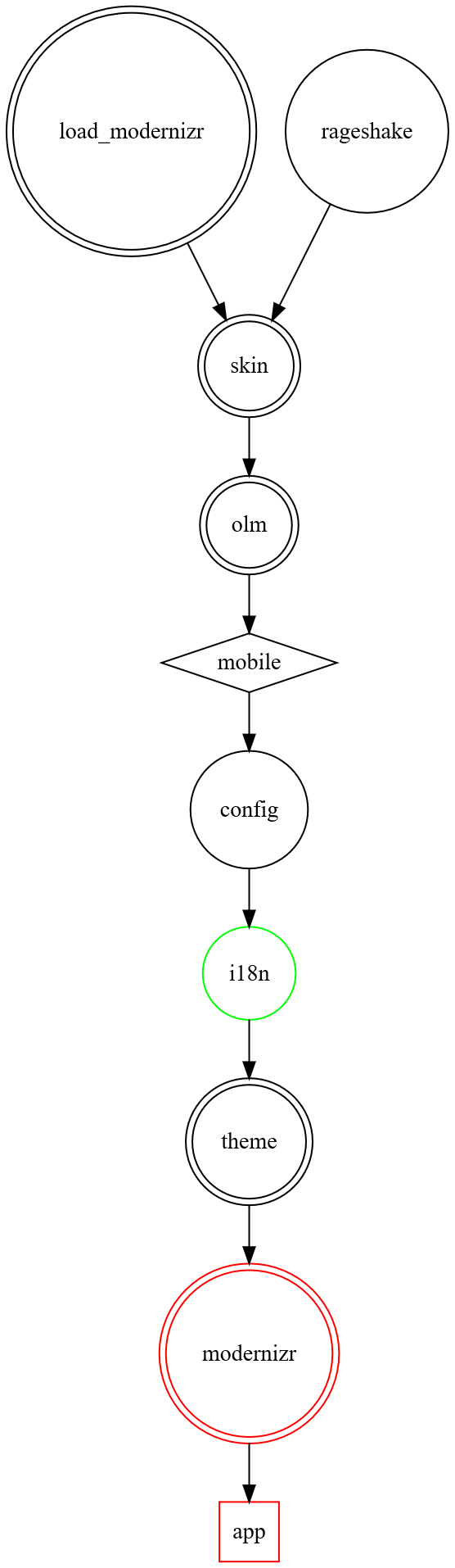
|
||||
|
||||
Current more parallel flow:
|
||||
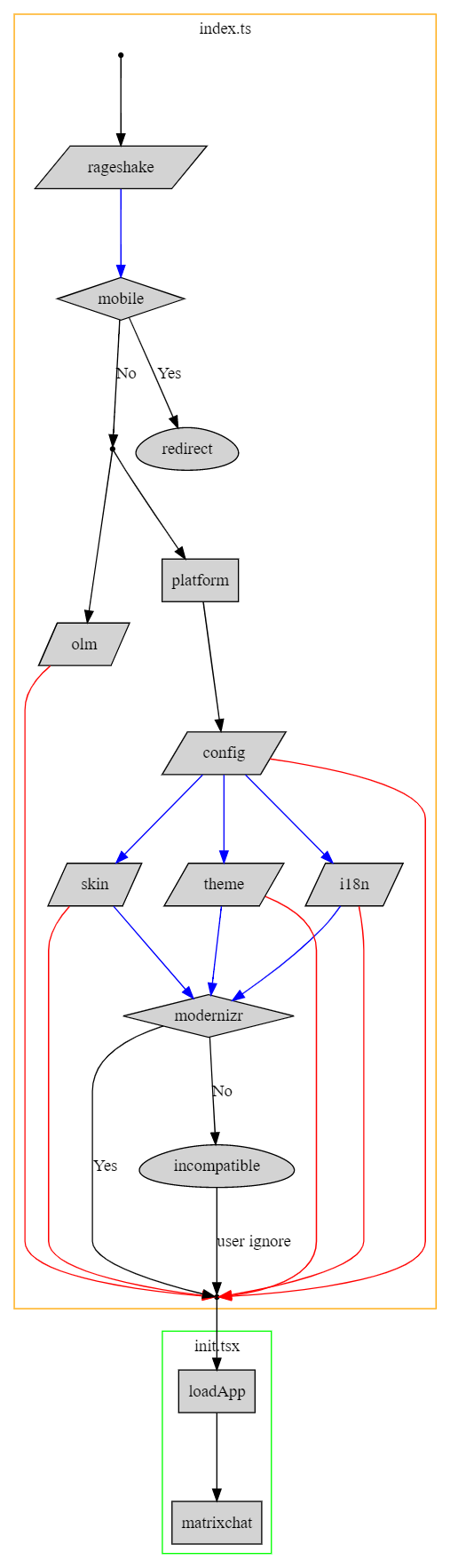
|
||||
|
||||
<details><summary>Code</summary>
|
||||
<p>
|
||||
<pre><code>
|
||||
digraph G {
|
||||
node [shape=box];
|
||||
|
||||
subgraph cluster_0 {
|
||||
color=orange;
|
||||
node [style=filled];
|
||||
label = "index.ts";
|
||||
|
||||
entrypoint, s0, ready [shape=point];
|
||||
rageshake, config, i18n, theme, skin, olm [shape=parallelogram];
|
||||
mobile [shape=diamond, label="mobile"];
|
||||
modernizr [shape=diamond];
|
||||
redirect, incompatible [shape=egg];
|
||||
|
||||
entrypoint -> rageshake;
|
||||
rageshake -> mobile [color=blue];
|
||||
mobile -> s0 [label="No"];
|
||||
mobile -> redirect [label="Yes"];
|
||||
|
||||
s0 -> platform;
|
||||
s0 -> olm;
|
||||
platform -> config;
|
||||
|
||||
config -> i18n [color=blue];
|
||||
config -> theme [color=blue];
|
||||
config -> skin [color=blue];
|
||||
|
||||
i18n -> modernizr [color=blue];
|
||||
theme -> modernizr [color=blue];
|
||||
skin -> modernizr [color=blue];
|
||||
|
||||
modernizr -> ready [label="Yes"];
|
||||
modernizr -> incompatible [label="No"];
|
||||
incompatible -> ready [label="user ignore"];
|
||||
|
||||
olm -> ready [color=red];
|
||||
config -> ready [color=red];
|
||||
skin -> ready [color=red];
|
||||
theme -> ready [color=red];
|
||||
i18n -> ready [color=red];
|
||||
|
||||
}
|
||||
|
||||
subgraph cluster_1 {
|
||||
color = green;
|
||||
node [style=filled];
|
||||
label = "init.tsx";
|
||||
|
||||
ready -> loadApp;
|
||||
loadApp -> matrixchat;
|
||||
|
||||
}
|
||||
}
|
||||
</code></pre>
|
||||
|
||||
</p>
|
||||
</details>
|
||||
|
||||
Key:
|
||||
|
||||
- Parallelogram: async/await task
|
||||
- Box: sync task
|
||||
- Diamond: conditional branch
|
||||
- Egg: user interaction
|
||||
- Blue arrow: async task is allowed to settle but allowed to fail
|
||||
- Red arrow: async task success is asserted
|
||||
|
||||
Notes:
|
||||
|
||||
- A task begins when all its dependencies (arrows going into it) are fulfilled.
|
||||
- The success of setting up rageshake is never asserted, element-web has a fallback path for running without IDB (and thus rageshake).
|
||||
- Everything is awaited to be settled before the Modernizr check, to allow it to make use of things like i18n if they are successful.
|
||||
|
||||
Underlying dependencies:
|
||||

|
||||
@@ -1,14 +0,0 @@
|
||||
# Beta features
|
||||
|
||||
Beta features are features that are not ready for production yet but the team
|
||||
wants more people to try the features and give feedback on them.
|
||||
|
||||
Before a feature gets into its beta phase, it is often a labs feature (see
|
||||
[Labs](https://github.com/vector-im/element-web/blob/develop/docs/labs.md)).
|
||||
|
||||
**Be warned! Beta features may not be completely finalised or stable!**
|
||||
|
||||
## Video rooms (`feature_video_rooms`)
|
||||
|
||||
Enables support for creating and joining video rooms, which are persistent video
|
||||
chats that users can jump in and out of.
|
||||
@@ -1,81 +0,0 @@
|
||||
# Choosing an issue to work on
|
||||
|
||||
So you want to contribute to Element Web? That is awesome!
|
||||
|
||||
If you're not sure where to start, make sure you read
|
||||
[CONTRIBUTING.md](../CONTRIBUTING.md), and the
|
||||
[Development](../README.md#development) and
|
||||
[Setting up a dev environment](../README.md#setting-up-a-dev-environment)
|
||||
sections of the README.
|
||||
|
||||
Maybe you've got something specific you'd like to work on? If so, make sure you
|
||||
create an issue and
|
||||
[discuss it with the developers](https://matrix.to/#/#element-dev:matrix.org)
|
||||
before you put a lot of time into it.
|
||||
|
||||
If you're looking for inspiration on where to start, keep reading!
|
||||
|
||||
## Finding a good first issue
|
||||
|
||||
All the issues for Element Web live in the
|
||||
[element-web](https://github.com/vector-im/element-web) repository, including
|
||||
issues that actually need fixing in `matrix-react-sdk` or one of the related
|
||||
repos.
|
||||
|
||||
The first place to look is for
|
||||
[issues tagged with "good first issue"](https://github.com/vector-im/element-web/issues?q=is%3Aopen+is%3Aissue+label%3A%22good+first+issue%22).
|
||||
|
||||
Look through that list and find something that catches your interest. If there
|
||||
is nothing, there, try gently asking in
|
||||
[#element-dev:matrix.org](https://matrix.to/#/#element-dev:matrix.org) for
|
||||
someone to add something.
|
||||
|
||||
When you're looking through the list, here are some things that might make an
|
||||
issue a **GOOD** choice:
|
||||
|
||||
- It is a problem or feature you care about.
|
||||
- It concerns a type of code you know a little about.
|
||||
- You think you can understand what's needed.
|
||||
- It already has approval from Element Web's designers (look for comments from
|
||||
members of the
|
||||
[Product](https://github.com/orgs/vector-im/teams/product/members) or
|
||||
[Design](https://github.com/orgs/vector-im/teams/design/members) teams).
|
||||
|
||||
Here are some things that might make it a **BAD** choice:
|
||||
|
||||
- You don't understand it (maybe add a comment asking a clarifying question).
|
||||
- It sounds difficult, or is part of a larger change you don't know about.
|
||||
- **It is tagged with `X-Needs-Design` or `X-Needs-Product`.**
|
||||
|
||||
**Element Web's Design and Product teams tend to be very busy**, so if you make
|
||||
changes that require approval from one of those teams, you will probably have
|
||||
to wait a very long time. The kind of change affected by this is changing the
|
||||
way the product works, or how it looks in a specific area.
|
||||
|
||||
## Finding a good second issue
|
||||
|
||||
Once you've fixed a few small things, you can consider taking on something a
|
||||
little larger. This should mostly be driven by what you find interesting, but
|
||||
you may also find the
|
||||
[Help Wanted](https://github.com/vector-im/element-web/issues?q=is%3Aissue+is%3Aopen+sort%3Aupdated-desc+label%3A%22Help+Wanted%22)
|
||||
label useful.
|
||||
|
||||
Note that the same comment applies as in the previous section: if you want to
|
||||
work in areas that require Design or Product approval, you should look to join
|
||||
existing work that is already designed, as getting approval for your random
|
||||
change will take a very long time.
|
||||
|
||||
So you should **always avoid issues tagged with `X-Needs-Design` or
|
||||
`X-Needs-Product`**.
|
||||
|
||||
## Asking questions
|
||||
|
||||
Feel free to ask questions about the issues or how to choose them in the
|
||||
[#element-dev:matrix.org](https://matrix.to/#/#element-dev:matrix.org) Matrix
|
||||
room.
|
||||
|
||||
## Thank you
|
||||
|
||||
Thank you again for contributing to Element Web. We welcome your contributions
|
||||
and are grateful for your work. We find working on it great fun, and we hope
|
||||
you do too!
|
||||
52
docs/conferencing.md
Normal file
@@ -0,0 +1,52 @@
|
||||
# VoIP Conferencing
|
||||
|
||||
This is a draft proposal for a naive voice/video conferencing implementation for
|
||||
Matrix clients. There are many possible conferencing architectures possible for
|
||||
Matrix (Multipoint Conferencing Unit (MCU); Stream Forwarding Unit (SFU); Peer-
|
||||
to-Peer mesh (P2P), etc; events shared in the group room; events shared 1:1;
|
||||
possibly even out-of-band signalling).
|
||||
|
||||
This is a starting point for a naive MCU implementation which could provide one
|
||||
possible Matrix-wide solution in future, which retains backwards compatibility
|
||||
with standard 1:1 calling.
|
||||
|
||||
* A client chooses to initiate a conference for a given room by starting a
|
||||
voice or video call with a 'conference focus' user. This is a virtual user
|
||||
(typically Application Service) which implements a conferencing bridge. It
|
||||
isn't defined how the client discovers or selects this user.
|
||||
|
||||
* The conference focus user MUST join the room in which the client has
|
||||
initiated the conference - this may require the client to invite the
|
||||
conference focus user to the room, depending on the room's `join_rules`. The
|
||||
conference focus user needs to be in the room to let the bridge eject users
|
||||
from the conference who have left the room in which it was initiated, and aid
|
||||
discovery of the conference by other users in the room. The bridge
|
||||
identifies the room to join based on the user ID by which it was invited.
|
||||
The format of this identifier is implementation dependent for now.
|
||||
|
||||
* If a client leaves the group chat room, they MUST be ejected from the
|
||||
conference. If a client leaves the 1:1 room with the conference focus user,
|
||||
they SHOULD be ejected from the conference.
|
||||
|
||||
* For now, rooms can contain multiple conference focus users - it's left to
|
||||
user or client implementation to select which to converge on. In future this
|
||||
could be mediated using a state event (e.g. `im.vector.call.mcu`), but we
|
||||
can't do that right now as by default normal users can't set arbitrary state
|
||||
events on a room.
|
||||
|
||||
* To participate in the conference, other clients initiates a standard 1:1
|
||||
voice or video call to the conference focus user.
|
||||
|
||||
* For best UX, clients SHOULD show the ongoing voice/video call in the UI
|
||||
context of the group room rather than 1:1 with the focus user. If a client
|
||||
recognises a conference user present in the room, it MAY chose to highlight
|
||||
this in the UI (e.g. with a "conference ongoing" notification, to aid
|
||||
discovery). Clients MAY hide the 1:1 room with the focus user (although in
|
||||
future this room could be used for floor control or other direct
|
||||
communication with the conference focus)
|
||||
|
||||
* When all users have left the conference, the 'conference focus' user SHOULD
|
||||
leave the room.
|
||||
|
||||
* If a conference focus user joins a room but does not receive a 1:1 voice or
|
||||
video call, it SHOULD time out after a period of time and leave the room.
|
||||
533
docs/config.md
@@ -1,533 +0,0 @@
|
||||
# Configuration
|
||||
|
||||
### 🦖 Deprecation notice
|
||||
|
||||
Configuration keys were previously a mix of camelCase and snake_case.
|
||||
We standardised to snake_case but added compatibility for camelCase to all settings.
|
||||
This backwards compatibility will be getting removed in a future release so please ensure you are using snake_case.
|
||||
|
||||
---
|
||||
|
||||
You can configure the app by copying `config.sample.json` to `config.json` or `config.$domain.json` and customising it.
|
||||
Element will attempt to load first `config.$domain.json` and if it fails `config.json`. This mechanism allows different
|
||||
configuration options depending on if you're hitting e.g. `app1.example.com` or `app2.example.com`. Configs are not mixed
|
||||
in any way, it either entirely uses the domain config, or entirely uses `config.json`.
|
||||
|
||||
The possible configuration options are described here. If you run into issues, please visit
|
||||
[#element-web:matrix.org](https://matrix.to/#/#element-web:matrix.org) on Matrix.
|
||||
|
||||
For a good example of a production-tuned config, see https://app.element.io/config.json
|
||||
|
||||
For an example of a development/beta-tuned config, see https://develop.element.io/config.json
|
||||
|
||||
After changing the config, the app will need to be reloaded. For web browsers this is a simple page refresh, however
|
||||
for the desktop app the application will need to be exited fully (including via the task tray) and re-started.
|
||||
|
||||
## Homeserver configuration
|
||||
|
||||
In order for Element to even start you will need to tell it what homeserver to connect to _by default_. Users will be
|
||||
able to use a different homeserver if they like, though this can be disabled with `"disable_custom_urls": true` in your
|
||||
config.
|
||||
|
||||
One of the following options **must** be supplied:
|
||||
|
||||
1. `default_server_config`: The preferred method of setting the homeserver connection information. Simply copy/paste
|
||||
your [`/.well-known/matrix/client`](https://spec.matrix.org/latest/client-server-api/#getwell-knownmatrixclient)
|
||||
into this field. For example:
|
||||
```json
|
||||
{
|
||||
"default_server_config": {
|
||||
"m.homeserver": {
|
||||
"base_url": "https://matrix-client.matrix.org"
|
||||
},
|
||||
"m.identity_server": {
|
||||
"base_url": "https://vector.im"
|
||||
}
|
||||
}
|
||||
}
|
||||
```
|
||||
2. `default_server_name`: A different method of connecting to the homeserver by looking up the connection information
|
||||
using `.well-known`. When using this option, simply use your server's domain name (the part at the end of user IDs):
|
||||
`"default_server_name": "matrix.org"`
|
||||
3. <del>`default_hs_url` and (optionally) `default_is_url`</del>: A very deprecated method of defining the connection
|
||||
information. These are the same values seen as `base_url` in the `default_server_config` example, with `default_is_url`
|
||||
being optional.
|
||||
|
||||
If both `default_server_config` and `default_server_name` are used, Element will try to look up the connection
|
||||
infomation using `.well-known`, and if that fails, take `default_server_config` as the homeserver connection
|
||||
infomation.
|
||||
|
||||
## Labs flags
|
||||
|
||||
Labs flags are optional, typically beta or in-development, features that can be turned on or off. The full range of
|
||||
labs flags and their development status are documented [here](./labs.md). If interested, the feature flag process is
|
||||
documented [here](./feature-flags.md).
|
||||
|
||||
To force a labs flag on or off, use the following:
|
||||
|
||||
```json
|
||||
{
|
||||
"features": {
|
||||
"feature_you_want_to_turn_on": true,
|
||||
"feature_you_want_to_keep_off": false
|
||||
}
|
||||
}
|
||||
```
|
||||
|
||||
If you'd like the user to be able to self-select which labs flags they can turn on, add `"show_labs_settings": true` to
|
||||
your config. This will turn on the tab in user settings.
|
||||
|
||||
**Note**: Feature support varies release-by-release. Check the [labs flag documentation](./labs.md) frequently if enabling
|
||||
the functionality.
|
||||
|
||||
## Default settings
|
||||
|
||||
Some settings additionally support being specified at the config level to affect the user experience of your Element Web
|
||||
instance. As of writing those settings are not fully documented, however a few are:
|
||||
|
||||
1. `default_federate`: When `true` (default), rooms will be marked as "federatable" during creation. Typically this setting
|
||||
shouldn't be used as the federation capabilities of a room **cannot** be changed after the room is created.
|
||||
2. `default_country_code`: An optional ISO 3166 alpha2 country code (eg: `GB`, the default) to use when showing phone number
|
||||
inputs.
|
||||
3. `room_directory`: Optionally defines how the room directory component behaves. Currently only a single property, `servers`
|
||||
is supported to add additional servers to the dropdown. For example:
|
||||
```json
|
||||
{
|
||||
"room_directory": {
|
||||
"servers": ["matrix.org", "example.org"]
|
||||
}
|
||||
}
|
||||
```
|
||||
4. `setting_defaults`: Optional configuration for settings which are not described by this document and support the `config`
|
||||
level. This list is incomplete. For example:
|
||||
```json
|
||||
{
|
||||
"setting_defaults": {
|
||||
"MessageComposerInput.showStickersButton": false,
|
||||
"MessageComposerInput.showPollsButton": false
|
||||
}
|
||||
}
|
||||
```
|
||||
These values will take priority over the hardcoded defaults for the settings. For a list of available settings, see
|
||||
[Settings.tsx](https://github.com/matrix-org/matrix-react-sdk/blob/develop/src/settings/Settings.tsx).
|
||||
|
||||
## Customisation & branding
|
||||
|
||||
<!-- Author's note: https://english.stackexchange.com/questions/570116/alternative-ways-of-saying-white-labeled -->
|
||||
|
||||
Element supports some customisation of the user experience through various branding and theme options. While it doesn't support
|
||||
complete re-branding/private labeling, a more personalised experience can be achieved for your users.
|
||||
|
||||
1. `default_theme`: Typically either `light` (the default) or `dark`, this is the optional name of the colour theme to use.
|
||||
If using custom themes, this can be a theme name from that as well.
|
||||
2. `default_device_display_name`: Optional public name for devices created by login and registration, instead of the default
|
||||
templated string. Note that this option does not support templating, currently.
|
||||
3. `brand`: Optional name for the app. Defaults to `Element`. This is used throughout the application in various strings/locations.
|
||||
4. `permalink_prefix`: An optional URL pointing to an Element Web deployment. For example, `https://app.element.io`. This will
|
||||
change all permalinks (via the "Share" menus) to point at the Element Web deployment rather than `matrix.to`.
|
||||
5. `desktop_builds`: Optional. Where the desktop builds for the application are, if available. This is explained in more detail
|
||||
down below.
|
||||
6. `mobile_builds`: Optional. Like `desktop_builds`, except for the mobile apps. Also described in more detail down below.
|
||||
7. `mobile_guide_toast`: When `true` (default), users accessing the Element Web instance from a mobile device will be prompted to
|
||||
download the app instead.
|
||||
8. `update_base_url`: For the desktop app only, the URL where to acquire update packages. If specified, must be a path to a directory
|
||||
containing `macos` and `win32` directories, with the update packages within. Defaults to `https://packages.element.io/desktop/update/`
|
||||
in production.
|
||||
9. `map_style_url`: Map tile server style URL for location sharing. e.g. `https://api.maptiler.com/maps/streets/style.json?key=YOUR_KEY_GOES_HERE`
|
||||
This setting is ignored if your homeserver provides `/.well-known/matrix/client` in its well-known location, and the JSON file
|
||||
at that location has a key `m.tile_server` (or the unstable version `org.matrix.msc3488.tile_server`). In this case, the
|
||||
configuration found in the well-known location is used instead.
|
||||
10. `welcome_user_id`: An optional user ID to start a DM with after creating an account. Defaults to nothing (no DM created).
|
||||
11. `custom_translations_url`: An optional URL to allow overriding of translatable strings. The JSON file must be in a format of
|
||||
`{"affected string": {"languageCode": "new string"}}`. See https://github.com/matrix-org/matrix-react-sdk/pull/7886 for details.
|
||||
12. `branding`: Options for configuring various assets used within the app. Described in more detail down below.
|
||||
13. `embedded_pages`: Further optional URLs for various assets used within the app. Described in more detail down below.
|
||||
14. `disable_3pid_login`: When `false` (default), **enables** the options to log in with email address or phone number. Set to
|
||||
`true` to hide these options.
|
||||
15. `disable_login_language_selector`: When `false` (default), **enables** the language selector on the login pages. Set to `true`
|
||||
to hide this dropdown.
|
||||
16. `disable_guests`: When `false` (default), **enable** guest-related functionality (peeking/previewing rooms, etc) for unregistered
|
||||
users. Set to `true` to disable this functionality.
|
||||
17. `user_notice`: Optional notice to show to the user, e.g. for sunsetting a deployment and pushing users to move in their own time.
|
||||
Takes a configuration object as below:
|
||||
1. `title`: Required. Title to show at the top of the notice.
|
||||
2. `description`: Required. The description to use for the notice.
|
||||
3. `show_once`: Optional. If true then the notice will only be shown once per device.
|
||||
18. `help_url`: The URL to point users to for help with the app, defaults to `https://element.io/help`.
|
||||
19. `help_encrption_url`: The URL to point users to for help with encryption, defaults to `https://element.io/help#encryption`.
|
||||
|
||||
### `desktop_builds` and `mobile_builds`
|
||||
|
||||
These two options describe the various availability for the application. When the app needs to promote an alternative download,
|
||||
such as trying to get the user to use an Android app or the desktop app for encrypted search, the config options will be looked
|
||||
at to see if the link should be to somewhere else.
|
||||
|
||||
Starting with `desktop_builds`, the following subproperties are available:
|
||||
|
||||
1. `available`: Required. When `true`, the desktop app can be downloaded from somewhere.
|
||||
2. `logo`: Required. A URL to a logo (SVG), intended to be shown at 24x24 pixels.
|
||||
3. `url`: Required. The download URL for the app. This is used as a hyperlink.
|
||||
|
||||
When `desktop_builds` is not specified at all, the app will assume desktop downloads are available from https://element.io
|
||||
|
||||
For `mobile_builds`, the following subproperties are available:
|
||||
|
||||
1. `ios`: The URL for where to download the iOS app, such as an App Store link. When explicitly `null`, the app will assume the
|
||||
iOS app cannot be downloaded. When not provided, the default Element app will be assumed available.
|
||||
2. `android`: The same as `ios`, except for Android instead.
|
||||
3. `fdroid`: The same as `android`, except for FDroid instead.
|
||||
|
||||
Together, these two options might look like the following in your config:
|
||||
|
||||
```json
|
||||
{
|
||||
"desktop_builds": {
|
||||
"available": true,
|
||||
"logo": "https://example.org/assets/logo-small.svg",
|
||||
"url": "https://example.org/not_element/download"
|
||||
},
|
||||
"mobile_builds": {
|
||||
"ios": null,
|
||||
"android": "https://example.org/not_element/android",
|
||||
"fdroid": "https://example.org/not_element/fdroid"
|
||||
}
|
||||
}
|
||||
```
|
||||
|
||||
### `branding` and `embedded_pages`
|
||||
|
||||
These two options point at various URLs for changing different internal pages (like the welcome page) and logos within the
|
||||
application.
|
||||
|
||||
Starting with `branding`, the following subproperties are available:
|
||||
|
||||
1. `welcome_background_url`: When a string, the URL for the full-page image background of the login, registration, and welcome
|
||||
pages. This property can additionally be an array to have the app choose an image at random from the selections.
|
||||
2. `auth_header_logo_url`: A URL to the logo used on the login, registration, etc pages.
|
||||
3. `auth_footer_links`: A list of links to add to the footer during login, registration, etc. Each entry must have a `text` and
|
||||
`url` property.
|
||||
|
||||
`embedded_pages` can be configured as such:
|
||||
|
||||
1. `welcome_url`: A URL to an HTML page to show as a welcome page (landing on `#/welcome`). When not specified, the default
|
||||
`welcome.html` that ships with Element will be used instead.
|
||||
2. `home_url`: A URL to an HTML page to show within the app as the "home" page. When the app doesn't have a room/screen to
|
||||
show the user, it will use the home page instead. The home page is additionally accessible from the user menu. By default,
|
||||
no home page is set and therefore a hardcoded landing screen is used. More documentation and examples are [here](./custom-home.md).
|
||||
3. `login_for_welcome`: When `true` (default `false`), the app will use the login form as a welcome page instead of the welcome
|
||||
page itself. This disables use of `welcome_url` and all welcome page functionality.
|
||||
|
||||
Together, the options might look like this in your config:
|
||||
|
||||
```json
|
||||
{
|
||||
"branding": {
|
||||
"welcome_background_url": "https://example.org/assets/background.jpg",
|
||||
"auth_header_logo_url": "https://example.org/assets/logo.svg",
|
||||
"auth_footer_links": [
|
||||
{ "text": "FAQ", "url": "https://example.org/faq" },
|
||||
{ "text": "Donate", "url": "https://example.org/donate" }
|
||||
]
|
||||
},
|
||||
"embedded_pages": {
|
||||
"welcome_url": "https://example.org/assets/welcome.html",
|
||||
"home_url": "https://example.org/assets/home.html"
|
||||
}
|
||||
}
|
||||
```
|
||||
|
||||
Note that `index.html` also has an og:image meta tag that is set to an image hosted on element.io. This is the image used if
|
||||
links to your copy of Element appear in some websites like Facebook, and indeed Element itself. This has to be static in the HTML
|
||||
and an absolute URL (and HTTP rather than HTTPS), so it's not possible for this to be an option in config.json. If you'd like to
|
||||
change it, you can build Element, but run `RIOT_OG_IMAGE_URL="http://example.com/logo.png" yarn build`. Alternatively, you can edit
|
||||
the `og:image` meta tag in `index.html` directly each time you download a new version of Element.
|
||||
|
||||
## SSO setup
|
||||
|
||||
When Element is deployed alongside a homeserver with SSO-only login, some options to ease the user experience might want to be set:
|
||||
|
||||
1. `logout_redirect_url`: Optional URL to redirect the user to after they have logged out. Some SSO systems support a page that the
|
||||
user can be sent to in order to log them out of that system too, making logout symmetric between Element and the SSO system.
|
||||
2. `sso_redirect_options`: Options to define how to handle unauthenticated users. If the object contains `"immediate": true`, then
|
||||
all unauthenticated users will be automatically redirected to the SSO system to start their login. If instead you'd only like to
|
||||
have users which land on the welcome page to be redirected, use `"on_welcome_page": true`. As an example:
|
||||
```json
|
||||
{
|
||||
"sso_redirect_options": {
|
||||
"immediate": false,
|
||||
"on_welcome_page": true
|
||||
}
|
||||
}
|
||||
```
|
||||
It is most common to use the `immediate` flag instead of `on_welcome_page`.
|
||||
|
||||
## VoIP / Jitsi calls
|
||||
|
||||
Currently, Element uses Jitsi to offer conference calls in rooms, with an experimental Element Call implementation in the works.
|
||||
A set of defaults are applied, pointing at our Jitsi and Element Call instances, to ensure conference calling works, however you
|
||||
can point Element at your own if you prefer.
|
||||
|
||||
More information about the Jitsi setup can be found [here](./jitsi.md).
|
||||
|
||||
The VoIP and Jitsi options are:
|
||||
|
||||
1. `jitsi`: Optional configuration for how to start Jitsi conferences. Currently can only contain a single `preferred_domain`
|
||||
value which points at the domain of the Jitsi instance. Defaults to `meet.element.io`. This is _not_ used if the Jitsi widget
|
||||
was created by an integration manager, or if the homeserver provides Jitsi information in `/.well-known/matrix/client`. For
|
||||
example:
|
||||
```json
|
||||
{
|
||||
"jitsi": {
|
||||
"preferred_domain": "meet.jit.si"
|
||||
}
|
||||
}
|
||||
```
|
||||
2. `jitsi_widget`: Optional configuration for the built-in Jitsi widget. Currently can only contain a single `skip_built_in_welcome_screen`
|
||||
value, denoting whether the "Join Conference" button should be shown. When `true` (default `false`), Jitsi calls will skip to
|
||||
the call instead of having a screen with a single button on it. This is most useful if the Jitsi instance being used already
|
||||
has a landing page for users to test audio and video before joining the call, otherwise users will automatically join the call.
|
||||
For example:
|
||||
```json
|
||||
{
|
||||
"jitsi_widget": {
|
||||
"skip_built_in_welcome_screen": true
|
||||
}
|
||||
}
|
||||
```
|
||||
3. `voip`: Optional configuration for various VoIP features. Currently can only contain a single `obey_asserted_identity` value to
|
||||
send MSC3086-style asserted identity messages during VoIP calls in the room corresponding to the asserted identity. This _must_
|
||||
only be set in trusted environments. The option defaults to `false`. For example:
|
||||
```json
|
||||
{
|
||||
"voip": {
|
||||
"obey_asserted_identity": false
|
||||
}
|
||||
}
|
||||
```
|
||||
4. `widget_build_url`: Optional URL to have Element make a request to when a user presses the voice/video call buttons in the app,
|
||||
if a call would normally be started by the action. The URL will be called with a `roomId` query parameter to identify the room
|
||||
being called in. The URL must respond with a JSON object similar to the following:
|
||||
```json
|
||||
{
|
||||
"widget_id": "$arbitrary_string",
|
||||
"widget": {
|
||||
"creatorUserId": "@user:example.org",
|
||||
"id": "$the_same_widget_id",
|
||||
"type": "m.custom",
|
||||
"waitForIframeLoad": true,
|
||||
"name": "My Widget Name Here",
|
||||
"avatar_url": "mxc://example.org/abc123",
|
||||
"url": "https://example.org/widget.html",
|
||||
"data": {
|
||||
"title": "Subtitle goes here"
|
||||
}
|
||||
},
|
||||
"layout": {
|
||||
"container": "top",
|
||||
"index": 0,
|
||||
"width": 65,
|
||||
"height": 50
|
||||
}
|
||||
}
|
||||
```
|
||||
The `widget` is the `content` of a normal widget state event. The `layout` is the layout specifier for the widget being created,
|
||||
as defined by the `io.element.widgets.layout` state event. By default this applies to all rooms, but the behaviour can be skipped for DMs
|
||||
by setting the option `widget_build_url_ignore_dm` to `true`.
|
||||
5. `audio_stream_url`: Optional URL to pass to Jitsi to enable live streaming. This option is considered experimental and may be removed
|
||||
at any time without notice.
|
||||
6. `element_call`: Optional configuration for native group calls using Element Call, with the following subkeys:
|
||||
- `url`: The URL of the Element Call instance to use for native group calls. This option is considered experimental
|
||||
and may be removed at any time without notice. Defaults to `https://call.element.io`.
|
||||
- `use_exclusively`: A boolean specifying whether Element Call should be used exclusively as the only VoIP stack in
|
||||
the app, removing the ability to start legacy 1:1 calls or Jitsi calls. Defaults to `false`.
|
||||
- `participant_limit`: The maximum number of users who can join a call; if
|
||||
this number is exceeded, the user will not be able to join a given call.
|
||||
- `brand`: Optional name for the app. Defaults to `Element Call`. This is
|
||||
used throughout the application in various strings/locations.
|
||||
|
||||
## Bug reporting
|
||||
|
||||
If you run your own rageshake server to collect bug reports, the following options may be of interest:
|
||||
|
||||
1. `bug_report_endpoint_url`: URL for where to submit rageshake logs to. Rageshakes include feedback submissions and bug reports. When
|
||||
not present in the config, the app will disable all rageshake functionality. Set to `https://element.io/bugreports/submit` to submit
|
||||
rageshakes to us, or use your own rageshake server.
|
||||
2. `uisi_autorageshake_app`: If a user has enabled the "automatically send debug logs on decryption errors" flag, this option will be sent
|
||||
alongside the rageshake so the rageshake server can filter them by app name. By default, this will be `element-auto-uisi`
|
||||
(in contrast to other rageshakes submitted by the app, which use `element-web`).
|
||||
|
||||
If you would like to use [Sentry](https://sentry.io/) for rageshake data, add a `sentry` object to your config with the following values:
|
||||
|
||||
1. `dsn`: The Sentry [DSN](https://docs.sentry.io/product/sentry-basics/dsn-explainer/).
|
||||
2. `environment`: Optional [environment](https://docs.sentry.io/product/sentry-basics/environments/) to pass to Sentry.
|
||||
|
||||
For example:
|
||||
|
||||
```json
|
||||
{
|
||||
"sentry": {
|
||||
"dsn": "dsn-goes-here",
|
||||
"environment": "production"
|
||||
}
|
||||
}
|
||||
```
|
||||
|
||||
## Integration managers
|
||||
|
||||
Integration managers are embedded applications within Element to help the user configure bots, bridges, and widgets. An integration manager
|
||||
is a separate piece of software not typically available with your homeserver. To disable integrations, set the options defined here to `null`.
|
||||
|
||||
1. `integrations_ui_url`: The UI URL for the integration manager.
|
||||
2. `integrations_rest_url`: The REST interface URL for the integration manager.
|
||||
3. `integrations_widgets_urls`: A list of URLs the integration manager uses to host widgets.
|
||||
|
||||
If you would like to use Scalar, the integration manager maintained by Element, the following options would apply:
|
||||
|
||||
```json
|
||||
{
|
||||
"integrations_ui_url": "https://scalar.vector.im/",
|
||||
"integrations_rest_url": "https://scalar.vector.im/api",
|
||||
"integrations_widgets_urls": [
|
||||
"https://scalar.vector.im/_matrix/integrations/v1",
|
||||
"https://scalar.vector.im/api",
|
||||
"https://scalar-staging.vector.im/_matrix/integrations/v1",
|
||||
"https://scalar-staging.vector.im/api",
|
||||
"https://scalar-staging.riot.im/scalar/api"
|
||||
]
|
||||
}
|
||||
```
|
||||
|
||||
## Administrative options
|
||||
|
||||
If you would like to include a custom message when someone is reporting an event, set the following Markdown-capable field:
|
||||
|
||||
```json
|
||||
{
|
||||
"report_event": {
|
||||
"admin_message_md": "Please be sure to review our [terms of service](https://example.org/terms) before reporting a message."
|
||||
}
|
||||
}
|
||||
```
|
||||
|
||||
To add additional "terms and conditions" links throughout the app, use the following template:
|
||||
|
||||
```json
|
||||
{
|
||||
"terms_and_conditions_links": [{ "text": "Code of conduct", "url": "https://example.org/code-of-conduct" }]
|
||||
}
|
||||
```
|
||||
|
||||
## Analytics
|
||||
|
||||
To configure [Posthog](https://posthog.com/), add the following under `posthog` in your config:
|
||||
|
||||
1. `api_host`: The hostname of the posthog server.
|
||||
2. `project_api_key`: The API key from posthog.
|
||||
|
||||
When these configuration options are not present,
|
||||
analytics are deemed impossible and the user won't be asked to opt in to the system.
|
||||
|
||||
There are additional root-level options which can be specified:
|
||||
|
||||
1. `analytics_owner`: the company name used in dialogs talking about analytics - this defaults to `brand`,
|
||||
and is useful when the provider of analytics is different from the provider of the Element instance.
|
||||
2. `privacy_policy_url`: URL to the privacy policy including the analytics collection policy.
|
||||
|
||||
## Miscellaneous
|
||||
|
||||
Element supports other options which don't quite fit into other sections of this document.
|
||||
|
||||
To configure whether presence UI is shown for a given homeserver, set `enable_presence_by_hs_url`. It is recommended to
|
||||
set this value to the following at a minimum:
|
||||
|
||||
```json
|
||||
{
|
||||
"enable_presence_by_hs_url": {
|
||||
"https://matrix.org": false,
|
||||
"https://matrix-client.matrix.org": false
|
||||
}
|
||||
}
|
||||
```
|
||||
|
||||
## Identity servers
|
||||
|
||||
The identity server is used for inviting other users to a room via third party
|
||||
identifiers like emails and phone numbers. It is not used to store your password
|
||||
or account information.
|
||||
|
||||
As of Element 1.4.0, all identity server functions are optional and you are
|
||||
prompted to agree to terms before data is sent to the identity server.
|
||||
|
||||
Element will check multiple sources when looking for an identity server to use in
|
||||
the following order of preference:
|
||||
|
||||
1. The identity server set in the user's account data
|
||||
- For a new user, no value is present in their account data. It is only set
|
||||
if the user visits Settings and manually changes their identity server.
|
||||
2. The identity server provided by the `.well-known` lookup that occurred at
|
||||
login
|
||||
3. The identity server provided by the Riot config file
|
||||
|
||||
If none of these sources have an identity server set, then Element will prompt the
|
||||
user to set an identity server first when attempting to use features that
|
||||
require one.
|
||||
|
||||
Currently, the only two public identity servers are https://vector.im and
|
||||
https://matrix.org, however in the future identity servers will be
|
||||
decentralised.
|
||||
|
||||
## Desktop app configuration
|
||||
|
||||
See https://github.com/vector-im/element-desktop#user-specified-configjson
|
||||
|
||||
## UI Features
|
||||
|
||||
Parts of the UI can be disabled using UI features. These are settings which appear
|
||||
under `setting_defaults` and can only be `true` (default) or `false`. When `false`,
|
||||
parts of the UI relating to that feature will be disabled regardless of the user's
|
||||
preferences.
|
||||
|
||||
Currently, the following UI feature flags are supported:
|
||||
|
||||
- `UIFeature.urlPreviews` - Whether URL previews are enabled across the entire application.
|
||||
- `UIFeature.feedback` - Whether prompts to supply feedback are shown.
|
||||
- `UIFeature.voip` - Whether or not VoIP is shown readily to the user. When disabled,
|
||||
Jitsi widgets will still work though they cannot easily be added.
|
||||
- `UIFeature.widgets` - Whether or not widgets will be shown.
|
||||
- `UIFeature.advancedSettings` - Whether or not sections titled "advanced" in room and
|
||||
user settings are shown to the user.
|
||||
- `UIFeature.shareQrCode` - Whether or not the QR code on the share room/event dialog
|
||||
is shown.
|
||||
- `UIFeature.shareSocial` - Whether or not the social icons on the share room/event dialog
|
||||
are shown.
|
||||
- `UIFeature.identityServer` - Whether or not functionality requiring an identity server
|
||||
is shown. When disabled, the user will not be able to interact with the identity
|
||||
server (sharing email addresses, 3PID invites, etc).
|
||||
- `UIFeature.thirdPartyId` - Whether or not UI relating to third party identifiers (3PIDs)
|
||||
is shown. Typically this is considered "contact information" on the homeserver, and is
|
||||
not directly related to the identity server.
|
||||
- `UIFeature.registration` - Whether or not the registration page is accessible. Typically
|
||||
useful if accounts are managed externally.
|
||||
- `UIFeature.passwordReset` - Whether or not the password reset page is accessible. Typically
|
||||
useful if accounts are managed externally.
|
||||
- `UIFeature.deactivate` - Whether or not the deactivate account button is accessible. Typically
|
||||
useful if accounts are managed externally.
|
||||
- `UIFeature.advancedEncryption` - Whether or not advanced encryption options are shown to the
|
||||
user.
|
||||
- `UIFeature.roomHistorySettings` - Whether or not the room history settings are shown to the user.
|
||||
This should only be used if the room history visibility options are managed by the server.
|
||||
- `UIFeature.TimelineEnableRelativeDates` - Display relative date separators (eg: 'Today', 'Yesterday') in the
|
||||
timeline for recent messages. When false day dates will be used.
|
||||
- `UIFeature.BulkUnverifiedSessionsReminder` - Display popup reminders to verify or remove unverified sessions. Defaults
|
||||
to true.
|
||||
- `UIFeature.locationSharing` - Whether or not location sharing menus will be shown.
|
||||
|
||||
## Undocumented / developer options
|
||||
|
||||
The following are undocumented or intended for developer use only.
|
||||
|
||||
1. `fallback_hs_url`
|
||||
2. `sync_timeline_limit`
|
||||
3. `dangerously_allow_unsafe_and_insecure_passwords`
|
||||
4. `latex_maths_delims`: An optional setting to override the default delimiters used for maths parsing. See https://github.com/matrix-org/matrix-react-sdk/pull/5939 for details. Only used when `feature_latex_maths` is enabled.
|
||||
5. `voice_broadcast.chunk_length`: Target chunk length in seconds for the Voice Broadcast feature currently under development.
|
||||
@@ -1,63 +0,0 @@
|
||||
# Custom Home Page
|
||||
|
||||
The home page is shown whenever the user is logged in, but no room is selected.
|
||||
A custom `home.html` replacing the default home page can be configured either in `.well-known/matrix/client` or `config.json`.
|
||||
Such a custom home page can be used to communicate helpful information and important rules to the users.
|
||||
|
||||
## Configuration
|
||||
|
||||
To provide a custom home page for all element-web/desktop users of a homeserver, include the following in `.well-known/matrix/client`:
|
||||
|
||||
```
|
||||
{
|
||||
"io.element.embedded_pages": {
|
||||
"home_url": "https://example.org/home.html"
|
||||
}
|
||||
}
|
||||
```
|
||||
|
||||
The home page can be overridden in `config.json` to provide all users of an element-web installation with the same experience:
|
||||
|
||||
```
|
||||
{
|
||||
"embeddedPages": {
|
||||
"homeUrl": "https://example.org/home.html"
|
||||
}
|
||||
}
|
||||
```
|
||||
|
||||
## `home.html` Example
|
||||
|
||||
The following is a simple example for a custom `home.html`:
|
||||
|
||||
```
|
||||
<style type="text/css">
|
||||
.tos {
|
||||
width: auto;
|
||||
color: black;
|
||||
background : #ffcccb;
|
||||
font-weight: bold;
|
||||
}
|
||||
</style>
|
||||
|
||||
<h1>The example.org Matrix Server</h1>
|
||||
|
||||
<div class="tos">
|
||||
<p>Behave appropriately.</p>
|
||||
</div>
|
||||
|
||||
<h2>Start Chatting</h2>
|
||||
<ul>
|
||||
<li><a href="#/dm">Send a Direct Message</a></li>
|
||||
<li><a href="#/directory">Explore Public Rooms</a></li>
|
||||
<li><a href="#/new">Create a Group Chat</a></li>
|
||||
</ul>
|
||||
```
|
||||
|
||||
When choosing colors, be aware that the home page may be displayed in either light or dark mode.
|
||||
|
||||
It may be needed to set CORS headers for the `home.html` to enable element-desktop to fetch it, with e.g., the following nginx config:
|
||||
|
||||
```
|
||||
add_header Access-Control-Allow-Origin *;
|
||||
```
|
||||
@@ -1,79 +0,0 @@
|
||||
# Customisations
|
||||
|
||||
### 🦖 DEPRECATED
|
||||
|
||||
Customisations have been deprecated in favour of the [Module API](https://github.com/vector-im/element-web/blob/develop/docs/modules.md).
|
||||
If you have use cases from customisations which are not yet available via the Module API please open an issue.
|
||||
Customisations will be removed from the codebase in a future release.
|
||||
|
||||
---
|
||||
|
||||
Element Web and the React SDK support "customisation points" that can be used to
|
||||
easily add custom logic specific to a particular deployment of Element Web.
|
||||
|
||||
An example of this is the [security customisations
|
||||
module](https://github.com/matrix-org/matrix-react-sdk/blob/develop/src/customisations/Security.ts).
|
||||
This module in the React SDK only defines some empty functions and their types:
|
||||
it does not do anything by default.
|
||||
|
||||
To make use of these customisation points, you will first need to fork Element
|
||||
Web so that you can add your own code. Even though the default module is part of
|
||||
the React SDK, you can still override it from the Element Web layer:
|
||||
|
||||
1. Copy the default customisation module to
|
||||
`element-web/src/customisations/YourNameSecurity.ts`
|
||||
2. Edit customisations points and make sure export the ones you actually want to
|
||||
activate
|
||||
3. Create/add an entry to `customisations.json` next to the webpack config:
|
||||
|
||||
```json
|
||||
{
|
||||
"src/customisations/Security.ts": "src/customisations/YourNameSecurity.ts"
|
||||
}
|
||||
```
|
||||
|
||||
By isolating customisations to their own module, this approach should remove the
|
||||
chance of merge conflicts when updating your fork, and thus simplify ongoing
|
||||
maintenance.
|
||||
|
||||
**Note**: The project deliberately does not exclude `customisations.json` from Git.
|
||||
This is to ensure that in shared projects it's possible to have a common config. By
|
||||
default, Element Web does _not_ ship with this file to prevent conflicts.
|
||||
|
||||
### Custom components
|
||||
|
||||
Maintainers can use the above system to override components if they wish. Maintenance and API surface compatibility are
|
||||
left as a responsibility for the project - the layering in Element Web (including the react-sdk) do not make guarantees
|
||||
that properties/state machines won't change.
|
||||
|
||||
### Component visibility customisation
|
||||
|
||||
UI for some actions can be hidden via the ComponentVisibility customisation:
|
||||
|
||||
- inviting users to rooms and spaces,
|
||||
- creating rooms,
|
||||
- creating spaces,
|
||||
|
||||
To customise visibility create a customisation module from [ComponentVisibility](https://github.com/matrix-org/matrix-react-sdk/blob/master/src/customisations/ComponentVisibility.ts) following the instructions above.
|
||||
|
||||
`shouldShowComponent` determines whether the active MatrixClient user should be able to use
|
||||
the given UI component. When `shouldShowComponent` returns falsy all UI components for that feature will be hidden.
|
||||
If shown, the user might still not be able to use the
|
||||
component depending on their contextual permissions. For example, invite options
|
||||
might be shown to the user, but they won't have permission to invite users to
|
||||
the current room: the button will appear disabled.
|
||||
|
||||
For example, to only allow users who meet a certain condition to create spaces:
|
||||
|
||||
```typescript
|
||||
function shouldShowComponent(component: UIComponent): boolean {
|
||||
if (component === UIComponent.CreateSpaces) {
|
||||
// customConditionCheck() is a function of your own creation
|
||||
const userMeetsCondition = customConditionCheck(MatrixClientPeg.get().getUserId());
|
||||
return userMeetsCondition;
|
||||
}
|
||||
return true;
|
||||
}
|
||||
```
|
||||
|
||||
In this example, all UI related to creating a space will be hidden unless the users meets the custom condition.
|
||||
85
docs/e2ee.md
@@ -1,85 +0,0 @@
|
||||
# End to end encryption by default
|
||||
|
||||
By default, Element will create encrypted DM rooms if the user you are chatting with has keys uploaded on their account.
|
||||
For private room creation, Element will default to encryption on but give you the choice to opt-out.
|
||||
|
||||
## Disabling encryption by default
|
||||
|
||||
Set the following on your homeserver's
|
||||
`/.well-known/matrix/client` config:
|
||||
|
||||
```json
|
||||
{
|
||||
"io.element.e2ee": {
|
||||
"default": false
|
||||
}
|
||||
}
|
||||
```
|
||||
|
||||
## Disabling encryption
|
||||
|
||||
Set the following on your homeserver's
|
||||
`/.well-known/matrix/client` config:
|
||||
|
||||
```json
|
||||
{
|
||||
"io.element.e2ee": {
|
||||
"force_disable": true
|
||||
}
|
||||
}
|
||||
```
|
||||
|
||||
When `force_disable` is true:
|
||||
|
||||
- all rooms will be created with encryption disabled, and it will not be possible to enable
|
||||
encryption from room settings.
|
||||
- any `io.element.e2ee.default` value will be disregarded.
|
||||
|
||||
Note: If the server is configured to forcibly enable encryption for some or all rooms,
|
||||
this behaviour will be overriden.
|
||||
|
||||
# Secure backup
|
||||
|
||||
By default, Element strongly encourages (but does not require) users to set up
|
||||
Secure Backup so that cross-signing identity key and message keys can be
|
||||
recovered in case of a disaster where you lose access to all active devices.
|
||||
|
||||
## Requiring secure backup
|
||||
|
||||
To require Secure Backup to be configured before Element can be used, set the
|
||||
following on your homeserver's `/.well-known/matrix/client` config:
|
||||
|
||||
```json
|
||||
{
|
||||
"io.element.e2ee": {
|
||||
"secure_backup_required": true
|
||||
}
|
||||
}
|
||||
```
|
||||
|
||||
## Preferring setup methods
|
||||
|
||||
By default, Element offers users a choice of a random key or user-chosen
|
||||
passphrase when setting up Secure Backup. If a homeserver admin would like to
|
||||
only offer one of these, you can signal this via the
|
||||
`/.well-known/matrix/client` config, for example:
|
||||
|
||||
```json
|
||||
{
|
||||
"io.element.e2ee": {
|
||||
"secure_backup_setup_methods": ["passphrase"]
|
||||
}
|
||||
}
|
||||
```
|
||||
|
||||
The field `secure_backup_setup_methods` is an array listing the methods the
|
||||
client should display. Supported values currently include `key` and
|
||||
`passphrase`. If the `secure_backup_setup_methods` field is not present or
|
||||
exists but does not contain any supported methods, Element will fallback to the
|
||||
default value of: `["key", "passphrase"]`.
|
||||
|
||||
# Compatibility
|
||||
|
||||
The settings above were first proposed under a `im.vector.riot.e2ee` key, which
|
||||
is now deprecated. Element will check for either key, preferring
|
||||
`io.element.e2ee` if both exist.
|
||||
@@ -1,113 +0,0 @@
|
||||
# Feature flags
|
||||
|
||||
When developing new features for Element, we use feature flags to give us more
|
||||
flexibility and control over when and where those features are enabled.
|
||||
|
||||
For example, flags make the following things possible:
|
||||
|
||||
- Extended testing of a feature via labs on develop
|
||||
- Enabling features when ready instead of the first moment the code is released
|
||||
- Testing a feature with a specific set of users (by enabling only on a specific
|
||||
Element instance)
|
||||
|
||||
The size of the feature controlled by a feature flag may vary widely: it could
|
||||
be a large project like reactions or a smaller change to an existing algorithm.
|
||||
A large project might use several feature flags if it's useful to control the
|
||||
deployment of different portions independently.
|
||||
|
||||
Everyone involved in a feature (engineering, design, product, reviewers) should
|
||||
think about its deployment plan up front as best as possible so we can have the
|
||||
right feature flags in place from the start.
|
||||
|
||||
## Interaction with spec process
|
||||
|
||||
Historically, we have often used feature flags to guard client features that
|
||||
depend on unstable spec features. Unfortunately, there was never clear agreement
|
||||
about how long such a flag should live for, when it should be removed, etc.
|
||||
|
||||
Under the [new spec
|
||||
process](https://github.com/matrix-org/matrix-doc/pull/2324), server-side
|
||||
unstable features can be used by clients and enabled by default as long as
|
||||
clients commit to doing the associated clean up work once a feature stabilises.
|
||||
|
||||
## Starting work on a feature
|
||||
|
||||
When starting work on a feature, we should create a matching feature flag:
|
||||
|
||||
1. Add a new
|
||||
[setting](https://github.com/matrix-org/matrix-react-sdk/blob/develop/src/settings/Settings.tsx)
|
||||
of the form:
|
||||
|
||||
```js
|
||||
"feature_cats": {
|
||||
isFeature: true,
|
||||
displayName: _td("Adds cats everywhere"),
|
||||
supportedLevels: LEVELS_FEATURE,
|
||||
default: false,
|
||||
},
|
||||
```
|
||||
|
||||
2. Check whether the feature is enabled as appropriate:
|
||||
|
||||
```js
|
||||
SettingsStore.getValue("feature_cats");
|
||||
```
|
||||
|
||||
3. Document the feature in the [labs documentation](https://github.com/vector-im/element-web/blob/develop/docs/labs.md)
|
||||
|
||||
With these steps completed, the feature is disabled by default, but can be
|
||||
enabled on develop and nightly by interested users for testing.
|
||||
|
||||
Different features may have different deployment plans for when to enable where.
|
||||
The following lists a few common options.
|
||||
|
||||
## Enabling by default on develop and nightly
|
||||
|
||||
Set the feature to `true` in the
|
||||
[develop](https://github.com/vector-im/element-web/blob/develop/element.io/develop/config.json)
|
||||
and
|
||||
[nightly](https://github.com/vector-im/element-desktop/blob/develop/element.io/nightly/config.json)
|
||||
configs:
|
||||
|
||||
```json
|
||||
"features": {
|
||||
"feature_cats": true
|
||||
},
|
||||
```
|
||||
|
||||
## Enabling by default on staging, app, and release
|
||||
|
||||
Set the feature to `true` in the
|
||||
[staging / app](https://github.com/vector-im/element-web/blob/develop/element.io/app/config.json)
|
||||
and
|
||||
[release](https://github.com/vector-im/element-desktop/blob/develop/element.io/release/config.json)
|
||||
configs.
|
||||
|
||||
**Note:** The above will only enable the feature for https://app.element.io and official Element
|
||||
Desktop builds. It will not be enabled for self-hosted installed, custom desktop builds, etc. To
|
||||
cover these cases, change the setting's `default` in `Settings.tsx` to `true`.
|
||||
|
||||
## Feature deployed successfully
|
||||
|
||||
Once we're confident that a feature is working well, we should remove or convert the flag.
|
||||
|
||||
If the feature is meant to be turned off/on by the user:
|
||||
|
||||
1. Remove `isFeature` from the [setting](https://github.com/matrix-org/matrix-react-sdk/blob/develop/src/settings/Settings.ts)
|
||||
2. Change the `default` to `true` (if desired).
|
||||
3. Remove the feature from the [labs documentation](https://github.com/vector-im/element-web/blob/develop/docs/labs.md)
|
||||
4. Celebrate! 🥳
|
||||
|
||||
If the feature is meant to be forced on (non-configurable):
|
||||
|
||||
1. Remove the [setting](https://github.com/matrix-org/matrix-react-sdk/blob/develop/src/settings/Settings.ts)
|
||||
2. Remove all `getValue` lines that test for the feature.
|
||||
3. Remove the feature from the [labs documentation](https://github.com/vector-im/element-web/blob/develop/docs/labs.md)
|
||||
4. If applicable, remove the feature state from
|
||||
[develop](https://github.com/vector-im/element-web/blob/develop/element.io/develop/config.json),
|
||||
[nightly](https://github.com/vector-im/element-desktop/blob/develop/element.io/nightly/config.json),
|
||||
[staging / app](https://github.com/vector-im/element-web/blob/develop/element.io/app/config.json),
|
||||
and
|
||||
[release](https://github.com/vector-im/element-desktop/blob/develop/element.io/release/config.json)
|
||||
configs
|
||||
5. Celebrate! 🥳
|
||||

|
Before Width: | Height: | Size: 155 KiB |
@@ -1,100 +0,0 @@
|
||||
# Jitsi wrapper developer docs
|
||||
|
||||
_If you're looking for information on how to set up Jitsi in your Element, see
|
||||
[jitsi.md](./jitsi.md) instead._
|
||||
|
||||
These docs are for developers wondering how the different conference buttons work
|
||||
within Element. If you're not a developer, you're probably looking for [jitsi.md](./jitsi.md).
|
||||
|
||||
## Brief introduction to widgets
|
||||
|
||||
Widgets are embedded web applications in a room, controlled through state events, and
|
||||
have a `url` property. They are largely specified by [MSC1236](https://github.com/matrix-org/matrix-doc/issues/1236)
|
||||
and have extensions proposed under [MSC1286](https://github.com/matrix-org/matrix-doc/issues/1286).
|
||||
|
||||
The `url` is typically something we shove into an iframe with sandboxing (see `AppTile`
|
||||
in the react-sdk), though for some widgets special integration can be done. v2 widgets
|
||||
have a `data` object which helps achieve that special integration, though v1 widgets
|
||||
are best iframed and left alone.
|
||||
|
||||
Widgets have a `postMessage` API they can use to interact with Element, which also allows
|
||||
Element to interact with them. Typically this is most used by the sticker picker (an
|
||||
account-level widget), though widgets like the Jitsi widget will request permissions to
|
||||
get 'stuck' into the room list during a conference.
|
||||
|
||||
Widgets can be added with the `/addwidget <url>` command.
|
||||
|
||||
## Brief introduction to integration managers
|
||||
|
||||
Integration managers (like Scalar and Dimension) are accessible via the 4 squares in
|
||||
the top right of the room and provide a simple UI over top of bridges, bots, and other
|
||||
stuff to plug into a room. They are a separate service to Element and are thus iframed
|
||||
in a dialog as well. They also have a `postMessage` API they can use to interact with
|
||||
the client to create things like widgets, give permissions to bridges, and generally
|
||||
set everything up for the integration the user is working with.
|
||||
|
||||
Integration managers do not currently have a spec associated with them, though efforts
|
||||
are underway in [MSC1286](https://github.com/matrix-org/matrix-doc/issues/1286).
|
||||
|
||||
## Widgets configured by integration managers
|
||||
|
||||
Integration managers will often "wrap" a widget by using a widget `url` which points
|
||||
to the integration manager instead of to where the user requested the widget be. For
|
||||
example, a custom widget added in an integration manager for https://matrix.org will
|
||||
end up creating a widget with a URL like `https://integrations.example.org?widgetUrl=https%3A%2F%2Fmatrix.org`.
|
||||
|
||||
The integration manager's wrapper will typically have another iframe to isolate the
|
||||
widget from the client by yet another layer. The wrapper often provides other functionality
|
||||
which might not be available on the embedded site, such as a fullscreen button or the
|
||||
communication layer with the client (all widgets _should_ be talking to the client
|
||||
over `postMessage`, even if they aren't going to be using the widget APIs).
|
||||
|
||||
Widgets added with the `/addwidget` command will _not_ be wrapped as they are not going
|
||||
through an integration manager. The widgets themselves _should_ also work outside of
|
||||
Element. Widgets currently have a "pop out" button which opens them in a new tab and
|
||||
therefore have no connection back to Riot.
|
||||
|
||||
## Jitsi widgets from integration managers
|
||||
|
||||
Integration managers will create an entire widget event and send it over `postMessage`
|
||||
for the client to add to the room. This means that the integration manager gets to
|
||||
decide the conference domain, conference name, and other aspects of the widget. As
|
||||
a result, users can end up with a Jitsi widget that does not use the same conference
|
||||
server they specified in their config.json - this is expected.
|
||||
|
||||
Some integration managers allow the user to change the conference name while others
|
||||
will generate one for the user.
|
||||
|
||||
## Jitsi widgets generated by Element itself
|
||||
|
||||
When the user clicks on the call buttons by the composer, the integration manager is
|
||||
not involved in the slightest. Instead, Element itself generates a widget event, this time
|
||||
using the config.json parameters, and publishes that to the room. If there's only two
|
||||
people in the room, a plain WebRTC call is made instead of using a widget at all - these
|
||||
are defined in the Matrix specification.
|
||||
|
||||
The Jitsi widget created by Element uses a local `jitsi.html` wrapper (or one hosted by
|
||||
`https://app.element.io` for desktop users or those on non-https domains) as the widget
|
||||
`url`. The wrapper has some basic functionality for talking to Element to ensure the
|
||||
required `postMessage` calls are fulfilled.
|
||||
|
||||
**Note**: Per [jitsi.md](./jitsi.md) the `preferredDomain` can also come from the server's
|
||||
client .well-known data.
|
||||
|
||||
## The Jitsi wrapper in Element
|
||||
|
||||
Whenever Element sees a Jitsi widget, it ditches the `url` and instead replaces it with
|
||||
its local wrapper, much like what it would do when creating a widget. However, instead
|
||||
of using one from [app.element.io](https://app.element.io), it will use one local to the client instead.
|
||||
|
||||
The wrapper is used to provide a consistent experience to users, as well as being faster
|
||||
and less risky to load. The local wrapper URL is populated with the conference information
|
||||
from the original widget (which could be a v1 or v2 widget) so the user joins the right
|
||||
call.
|
||||
|
||||
Critically, when the widget URL is reconstructed it does _not_ take into account the
|
||||
config.json's `preferredDomain` for Jitsi. If it did this, users would end up on different
|
||||
conference servers and therefore different calls entirely.
|
||||
|
||||
**Note**: Per [jitsi.md](./jitsi.md) the `preferredDomain` can also come from the server's
|
||||
client .well-known data.
|
||||
@@ -1,72 +0,0 @@
|
||||
# Jitsi in Element
|
||||
|
||||
Element uses [Jitsi](https://jitsi.org/) for conference calls, which provides options for
|
||||
self-hosting your own server and supports most major platforms.
|
||||
|
||||
1:1 calls, or calls between you and one other person, do not use Jitsi. Instead, those
|
||||
calls work directly between clients or via TURN servers configured on the respective
|
||||
homeservers.
|
||||
|
||||
There's a number of ways to start a Jitsi call: the easiest way is to click on the
|
||||
voice or video buttons near the message composer in a room with more than 2 people. This
|
||||
will add a Jitsi widget which allows anyone in the room to join.
|
||||
|
||||
Integration managers (available through the 4 squares in the top right of the room) may
|
||||
provide their own approaches for adding Jitsi widgets.
|
||||
|
||||
## Configuring Element to use your self-hosted Jitsi server
|
||||
|
||||
You can host your own Jitsi server to use with Element. It's usually advisable to use a recent
|
||||
version of Jitsi. In particular, versions older than around 6826 will cause problems with
|
||||
Element 1.9.10 or newer.
|
||||
|
||||
Element will use the Jitsi server that is embedded in the widget, even if it is not the
|
||||
one you configured. This is because conference calls must be held on a single Jitsi
|
||||
server and cannot be split over multiple servers.
|
||||
|
||||
However, you can configure Element to _start_ a conference with your Jitsi server by adding
|
||||
to your [config](./config.md) the following:
|
||||
|
||||
```json
|
||||
{
|
||||
"jitsi": {
|
||||
"preferred_domain": "your.jitsi.example.org"
|
||||
}
|
||||
}
|
||||
```
|
||||
|
||||
Element's default is `meet.element.io` (a free service offered by Element). `meet.jit.si`
|
||||
is an instance hosted by Jitsi themselves and is also free to use.
|
||||
|
||||
Once you've applied the config change, refresh Element and press the call button. This
|
||||
should start a new conference on your Jitsi server.
|
||||
|
||||
**Note**: The widget URL will point to a `jitsi.html` page hosted by Element. The Jitsi
|
||||
domain will appear later in the URL as a configuration parameter.
|
||||
|
||||
**Hint**: If you want everyone on your homeserver to use the same Jitsi server by
|
||||
default, and you are using element-web 1.6 or newer, set the following on your homeserver's
|
||||
`/.well-known/matrix/client` config:
|
||||
|
||||
```json
|
||||
{
|
||||
"im.vector.riot.jitsi": {
|
||||
"preferredDomain": "your.jitsi.example.org"
|
||||
}
|
||||
}
|
||||
```
|
||||
|
||||
## Element Android
|
||||
|
||||
Element Android (1.0.5+) supports custom Jitsi domains, similar to Element Web above.
|
||||
|
||||
1:1 calls, or calls between you and one other person, do not use Jitsi. Instead, those
|
||||
calls work directly between clients or via TURN servers configured on the respective
|
||||
homeservers.
|
||||
|
||||
For rooms with more than 2 joined members, when creating a Jitsi conference via call/video buttons of the toolbar (not via integration manager), Element Android will create a widget using the [wrapper](https://github.com/vector-im/element-web/blob/develop/docs/jitsi-dev.md) hosted on `app.element.io`.
|
||||
The domain used is the one specified by the `/.well-known/matrix/client` endpoint, and if not present it uses the fallback defined in `config.json` (meet.element.io)
|
||||
|
||||
For active Jitsi widgets in the room, a native Jitsi widget UI is created and points to the instance specified in the `domain` key of the widget content data.
|
||||
|
||||
Element Android manages allowed native widgets permissions a bit differently than web widgets (as the data shared are different and never shared with the widget URL). For Jitsi widgets, permissions are requested only once per domain (consent saved in account data).
|
||||
@@ -1,179 +0,0 @@
|
||||
# Running in Kubernetes
|
||||
|
||||
In case you would like to deploy element-web in a kubernetes cluster you can use
|
||||
the provided Kubernetes example below as a starting point. Note that this example assumes the
|
||||
Nginx ingress to be installed.
|
||||
|
||||
Note that the content of the required `config.json` is defined inside this yaml because it needs
|
||||
to be put in your Kubernetes cluster as a `ConfigMap`.
|
||||
|
||||
So to use it you must create a file with this content as a starting point and modify it so it meets
|
||||
the requirements of your environment.
|
||||
|
||||
Then you can deploy it to your cluster with something like `kubectl apply -f my-element-web.yaml`.
|
||||
|
||||
# This is an example of a POSSIBLE config for deploying a single element-web instance in Kubernetes
|
||||
|
||||
# Use the element-web namespace to put it all in.
|
||||
|
||||
apiVersion: v1
|
||||
kind: Namespace
|
||||
metadata:
|
||||
name: element-web
|
||||
|
||||
---
|
||||
|
||||
# The config.json file is to be put into Kubernetes as a config file in such a way that
|
||||
# the element web instance can read it.
|
||||
# The code below shows how this can be done with the config.sample.json content.
|
||||
|
||||
apiVersion: v1
|
||||
kind: ConfigMap
|
||||
metadata:
|
||||
name: element-config
|
||||
namespace: element-web
|
||||
data:
|
||||
config.json: |
|
||||
{
|
||||
"default_server_config": {
|
||||
"m.homeserver": {
|
||||
"base_url": "https://matrix-client.matrix.org",
|
||||
"server_name": "matrix.org"
|
||||
},
|
||||
"m.identity_server": {
|
||||
"base_url": "https://vector.im"
|
||||
}
|
||||
},
|
||||
"disable_custom_urls": false,
|
||||
"disable_guests": false,
|
||||
"disable_login_language_selector": false,
|
||||
"disable_3pid_login": false,
|
||||
"brand": "Element",
|
||||
"integrations_ui_url": "https://scalar.vector.im/",
|
||||
"integrations_rest_url": "https://scalar.vector.im/api",
|
||||
"integrations_widgets_urls": [
|
||||
"https://scalar.vector.im/_matrix/integrations/v1",
|
||||
"https://scalar.vector.im/api",
|
||||
"https://scalar-staging.vector.im/_matrix/integrations/v1",
|
||||
"https://scalar-staging.vector.im/api",
|
||||
"https://scalar-staging.riot.im/scalar/api"
|
||||
],
|
||||
"bug_report_endpoint_url": "https://element.io/bugreports/submit",
|
||||
"defaultCountryCode": "GB",
|
||||
"show_labs_settings": false,
|
||||
"features": { },
|
||||
"default_federate": true,
|
||||
"default_theme": "light",
|
||||
"room_directory": {
|
||||
"servers": [
|
||||
"matrix.org"
|
||||
]
|
||||
},
|
||||
"enable_presence_by_hs_url": {
|
||||
"https://matrix.org": false,
|
||||
"https://matrix-client.matrix.org": false
|
||||
},
|
||||
"setting_defaults": {
|
||||
"breadcrumbs": true
|
||||
},
|
||||
"jitsi": {
|
||||
"preferred_domain": "meet.element.io"
|
||||
}
|
||||
}
|
||||
|
||||
|
||||
---
|
||||
|
||||
# A deployment of the element-web for a single instance
|
||||
|
||||
apiVersion: apps/v1
|
||||
kind: Deployment
|
||||
metadata:
|
||||
name: element
|
||||
namespace: element-web
|
||||
spec:
|
||||
selector:
|
||||
matchLabels:
|
||||
app: element
|
||||
replicas: 1
|
||||
template:
|
||||
metadata:
|
||||
labels:
|
||||
app: element
|
||||
spec:
|
||||
containers:
|
||||
- name: element
|
||||
image: vectorim/element-web:latest
|
||||
volumeMounts:
|
||||
- name: config-volume
|
||||
mountPath: /app/config.json
|
||||
subPath: config.json
|
||||
ports:
|
||||
- containerPort: 80
|
||||
name: element
|
||||
protocol: TCP
|
||||
readinessProbe:
|
||||
httpGet:
|
||||
path: /
|
||||
port: element
|
||||
initialDelaySeconds: 2
|
||||
periodSeconds: 3
|
||||
livenessProbe:
|
||||
httpGet:
|
||||
path: /
|
||||
port: element
|
||||
initialDelaySeconds: 10
|
||||
periodSeconds: 10
|
||||
volumes:
|
||||
- name: config-volume
|
||||
configMap:
|
||||
name: element-config
|
||||
|
||||
---
|
||||
|
||||
# Wrap it all in a Service
|
||||
|
||||
apiVersion: v1
|
||||
kind: Service
|
||||
metadata:
|
||||
name: element
|
||||
namespace: element-web
|
||||
spec:
|
||||
selector:
|
||||
app: element
|
||||
ports:
|
||||
- name: default
|
||||
protocol: TCP
|
||||
port: 80
|
||||
targetPort: 80
|
||||
|
||||
---
|
||||
|
||||
# An ingress definition to expose the service via a hostname
|
||||
|
||||
apiVersion: networking.k8s.io/v1
|
||||
kind: Ingress
|
||||
metadata:
|
||||
name: element
|
||||
namespace: element-web
|
||||
annotations:
|
||||
kubernetes.io/ingress.class: nginx
|
||||
nginx.ingress.kubernetes.io/configuration-snippet: |
|
||||
add_header X-Frame-Options SAMEORIGIN;
|
||||
add_header X-Content-Type-Options nosniff;
|
||||
add_header X-XSS-Protection "1; mode=block";
|
||||
add_header Content-Security-Policy "frame-ancestors 'self'";
|
||||
spec:
|
||||
rules:
|
||||
- host: element.example.nl
|
||||
http:
|
||||
paths:
|
||||
- pathType: Prefix
|
||||
path: /
|
||||
backend:
|
||||
service:
|
||||
name: element
|
||||
port:
|
||||
number: 80
|
||||
|
||||
---
|
||||
139
docs/labs.md
@@ -1,139 +0,0 @@
|
||||
# Labs features
|
||||
|
||||
If Labs is enabled in the [Element config](config.md), you can enable some of these features by going
|
||||
to `Settings->Labs`. This list is non-exhaustive and subject to change, chat in
|
||||
[#element-web:matrix.org](https://matrix.to/#/#element-web:matrix.org) for more information.
|
||||
|
||||
If a labs features gets more stable, it _may_ be promoted to a beta feature
|
||||
(see [Betas](https://github.com/vector-im/element-web/blob/develop/docs/betas.md)).
|
||||
|
||||
**Be warned! Labs features are not finalised, they may be fragile, they may change, they may be
|
||||
dropped. Ask in the room if you are unclear about any details here.**
|
||||
|
||||
## Submit Abuse Report to Moderators [MSC3215](https://github.com/matrix-org/matrix-doc/pull/3215) support (`feature_report_to_moderators`)
|
||||
|
||||
A new version of the "Report" dialog that lets users send abuse reports directly to room moderators,
|
||||
if the room supports it.
|
||||
|
||||
## Render LaTeX maths in messages (`feature_latex_maths`)
|
||||
|
||||
Enables rendering of LaTeX maths in messages using [KaTeX](https://katex.org/). LaTeX between single dollar-signs is interpreted as inline maths and double dollar-signs as display maths (i.e. centred on its own line).
|
||||
|
||||
## Message pinning (`feature_pinning`)
|
||||
|
||||
Allows you to pin messages in the room. To pin a message, use the 3 dots to the right of the message
|
||||
and select "Pin".
|
||||
|
||||
## Jump to date (`feature_jump_to_date`)
|
||||
|
||||
Note: This labs feature is only visible when your homeserver has MSC3030 enabled
|
||||
(in Synapse, add `experimental_features` -> `msc3030_enabled` to your
|
||||
`homeserver.yaml`) which means `GET /_matrix/client/versions` responds with
|
||||
`org.matrix.msc3030` under the `unstable_features` key.
|
||||
|
||||
Adds a dropdown menu to the date separator headers in the timeline which allows
|
||||
you to jump to last week, last month, the beginning of the room, or choose a
|
||||
date from the calendar.
|
||||
|
||||
Also adds the `/jumptodate 2022-01-31` slash command.
|
||||
|
||||
## Render simple counters in room header (`feature_state_counters`)
|
||||
|
||||
Allows rendering of labelled counters above the message list.
|
||||
|
||||
Once enabled, send a custom state event to a room to set values:
|
||||
|
||||
1. In a room, type `/devtools` to bring up the devtools interface
|
||||
2. Click "Send Custom Event"
|
||||
3. Toggle from "Event" to "State Event"
|
||||
4. Set the event type to: `re.jki.counter` and give it a unique key
|
||||
5. Specify the content in the following format:
|
||||
|
||||
```
|
||||
{
|
||||
"link": "",
|
||||
"severity": "normal",
|
||||
"title": "my counter",
|
||||
"value": 0
|
||||
}
|
||||
```
|
||||
|
||||
That's it. Now should see your new counter under the header.
|
||||
|
||||
## New ways to ignore people (`feature_mjolnir`)
|
||||
|
||||
When enabled, a new settings tab appears for users to be able to manage their ban lists.
|
||||
This is a different kind of ignoring where the ignored user's messages still get rendered,
|
||||
but are hidden by default.
|
||||
|
||||
Ban lists are rooms within Matrix, proposed as [MSC2313](https://github.com/matrix-org/matrix-doc/pull/2313).
|
||||
[Mjolnir](https://github.com/matrix-org/mjolnir) is a set of moderation tools which support
|
||||
ban lists.
|
||||
|
||||
## Verifications in DMs (`feature_dm_verification`)
|
||||
|
||||
An implementation of [MSC2241](https://github.com/matrix-org/matrix-doc/pull/2241). When enabled, verification might not work with devices which don't support MSC2241.
|
||||
|
||||
This also includes a new implementation of the user & member info panel, designed to share more code between showing community members & room members. Built on top of this new panel is also a new UX for verification from the member panel.
|
||||
|
||||
The setting will be removed in a future release, enabling it non-optionally for
|
||||
all users.
|
||||
|
||||
## Bridge info tab (`feature_bridge_state`)
|
||||
|
||||
Adds a "Bridge Info" tab to the Room Settings dialog, if a compatible bridge is
|
||||
present in the room. The Bridge info tab pulls information from the `m.bridge` state event ([MSC2346](https://github.com/matrix-org/matrix-doc/pull/2346)). Since the feature is based upon a MSC, most
|
||||
bridges are not expected to be compatible, and users should not rely on this
|
||||
tab as the single source of truth just yet.
|
||||
|
||||
## Custom themes (`feature_custom_themes`)
|
||||
|
||||
Custom themes are possible through Element's [theme support](./theming.md), though
|
||||
normally these themes need to be defined in the config for Element. This labs flag
|
||||
adds an ability for end users to add themes themselves by using a URL to the JSON
|
||||
theme definition.
|
||||
|
||||
For some sample themes, check out [aaronraimist/element-themes](https://github.com/aaronraimist/element-themes).
|
||||
|
||||
## Dehydrated devices (`feature_dehydration`)
|
||||
|
||||
Allows users to receive encrypted messages by creating a device that is stored
|
||||
encrypted on the server, as described in [MSC2697](https://github.com/matrix-org/matrix-doc/pull/2697).
|
||||
|
||||
## Live location sharing (`feature_location_share_live`) [In Development]
|
||||
|
||||
Enables sharing your current location to the timeline, with live updates.
|
||||
|
||||
## Video rooms (`feature_video_rooms`)
|
||||
|
||||
Enables support for creating and joining video rooms, which are persistent video chats that users can jump in and out of.
|
||||
|
||||
## Element Call video rooms (`feature_element_call_video_rooms`) [In Development]
|
||||
|
||||
Enables support for video rooms that use Element Call rather than Jitsi, and causes the 'New video room' option to create Element Call video rooms rather than Jitsi ones.
|
||||
|
||||
This flag will not have any effect unless `feature_video_rooms` is also enabled.
|
||||
|
||||
## New group call experience (`feature_group_calls`) [In Development]
|
||||
|
||||
This feature allows users to place and join native [MSC3401](https://github.com/matrix-org/matrix-spec-proposals/pull/3401) group calls in compatible rooms, using Element Call.
|
||||
|
||||
If you're enabling this at the deployment level, you may also want to reference the docs for the `element_call` config section.
|
||||
|
||||
## Rich text in room topics (`feature_html_topic`) [In Development]
|
||||
|
||||
Enables rendering of MD / HTML in room topics.
|
||||
|
||||
## Use the Rust cryptography implementation (`feature_rust_crypto`) [In Development]
|
||||
|
||||
Configures Element to use a new cryptography implementation based on the [matrix-rust-sdk](https://github.com/matrix-org/matrix-rust-sdk).
|
||||
|
||||
This setting is (currently) _sticky_ to a user's session: it only takes effect when the user logs in to a new session. Likewise, even after disabling the setting in `config.json`, the Rust implemention will remain in use until users log out.
|
||||
|
||||
## New room header & details (`feature_new_room_decoration_ui`) [In Development]
|
||||
|
||||
Refactors visually the room header and room sidebar
|
||||
|
||||
## Knock rooms (`feature_ask_to_join`) [In Development]
|
||||
|
||||
Enables knock feature for rooms. This allows users to ask to join a room.
|
||||
@@ -1,53 +0,0 @@
|
||||
## Memory leaks
|
||||
|
||||
Element usually emits slow behaviour just before it is about to crash. Getting a
|
||||
memory snapshot (below) just before that happens is ideal in figuring out what
|
||||
is going wrong.
|
||||
|
||||
Common symptoms are clicking on a room and it feels like the tab froze and scrolling
|
||||
becoming jumpy/staggered.
|
||||
|
||||
If you receive a white screen (electron) or the chrome crash page, it is likely
|
||||
run out of memory and it is too late for a memory profile. Please do report when
|
||||
this happens though so we can try and narrow down what might have gone wrong.
|
||||
|
||||
## Memory profiles/snapshots
|
||||
|
||||
When investigating memory leaks/problems it's usually important to compare snapshots
|
||||
from different points in the Element session lifecycle. Most importantly, a snapshot
|
||||
to establish the baseline or "normal" memory usage is useful. Taking a snapshot
|
||||
roughly 30-60 minutes after starting Element is a good time to establish "normal"
|
||||
memory usage for the app - anything after that is at risk of hiding the memory leak
|
||||
and anything newer is still in the warmup stages of the app.
|
||||
|
||||
**Memory profiles can contain sensitive information.** If you are submitting a memory
|
||||
profile to us for debugging purposes, please pick the appropriate Element developer and
|
||||
send them over an encrypted private message. _Do not share your memory profile in
|
||||
public channels or with people you do not trust._
|
||||
|
||||
### Taking a memory profile (Firefox)
|
||||
|
||||
1. Press CTRL+SHIFT+I (I as in eye).
|
||||
2. Click the Memory tab.
|
||||
3. Press the camera icon in the top left of the pane.
|
||||
4. Wait a bit (coffee is a good option).
|
||||
5. When the save button appears on the left side of the panel, click it to save the
|
||||
profile locally.
|
||||
6. Compress the file (gzip or regular zip) to make the file smaller.
|
||||
7. Send the compressed file to whoever asked for it (if you trust them).
|
||||
|
||||
While the profile is in progress, the tab might be frozen or unresponsive.
|
||||
|
||||
### Taking a memory profile (Chrome/Desktop)
|
||||
|
||||
1. Press CTRL+SHIFT+I (I as in eye).
|
||||
2. Click the Memory tab.
|
||||
3. Select "Heap Snapshot" and the app.element.io VM instance (not the indexeddb one).
|
||||
4. Click "Take Snapshot".
|
||||
5. Wait a bit (coffee is a good option).
|
||||
6. When the save button appears on the left side of the panel, click it to save the
|
||||
profile locally.
|
||||
7. Compress the file (gzip or regular zip) to make the file smaller.
|
||||
8. Send the compressed file to whoever asked for it (if you trust them).
|
||||
|
||||
While the profile is in progress, the tab might be frozen or unresponsive.
|
||||
@@ -1,49 +0,0 @@
|
||||
# Module system
|
||||
|
||||
The module system in Element Web is a way to add or modify functionality of Element Web itself, bundled at compile time
|
||||
for the app. This means that modules are loaded as part of the `yarn build` process but have an effect on user experience
|
||||
at runtime.
|
||||
|
||||
## Installing modules
|
||||
|
||||
If you already have a module you want to install, such as our [ILAG Module](https://github.com/vector-im/element-web-ilag-module),
|
||||
then copy `build_config.sample.yaml` to `build_config.yaml` in the same directory. In your new `build_config.yaml` simply
|
||||
add the reference to the module as described by the sample file, using the same syntax you would for `yarn add`:
|
||||
|
||||
```yaml
|
||||
modules:
|
||||
# Our module happens to be published on NPM, so we use that syntax to reference it.
|
||||
- "@vector-im/element-web-ilag-module@latest"
|
||||
```
|
||||
|
||||
Then build the app as you normally would: `yarn build` or `yarn dist` (if compatible on your platform). If you are building
|
||||
the Docker image then ensure your `build_config.yaml` ends up in the build directory. Usually this works fine if you use
|
||||
the current directory as the build context (the `.` in `docker build -t my-element-web .`).
|
||||
|
||||
## Writing modules
|
||||
|
||||
While writing modules is meant to be easy, not everything is possible yet. For modules which want to do something we haven't
|
||||
exposed in the module API, the module API will need to be updated. This means a PR to both the
|
||||
[`matrix-react-sdk`](https://github.com/matrix-org/matrix-react-sdk) and [`matrix-react-sdk-module-api`](https://github.com/matrix-org/matrix-react-sdk-module-api).
|
||||
|
||||
Once your change to the module API is accepted, the `@matrix-org/react-sdk-module-api` dependency gets updated at the
|
||||
`matrix-react-sdk` and `element-web` layers (usually by us, the maintainers) to ensure your module can operate.
|
||||
|
||||
If you're not adding anything to the module API, or your change was accepted per above, then start off with a clone of
|
||||
our [ILAG module](https://github.com/vector-im/element-web-ilag-module) which will give you a general idea for what the
|
||||
structure of a module is and how it works.
|
||||
|
||||
The following requirements are key for any module:
|
||||
|
||||
1. The module must depend on `@matrix-org/react-sdk-module-api` (usually as a dev dependency).
|
||||
2. The module's `main` entrypoint must have a `default` export for the `RuntimeModule` instance, supporting a constructor
|
||||
which takes a single parameter: a `ModuleApi` instance. This instance is passed to `super()`.
|
||||
3. The module must be deployed in a way where `yarn add` can access it, as that is how the build system will try to
|
||||
install it. Note that while this is often NPM, it can also be a GitHub/GitLab repo or private NPM registry.
|
||||
|
||||
... and that's pretty much it. As with any code, please be responsible and call things in line with the documentation.
|
||||
Both `RuntimeModule` and `ModuleApi` have extensive documentation to describe what is proper usage and how to set things
|
||||
up.
|
||||
|
||||
If you have any questions then please visit [#element-dev:matrix.org](https://matrix.to/#/#element-dev:matrix.org) on
|
||||
Matrix and we'll help as best we can.
|
||||
@@ -1,3 +0,0 @@
|
||||
# Native Node Modules
|
||||
|
||||
This documentation moved to the [`element-desktop`](https://github.com/vector-im/element-desktop/blob/develop/docs/native-node-modules.md) repository.
|
||||
@@ -1,30 +0,0 @@
|
||||
# Pull Request Previews
|
||||
|
||||
Pull requests to the React SDK layer (and in the future other layers as well)
|
||||
automatically set up a preview site with a full deployment of Element with the
|
||||
changes from the pull request added in so that anyone can easily test and review
|
||||
them. This is especially useful for checking visual and interactive changes.
|
||||
|
||||
To access the preview site, click the link in the description of the PR.
|
||||
|
||||
The checks section could be collapsed at first, so you may need to click "Show
|
||||
all checks" to reveal them. Look for an entry that mentions `deploy-preview`. It
|
||||
may be at the end of the list, so you may need scroll a bit to see it. To access
|
||||
the preview site, click the "Details" link in the deploy preview row.
|
||||
|
||||
**Important:** Please always use test accounts when logging into preview sites,
|
||||
as they may contain unreviewed and potentially dangerous code that could damage
|
||||
your account, exfiltrate encryption keys, etc.
|
||||
|
||||
## FAQs
|
||||
|
||||
### Are preview sites created for pull requests from contributors?
|
||||
|
||||
Yes, they are created for all PRs from any author.
|
||||
|
||||
### Do preview sites expire after some time period?
|
||||
|
||||
No, there is no expiry date, so they should remain accessible indefinitely, but
|
||||
of course they obviously aren't meant to live beyond the development workflow,
|
||||
so please don't rely on them for anything important. They may disappear at any
|
||||
time without notice.
|
||||
120
docs/review.md
@@ -1,120 +0,0 @@
|
||||
# Review Guidelines
|
||||
|
||||
The following summarises review guidelines that we follow for pull requests in
|
||||
Element Web and other supporting repos. These are just guidelines (not strict
|
||||
rules) and may be updated over time.
|
||||
|
||||
## Code Review
|
||||
|
||||
When reviewing code, here are some things we look for and also things we avoid:
|
||||
|
||||
### We review for
|
||||
|
||||
- Correctness
|
||||
- Performance
|
||||
- Accessibility
|
||||
- Security
|
||||
- Quality via automated and manual testing
|
||||
- Comments and documentation where needed
|
||||
- Sharing knowledge of different areas among the team
|
||||
- Ensuring it's something we're comfortable maintaining for the long term
|
||||
- Progress indicators and local echo where appropriate with network activity
|
||||
|
||||
### We should avoid
|
||||
|
||||
- Style nits that are already handled by the linter
|
||||
- Dramatically increasing scope
|
||||
|
||||
### Good practices
|
||||
|
||||
- Use empathetic language
|
||||
- See also [Mindful Communication in Code
|
||||
Reviews](https://kickstarter.engineering/a-guide-to-mindful-communication-in-code-reviews-48aab5282e5e)
|
||||
and [How to Do Code Reviews Like a Human](https://mtlynch.io/human-code-reviews-1/)
|
||||
- Authors should prefer smaller commits for easier reviewing and bisection
|
||||
- Reviewers should be explicit about required versus optional changes
|
||||
- Reviews are conversations and the PR author should feel comfortable
|
||||
discussing and pushing back on changes before making them
|
||||
- Reviewers are encouraged to ask for tests where they believe it is reasonable
|
||||
- Core team should lead by example through their tone and language
|
||||
- Take the time to thank and point out good code changes
|
||||
- Using softer language like "please" and "what do you think?" goes a long way
|
||||
towards making others feel like colleagues working towards a common goal
|
||||
|
||||
### Workflow
|
||||
|
||||
- Authors should request review from the element-web team by default (if someone on
|
||||
the team is clearly the expert in an area, a direct review request to them may
|
||||
be more appropriate)
|
||||
- Reviewers should remove the team review request and request review from
|
||||
themselves when starting a review to avoid double review
|
||||
- If there are multiple related PRs authors should reference each of the PRs in
|
||||
the others before requesting review. Reviewers might start reviewing from
|
||||
different places and could miss other required PRs.
|
||||
- Avoid force pushing to a PR after the first round of review
|
||||
- Use the GitHub default of merge commits when landing (avoid alternate options
|
||||
like squash or rebase)
|
||||
- PR author merges after review (assuming they have write access)
|
||||
- Assign issues only when in progress to indicate to others what can be picked
|
||||
up
|
||||
|
||||
## Code Quality
|
||||
|
||||
In the past, we have occasionally written different kinds of tests for
|
||||
Element and the SDKs, but it hasn't been a consistent focus. Going forward, we'd
|
||||
like to change that.
|
||||
|
||||
- For new features, code reviewers will expect some form of automated testing to
|
||||
be included by default
|
||||
- For bug fixes, regression tests are of course great to have, but we don't want
|
||||
to block fixes on this, so we won't require them at this time
|
||||
|
||||
The above policy is not a strict rule, but instead it's meant to be a
|
||||
conversation between the author and reviewer. As an author, try to think about
|
||||
writing a test when making your next change. As a reviewer, try to think about
|
||||
how you might test the area of code you are reviewing. If the reviewer agrees
|
||||
it would be quite difficult to test some new feature, then it's okay for them to
|
||||
accept the change without tests for now, but we'd eventually like to be more
|
||||
strict about this further down the road.
|
||||
|
||||
If you do spot areas that are quite hard to test today, please let us know in
|
||||
[#element-dev:matrix.org](https://matrix.to/#/#element-dev:matrix.org). We can
|
||||
work on improving the app architecture and testing helpers so that future tests
|
||||
are easier for everyone to write, but we won't know which parts are difficult
|
||||
unless people shout when stumbling through them.
|
||||
|
||||
We recognise that this testing policy will slow things down a bit, but overall
|
||||
it should encourage better long-term health of the app and give everyone more
|
||||
confidence when making changes as coverage increases over time.
|
||||
|
||||
For changes guarded by a feature flag, we currently lean towards prioritising
|
||||
our ability to evolve quickly using such flags and thus we will not currently
|
||||
require tests to appear at the same time as the initial landing of features
|
||||
guarded by flags, as long as (for new flagged features going forward) the
|
||||
feature author understands that they are effectively deferring part of their
|
||||
work (adding tests) until later and tests are expected to appear before the
|
||||
feature can be enabled by default.
|
||||
|
||||
## Design and Product Review
|
||||
|
||||
We want to ensure that all changes to Element fit with our design and product
|
||||
vision. We often request review from those teams so they can provide their
|
||||
perspective.
|
||||
|
||||
In more detail, our usual process for changes that affect the UI or alter user
|
||||
functionality is:
|
||||
|
||||
- For changes that will go live when merged, always flag Design and Product
|
||||
teams as appropriate
|
||||
- For changes guarded by a feature flag, Design and Product review is not
|
||||
required (though may still be useful) since we can continue tweaking
|
||||
|
||||
As it can be difficult to review design work from looking at just the changed
|
||||
files in a PR, a [preview site](./pr-previews.md) that includes your changes
|
||||
will be added automatically so that anyone who's interested can try them out
|
||||
easily.
|
||||
|
||||
Before starting work on a feature, it's best to ensure your plan aligns well
|
||||
with our vision for Element. Please chat with the team in
|
||||
[#element-dev:matrix.org](https://matrix.to/#/#element-dev:matrix.org) before
|
||||
you start so we can ensure it's something we'd be willing to merge.
|
||||
103
docs/theming.md
@@ -1,96 +1,25 @@
|
||||
# Theming Element
|
||||
Theming Riot
|
||||
============
|
||||
|
||||
Themes are a very basic way of providing simple alternative look & feels to the
|
||||
Element app via CSS & custom imagery.
|
||||
riot-web app via CSS & custom imagery.
|
||||
|
||||
They are _NOT_ co be confused with 'skins', which describe apps which sit on top
|
||||
of matrix-react-sdk - e.g. in theory Element itself is a react-sdk skin.
|
||||
As of March 2022, skins are not fully supported; Element is the only available skin.
|
||||
They are *NOT* co be confused with 'skins', which describe apps which sit on top
|
||||
of matrix-react-sdk - e.g. in theory Riot itself is a react-sdk skin.
|
||||
As of Jan 2017, skins are not fully supported; riot is the only available skin.
|
||||
|
||||
To define a theme for Element:
|
||||
To define a theme for Riot:
|
||||
|
||||
1. Pick a name, e.g. `teal`. at time of writing we have `light` and `dark`.
|
||||
2. Fork `src/skins/vector/css/themes/dark.pcss` to be `teal.pcss`
|
||||
3. Fork `src/skins/vector/css/themes/_base.pcss` to be `_teal.pcss`
|
||||
4. Override variables in `_teal.pcss` as desired. You may wish to delete ones
|
||||
which don't differ from `_base.pcss`, to make it clear which are being
|
||||
overridden. If every single colour is being changed (as per `_dark.pcss`)
|
||||
1. Pick a name, e.g. `teal`. at time of writing we have `light` and `dark`.
|
||||
2. Fork `src/skins/vector/css/themes/dark.scss` to be teal.scss
|
||||
3. Fork `src/skins/vector/css/themes/_base.scss` to be _teal.scss
|
||||
4. Override variables in _teal.scss as desired. You may wish to delete ones
|
||||
which don't differ from _base.scss, to make it clear which are being
|
||||
overridden. If every single colour is being changed (as per _dark.scss)
|
||||
then you might as well keep them all.
|
||||
5. Add the theme to the list of entrypoints in webpack.config.js
|
||||
6. Add the theme to the list of themes in matrix-react-sdk's UserSettings.js
|
||||
7. Sit back and admire your handywork.
|
||||
5. Add the theme to the list of entrypoints in webpack.config.js
|
||||
6. Add the theme to the list of themes in matrix-react-sdk's UserSettings.js
|
||||
7. Sit back and admire your handywork.
|
||||
|
||||
In future, the assets for a theme will probably be gathered together into a
|
||||
single directory tree.
|
||||
|
||||
# Custom Themes
|
||||
|
||||
Themes derived from the built in themes may also be defined in settings.
|
||||
|
||||
To avoid name collisions, the internal name of a theme is
|
||||
`custom-${theme.name}`. So if you want to set the custom theme below as the
|
||||
default theme, you would use `default_theme: "custom-Electric Blue"`.
|
||||
|
||||
eg. in config.json:
|
||||
|
||||
```
|
||||
"setting_defaults": {
|
||||
"custom_themes": [
|
||||
{
|
||||
"name": "Electric Blue",
|
||||
"is_dark": false,
|
||||
"fonts": {
|
||||
"faces": [
|
||||
{
|
||||
"font-family": "Inter",
|
||||
"src": [{"url": "/fonts/Inter.ttf", "format": "ttf"}]
|
||||
}
|
||||
],
|
||||
"general": "Inter, sans",
|
||||
"monospace": "'Courier New'"
|
||||
},
|
||||
"colors": {
|
||||
"accent-color": "#3596fc",
|
||||
"primary-color": "#368bd6",
|
||||
"warning-color": "#ff4b55",
|
||||
"sidebar-color": "#27303a",
|
||||
"roomlist-background-color": "#f3f8fd",
|
||||
"roomlist-text-color": "#2e2f32",
|
||||
"roomlist-text-secondary-color": "#61708b",
|
||||
"roomlist-highlights-color": "#ffffff",
|
||||
"roomlist-separator-color": "#e3e8f0",
|
||||
"timeline-background-color": "#ffffff",
|
||||
"timeline-text-color": "#2e2f32",
|
||||
"timeline-text-secondary-color": "#61708b",
|
||||
"timeline-highlights-color": "#f3f8fd",
|
||||
"username-colors": ["#ff0000", ...]
|
||||
"avatar-background-colors": ["#cc0000", ...]
|
||||
}
|
||||
}, {
|
||||
"name": "Deep Purple",
|
||||
"is_dark": true,
|
||||
"colors": {
|
||||
"accent-color": "#6503b3",
|
||||
"primary-color": "#368bd6",
|
||||
"warning-color": "#b30356",
|
||||
"sidebar-color": "#15171B",
|
||||
"roomlist-background-color": "#22262E",
|
||||
"roomlist-text-color": "#A1B2D1",
|
||||
"roomlist-text-secondary-color": "#EDF3FF",
|
||||
"roomlist-highlights-color": "#343A46",
|
||||
"roomlist-separator-color": "#a1b2d1",
|
||||
"timeline-background-color": "#181b21",
|
||||
"timeline-text-color": "#EDF3FF",
|
||||
"timeline-text-secondary-color": "#A1B2D1",
|
||||
"timeline-highlights-color": "#22262E"
|
||||
}
|
||||
}
|
||||
]
|
||||
}
|
||||
```
|
||||
|
||||
`username-colors` is expected to contain 8 colors. `avatar-background-colors` is expected to contain 3 colors. Both values are optional and have fallbacks from the built-in theme.
|
||||
|
||||
These are exposed as `--username-colors_0`, ... and `--avatar-background-colors_0`, ... respectively in CSS.
|
||||
|
||||
All properties in `fonts` are optional, and will default to the standard Riot fonts.
|
||||
|
||||
@@ -1,64 +0,0 @@
|
||||
# How to translate Element (Dev Guide)
|
||||
|
||||
## Requirements
|
||||
|
||||
- A working [Development Setup](../README.md#setting-up-a-dev-environment)
|
||||
- Including up-to-date versions of matrix-react-sdk and matrix-js-sdk
|
||||
- Latest LTS version of Node.js installed
|
||||
- Be able to understand English
|
||||
- Be able to understand the language you want to translate Element into
|
||||
|
||||
## Translating strings vs. marking strings for translation
|
||||
|
||||
Translating strings are done with the `_t()` function found in matrix-react-sdk/lib/languageHandler.js. It is recommended to call this function wherever you introduce a string constant which should be translated. However, translating can not be performed until after the translation system has been initialized. Thus, sometimes translation must be performed at a different location in the source code than where the string is introduced. This breaks some tooling and makes it difficult to find translatable strings. Therefore, there is the alternative `_td()` function which is used to mark strings for translation, without actually performing the translation (which must still be performed separately, and after the translation system has been initialized).
|
||||
|
||||
Basically, whenever a translatable string is introduced, you should call either `_t()` immediately OR `_td()` and later `_t()`.
|
||||
|
||||
Example:
|
||||
|
||||
```
|
||||
// Module-level constant
|
||||
const COLORS = {
|
||||
'#f8481c': _td('reddish orange'), // Can't call _t() here yet
|
||||
'#fc2647': _td('pinky red') // Use _td() instead so the text is picked up for translation anyway
|
||||
}
|
||||
|
||||
// Function that is called some time after i18n has been loaded
|
||||
function getColorName(hex) {
|
||||
return _t(COLORS[hex]); // Perform actual translation here
|
||||
}
|
||||
```
|
||||
|
||||
## Adding new strings
|
||||
|
||||
1. Check if the import `import { _t } from 'matrix-react-sdk/src/languageHandler';` is present. If not add it to the other import statements. Also import `_td` if needed.
|
||||
1. Add `_t()` to your string. (Don't forget curly braces when you assign an expression to JSX attributes in the render method). If the string is introduced at a point before the translation system has not yet been initialized, use `_td()` instead, and call `_t()` at the appropriate time.
|
||||
1. Run `yarn i18n` to update `src/i18n/strings/en_EN.json`
|
||||
1. If you added a string with a plural, you can add other English plural variants to `src/i18n/strings/en_EN.json` (remeber to edit the one in the same project as the source file containing your new translation).
|
||||
|
||||
## Editing existing strings
|
||||
|
||||
1. Edit every occurrence of the string inside `_t()` and `_td()` in the JSX files.
|
||||
1. Run `yarn i18n` to update `src/i18n/strings/en_EN.json`. (Be sure to run this in the same project as the JSX files you just edited.)
|
||||
1. Run `yarn prunei18n` to remove the old string from `src/i18n/strings/*.json`.
|
||||
|
||||
## Adding variables inside a string.
|
||||
|
||||
1. Extend your `_t()` call. Instead of `_t(STRING)` use `_t(STRING, {})`
|
||||
1. Decide how to name it. Please think about if the person who has to translate it can understand what it does. E.g. using the name 'recipient' is bad, because a translator does not know if it is the name of a person, an email address, a user ID, etc. Rather use e.g. recipientEmailAddress.
|
||||
1. Add it to the array in `_t` for example `_t(STRING, {variable: this.variable})`
|
||||
1. Add the variable inside the string. The syntax for variables is `%(variable)s`. Please note the _s_ at the end. The name of the variable has to match the previous used name.
|
||||
|
||||
- You can use the special `count` variable to choose between multiple versions of the same string, in order to get the correct pluralization. E.g. `_t('You have %(count)s new messages', { count: 2 })` would show 'You have 2 new messages', while `_t('You have %(count)s new messages', { count: 1 })` would show 'You have one new message' (assuming a singular version of the string has been added to the translation file. See above). Passing in `count` is much prefered over having an if-statement choose the correct string to use, because some languages have much more complicated plural rules than english (e.g. they might need a completely different form if there are three things rather than two).
|
||||
- If you want to translate text that includes e.g. hyperlinks or other HTML you have to also use tag substitution, e.g. `_t('<a>Click here!</a>', {}, { 'a': (sub) => <a>{sub}</a> })`. If you don't do the tag substitution you will end up showing literally '<a>' rather than making a hyperlink.
|
||||
- You can also use React components with normal variable substitution if you want to insert HTML markup, e.g. `_t('Your email address is %(emailAddress)s', { emailAddress: <i>{userEmailAddress}</i> })`.
|
||||
|
||||
## Things to know/Style Guides
|
||||
|
||||
- Do not use `_t()` inside `getDefaultProps`: the translations aren't loaded when `getDefaultProps` is called, leading to missing translations. Use `_td()` to indicate that `_t()` will be called on the string later.
|
||||
- If using translated strings as constants, translated strings can't be in constants loaded at class-load time since the translations won't be loaded. Mark the strings using `_td()` instead and perform the actual translation later.
|
||||
- If a string is presented in the UI with punctuation like a full stop, include this in the translation strings, since punctuation varies between languages too.
|
||||
- Avoid "translation in parts", i.e. concatenating translated strings or using translated strings in variable substitutions. Context is important for translations, and translating partial strings this way is simply not always possible.
|
||||
- Concatenating strings often also introduces an implicit assumption about word order (e.g. that the subject of the sentence comes first), which is incorrect for many languages.
|
||||
- Translation 'smell test': If you have a string that does not begin with a capital letter (is not the start of a sentence) or it ends with e.g. ':' or a preposition (e.g. 'to') you should recheck that you are not trying to translate a partial sentence.
|
||||
- If you have multiple strings, that are almost identical, except some part (e.g. a word or two) it is still better to translate the full sentence multiple times. It may seem like inefficient repetion, but unlike programming where you try to minimize repetition, translation is much faster if you have many, full, clear, sentences to work with, rather than fewer, but incomplete sentence fragments.
|
||||
@@ -1,63 +0,0 @@
|
||||
# How to translate Element
|
||||
|
||||
## Requirements
|
||||
|
||||
- Web Browser
|
||||
- Be able to understand English
|
||||
- Be able to understand the language you want to translate Element into
|
||||
|
||||
## Step 0: Join #element-translations:matrix.org
|
||||
|
||||
1. Come and join https://matrix.to/#/#element-translations:matrix.org for general discussion
|
||||
2. Join https://matrix.to/#/#element-translators:matrix.org for language-specific rooms
|
||||
3. Read scrollback and/or ask if anyone else is working on your language, and co-ordinate if needed. In general little-or-no coordination is needed though :)
|
||||
|
||||
## Step 1: Preparing your Weblate Profile
|
||||
|
||||
1. Head to https://translate.element.io and register either via Github or email
|
||||
2. After registering check if you got an email to verify your account and click the link (if there is none head to step 1.4)
|
||||
3. Log into weblate
|
||||
4. Head to https://translate.element.io/accounts/profile/ and select the languages you know and maybe another language you know too.
|
||||
|
||||
## How to check if your language already is being translated
|
||||
|
||||
Go to https://translate.element.io/projects/element-web/ and visit the 2 sub-projects.
|
||||
If your language is listed go to Step 2a and if not go to Step 2b
|
||||
|
||||
## Step 2a: Helping on existing languages.
|
||||
|
||||
1. Head to one of the projects listed https://translate.element.io/projects/element-web/
|
||||
2. Click on the `translate` button on the right side of your language
|
||||
3. Fill in the translations in the writeable field. You will see the original English string and the string of your second language above.
|
||||
|
||||
Head to the explanations under Steb 2b
|
||||
|
||||
## Step 2b: Adding a new language
|
||||
|
||||
1. Go to one of the projects listed https://translate.element.io/projects/element-web/
|
||||
2. Click the `Start new translation` button at the bottom
|
||||
3. Select a language
|
||||
4. Start translating like in 2a.3
|
||||
5. Repeat these steps for the other projects which are listed at the link of step 2b.1
|
||||
|
||||
### What means the green button under the text field?
|
||||
|
||||
The green button let you save our translations directly. Please only use it if you are 100% sure about that translation. If you do not know a translation please DO NOT click that button. Use the arrows above the translations field and click to the right.
|
||||
|
||||
### What means the yellow button under the text field?
|
||||
|
||||
The yellow button has to be used if you are unsure about the translation but you have a rough idea. It adds a new suggestion to the string which can than be reviewed by others.
|
||||
|
||||
### What are "%(something)s"?
|
||||
|
||||
These things are variables that are expanded when displayed by Element. They can be room names, usernames or similar. If you find one, you can move to the right place for your language, but not delete it as the variable will be missing if you do.
|
||||
|
||||
A special case is `%(urlStart)s` and `%(urlEnd)s` which are used to mark the beginning of a hyperlink (i.e. `<a href="/somewhere">` and `</a>`. You must keep these markers surrounding the equivalent string in your language that needs to be hyperlinked.
|
||||
|
||||
### "I want to come back to this string. How?"
|
||||
|
||||
You can use inside the translation field "Review needed" checkbox. It will be shown as Strings that need to be reviewed.
|
||||
|
||||
### Further reading
|
||||
|
||||
The official Weblate doc provides some more in-depth explanation on how to do translations and talks about do and don'ts. You can find it at: https://docs.weblate.org/en/latest/user/translating.html
|
||||
BIN
electron/build/icon.icns
Normal file
BIN
electron/build/icon.ico
Normal file
|
After Width: | Height: | Size: 102 KiB |
BIN
electron/build/icons/128x128.png
Normal file

|
After Width: | Height: | Size: 7.2 KiB |
BIN
electron/build/icons/16x16.png
Normal file

|
After Width: | Height: | Size: 673 B |
BIN
electron/build/icons/24x24.png
Normal file

|
After Width: | Height: | Size: 1.1 KiB |
BIN
electron/build/icons/256x256.png
Normal file

|
After Width: | Height: | Size: 14 KiB |
BIN
electron/build/icons/48x48.png
Normal file

|
After Width: | Height: | Size: 2.6 KiB |
BIN
electron/build/icons/512x512.png
Normal file

|
After Width: | Height: | Size: 30 KiB |
BIN
electron/build/icons/64x64.png
Normal file

|
After Width: | Height: | Size: 3.6 KiB |
BIN
electron/build/icons/96x96.png
Normal file

|
After Width: | Height: | Size: 5.5 KiB |
BIN
electron/build/install-spinner.gif
Normal file

|
After Width: | Height: | Size: 4.4 KiB |
BIN
electron/img/riot.ico
Normal file
|
After Width: | Height: | Size: 21 KiB |
BIN
electron/img/riot.png
Normal file

|
After Width: | Height: | Size: 14 KiB |
4
electron/riot.im/README
Normal file
@@ -0,0 +1,4 @@
|
||||
This directory contains the config file for the official riot.im distribution
|
||||
of Riot Desktop. You probably do not want to build with this config unless
|
||||
you're building the official riot.im distribution, or you'll find your builds
|
||||
will replace themselves with the riot.im build.
|
||||
73
electron/riot.im/config.json
Normal file
@@ -0,0 +1,73 @@
|
||||
{
|
||||
"update_base_url": "https://riot.im/download/desktop/update/",
|
||||
"default_hs_url": "https://matrix.org",
|
||||
"default_is_url": "https://vector.im",
|
||||
"brand": "Riot",
|
||||
"integrations_ui_url": "https://scalar.vector.im/",
|
||||
"integrations_rest_url": "https://scalar.vector.im/api",
|
||||
"bug_report_endpoint_url": "https://riot.im/bugreports/submit",
|
||||
"enableLabs": true,
|
||||
"roomDirectory": {
|
||||
"servers": [
|
||||
"matrix.org"
|
||||
],
|
||||
"serverConfig": {
|
||||
"matrix.org": {
|
||||
"networks": [
|
||||
"_matrix",
|
||||
"gitter",
|
||||
"irc:freenode",
|
||||
"irc:mozilla",
|
||||
"irc:snoonet",
|
||||
"irc:oftc"
|
||||
]
|
||||
}
|
||||
},
|
||||
"networks": {
|
||||
"gitter": {
|
||||
"protocol": "gitter",
|
||||
"portalRoomPattern": "#gitter_.*:matrix.org",
|
||||
"name": "Gitter",
|
||||
"icon": "https://gitter.im/favicon.ico",
|
||||
"example": "org/community",
|
||||
"nativePattern": "[^\\s]+/[^\\s]+$"
|
||||
},
|
||||
"irc:freenode": {
|
||||
"protocol": "irc",
|
||||
"domain": "chat.freenode.net",
|
||||
"portalRoomPattern": "#freenode_.*:matrix.org",
|
||||
"name": "Freenode",
|
||||
"icon": "https://matrix.org/_matrix/media/v1/download/matrix.org/DHLHpDDgWNNejFmrewvwEAHX",
|
||||
"example": "#channel",
|
||||
"nativePattern": "^#[^\\s]+$"
|
||||
},
|
||||
"irc:mozilla": {
|
||||
"protocol": "irc",
|
||||
"domain": "chat.freenode.net",
|
||||
"portalRoomPattern": "#mozilla_.*:matrix.org",
|
||||
"name": "Mozilla",
|
||||
"icon": "https://matrix.org/_matrix/media/v1/download/matrix.org/DHLHpDDgWNNejFmrewvwEAHX",
|
||||
"example": "#channel",
|
||||
"nativePattern": "^#[^\\s]+$"
|
||||
},
|
||||
"irc:snoonet": {
|
||||
"protocol": "irc",
|
||||
"domain": "ipv6-irc.snoonet.org",
|
||||
"portalRoomPattern": "#_snoonet_.*:matrix.org",
|
||||
"name": "Snoonet",
|
||||
"icon": "https://matrix.org/_matrix/media/v1/download/matrix.org/DHLHpDDgWNNejFmrewvwEAHX",
|
||||
"example": "#channel",
|
||||
"nativePattern": "^#[^\\s]+$"
|
||||
},
|
||||
"irc:oftc": {
|
||||
"protocol": "irc",
|
||||
"domain": "irc.oftc.net",
|
||||
"portalRoomPattern": "#_oftc_.*:matrix.org",
|
||||
"name": "OFTC",
|
||||
"icon": "https://matrix.org/_matrix/media/v1/download/matrix.org/DHLHpDDgWNNejFmrewvwEAHX",
|
||||
"example": "#channel",
|
||||
"nativePattern": "^#[^\\s]+$"
|
||||
}
|
||||
}
|
||||
}
|
||||
}
|
||||
247
electron/src/electron-main.js
Normal file
@@ -0,0 +1,247 @@
|
||||
// @flow
|
||||
|
||||
/*
|
||||
Copyright 2016 Aviral Dasgupta
|
||||
Copyright 2016 OpenMarket Ltd
|
||||
|
||||
Licensed under the Apache License, Version 2.0 (the "License");
|
||||
you may not use this file except in compliance with the License.
|
||||
You may obtain a copy of the License at
|
||||
|
||||
http://www.apache.org/licenses/LICENSE-2.0
|
||||
|
||||
Unless required by applicable law or agreed to in writing, software
|
||||
distributed under the License is distributed on an "AS IS" BASIS,
|
||||
WITHOUT WARRANTIES OR CONDITIONS OF ANY KIND, either express or implied.
|
||||
See the License for the specific language governing permissions and
|
||||
limitations under the License.
|
||||
*/
|
||||
|
||||
// Squirrel on windows starts the app with various flags
|
||||
// as hooks to tell us when we've been installed/uninstalled
|
||||
// etc.
|
||||
const check_squirrel_hooks = require('./squirrelhooks');
|
||||
if (check_squirrel_hooks()) return;
|
||||
|
||||
const electron = require('electron');
|
||||
const url = require('url');
|
||||
|
||||
const tray = require('./tray');
|
||||
|
||||
const VectorMenu = require('./vectormenu');
|
||||
|
||||
let vectorConfig = {};
|
||||
try {
|
||||
vectorConfig = require('../../webapp/config.json');
|
||||
} catch (e) {
|
||||
// it would be nice to check the error code here and bail if the config
|
||||
// is unparseable, but we get MODULE_NOT_FOUND in the case of a missing
|
||||
// file or invalid json, so node is just very unhelpful.
|
||||
// Continue with the defaults (ie. an empty config)
|
||||
}
|
||||
|
||||
const PERMITTED_URL_SCHEMES = [
|
||||
'http:',
|
||||
'https:',
|
||||
'mailto:',
|
||||
];
|
||||
|
||||
const UPDATE_POLL_INTERVAL_MS = 60 * 60 * 1000;
|
||||
const INITIAL_UPDATE_DELAY_MS = 30 * 1000;
|
||||
|
||||
let mainWindow = null;
|
||||
let appQuitting = false;
|
||||
|
||||
function safeOpenURL(target) {
|
||||
// openExternal passes the target to open/start/xdg-open,
|
||||
// so put fairly stringent limits on what can be opened
|
||||
// (for instance, open /bin/sh does indeed open a terminal
|
||||
// with a shell, albeit with no arguments)
|
||||
const parsed_url = url.parse(target);
|
||||
if (PERMITTED_URL_SCHEMES.indexOf(parsed_url.protocol) > -1) {
|
||||
// explicitly use the URL re-assembled by the url library,
|
||||
// so we know the url parser has understood all the parts
|
||||
// of the input string
|
||||
const new_target = url.format(parsed_url);
|
||||
electron.shell.openExternal(new_target);
|
||||
}
|
||||
}
|
||||
|
||||
function onWindowOrNavigate(ev, target) {
|
||||
// always prevent the default: if something goes wrong,
|
||||
// we don't want to end up opening it in the electron
|
||||
// app, as we could end up opening any sort of random
|
||||
// url in a window that has node scripting access.
|
||||
ev.preventDefault();
|
||||
safeOpenURL(target);
|
||||
}
|
||||
|
||||
function onLinkContextMenu(ev, params) {
|
||||
const popup_menu = new electron.Menu();
|
||||
popup_menu.append(new electron.MenuItem({
|
||||
label: params.linkURL,
|
||||
click() {
|
||||
safeOpenURL(params.linkURL);
|
||||
},
|
||||
}));
|
||||
popup_menu.popup();
|
||||
ev.preventDefault();
|
||||
}
|
||||
|
||||
function installUpdate() {
|
||||
// for some reason, quitAndInstall does not fire the
|
||||
// before-quit event, so we need to set the flag here.
|
||||
appQuitting = true;
|
||||
electron.autoUpdater.quitAndInstall();
|
||||
}
|
||||
|
||||
function pollForUpdates() {
|
||||
try {
|
||||
electron.autoUpdater.checkForUpdates();
|
||||
} catch (e) {
|
||||
console.log("Couldn't check for update", e);
|
||||
}
|
||||
}
|
||||
|
||||
function startAutoUpdate(update_base_url) {
|
||||
if (update_base_url.slice(-1) !== '/') {
|
||||
update_base_url = update_base_url + '/';
|
||||
}
|
||||
try {
|
||||
// For reasons best known to Squirrel, the way it checks for updates
|
||||
// is completely different between macOS and windows. On macOS, it
|
||||
// hits a URL that either gives it a 200 with some json or
|
||||
// 204 No Content. On windows it takes a base path and looks for
|
||||
// files under that path.
|
||||
if (process.platform == 'darwin') {
|
||||
// include the current version in the URL we hit. Electron doesn't add
|
||||
// it anywhere (apart from the User-Agent) so it's up to us. We could
|
||||
// (and previously did) just use the User-Agent, but this doesn't
|
||||
// rely on NSURLConnection setting the User-Agent to what we expect,
|
||||
// and also acts as a convenient cache-buster to ensure that when the
|
||||
// app updates it always gets a fresh value to avoid update-looping.
|
||||
electron.autoUpdater.setFeedURL(
|
||||
update_base_url +
|
||||
'macos/?localVersion=' + encodeURIComponent(electron.app.getVersion())
|
||||
);
|
||||
} else if (process.platform == 'win32') {
|
||||
electron.autoUpdater.setFeedURL(update_base_url + 'win32/' + process.arch + '/');
|
||||
} else {
|
||||
// Squirrel / electron only supports auto-update on these two platforms.
|
||||
// I'm not even going to try to guess which feed style they'd use if they
|
||||
// implemented it on Linux, or if it would be different again.
|
||||
console.log("Auto update not supported on this platform");
|
||||
}
|
||||
// We check for updates ourselves rather than using 'updater' because we need to
|
||||
// do it in the main process (and we don't really need to check every 10 minutes:
|
||||
// every hour should be just fine for a desktop app)
|
||||
// However, we still let the main window listen for the update events.
|
||||
// We also wait a short time before checking for updates the first time because
|
||||
// of squirrel on windows and it taking a small amount of time to release a
|
||||
// lock file.
|
||||
setTimeout(pollForUpdates, INITIAL_UPDATE_DELAY_MS);
|
||||
setInterval(pollForUpdates, UPDATE_POLL_INTERVAL_MS);
|
||||
} catch (err) {
|
||||
// will fail if running in debug mode
|
||||
console.log("Couldn't enable update checking", err);
|
||||
}
|
||||
}
|
||||
|
||||
// handle uncaught errors otherwise it displays
|
||||
// stack traces in popup dialogs, which is terrible (which
|
||||
// it will do any time the auto update poke fails, and there's
|
||||
// no other way to catch this error).
|
||||
// Assuming we generally run from the console when developing,
|
||||
// this is far preferable.
|
||||
process.on('uncaughtException', function (error) {
|
||||
console.log("Unhandled exception", error);
|
||||
});
|
||||
|
||||
electron.ipcMain.on('install_update', installUpdate);
|
||||
|
||||
electron.app.commandLine.appendSwitch('--enable-usermedia-screen-capturing');
|
||||
|
||||
const shouldQuit = electron.app.makeSingleInstance((commandLine, workingDirectory) => {
|
||||
// Someone tried to run a second instance, we should focus our window.
|
||||
if (mainWindow) {
|
||||
if (!mainWindow.isVisible()) mainWindow.show();
|
||||
if (mainWindow.isMinimized()) mainWindow.restore();
|
||||
mainWindow.focus();
|
||||
}
|
||||
});
|
||||
|
||||
if (shouldQuit) {
|
||||
electron.app.quit()
|
||||
}
|
||||
|
||||
electron.app.on('ready', () => {
|
||||
if (vectorConfig.update_base_url) {
|
||||
console.log("Starting auto update with base URL: " + vectorConfig.update_base_url);
|
||||
startAutoUpdate(vectorConfig.update_base_url);
|
||||
} else {
|
||||
console.log("No update_base_url is defined: auto update is disabled");
|
||||
}
|
||||
|
||||
const icon_path = `${__dirname}/../img/riot.` + (
|
||||
process.platform == 'win32' ? 'ico' : 'png'
|
||||
);
|
||||
|
||||
mainWindow = new electron.BrowserWindow({
|
||||
icon: icon_path,
|
||||
width: 1024, height: 768,
|
||||
show: false,
|
||||
autoHideMenuBar: true,
|
||||
});
|
||||
mainWindow.loadURL(`file://${__dirname}/../../webapp/index.html`);
|
||||
electron.Menu.setApplicationMenu(VectorMenu);
|
||||
|
||||
// Create trayIcon icon
|
||||
tray.create(mainWindow, {
|
||||
icon_path: icon_path,
|
||||
brand: vectorConfig.brand || 'Riot'
|
||||
});
|
||||
|
||||
mainWindow.once('ready-to-show', () => {
|
||||
mainWindow.show();
|
||||
});
|
||||
mainWindow.on('closed', () => {
|
||||
mainWindow = null;
|
||||
});
|
||||
mainWindow.on('close', (e) => {
|
||||
if (!appQuitting && (tray.hasTray() || process.platform == 'darwin')) {
|
||||
// On Mac, closing the window just hides it
|
||||
// (this is generally how single-window Mac apps
|
||||
// behave, eg. Mail.app)
|
||||
e.preventDefault();
|
||||
mainWindow.hide();
|
||||
return false;
|
||||
}
|
||||
});
|
||||
|
||||
mainWindow.webContents.on('new-window', onWindowOrNavigate);
|
||||
mainWindow.webContents.on('will-navigate', onWindowOrNavigate);
|
||||
|
||||
mainWindow.webContents.on('context-menu', function(ev, params) {
|
||||
if (params.linkURL) {
|
||||
onLinkContextMenu(ev, params);
|
||||
}
|
||||
});
|
||||
});
|
||||
|
||||
electron.app.on('window-all-closed', () => {
|
||||
electron.app.quit();
|
||||
});
|
||||
|
||||
electron.app.on('activate', () => {
|
||||
mainWindow.show();
|
||||
});
|
||||
|
||||
electron.app.on('before-quit', () => {
|
||||
appQuitting = true;
|
||||
});
|
||||
|
||||
// Set the App User Model ID to match what the squirrel
|
||||
// installer uses for the shortcut icon.
|
||||
// This makes notifications work on windows 8.1 (and is
|
||||
// a noop on other platforms).
|
||||
electron.app.setAppUserModelId('com.squirrel.riot-web.Riot');
|
||||
51
electron/src/squirrelhooks.js
Normal file
@@ -0,0 +1,51 @@
|
||||
/*
|
||||
Copyright 2017 OpenMarket Ltd
|
||||
|
||||
Licensed under the Apache License, Version 2.0 (the "License");
|
||||
you may not use this file except in compliance with the License.
|
||||
You may obtain a copy of the License at
|
||||
|
||||
http://www.apache.org/licenses/LICENSE-2.0
|
||||
|
||||
Unless required by applicable law or agreed to in writing, software
|
||||
distributed under the License is distributed on an "AS IS" BASIS,
|
||||
WITHOUT WARRANTIES OR CONDITIONS OF ANY KIND, either express or implied.
|
||||
See the License for the specific language governing permissions and
|
||||
limitations under the License.
|
||||
*/
|
||||
|
||||
const path = require('path');
|
||||
const spawn = require('child_process').spawn;
|
||||
const app = require('electron').app;
|
||||
|
||||
function run_update_exe(args, done) {
|
||||
// Invokes Squirrel's Update.exe which will do things for us like create shortcuts
|
||||
// Note that there's an Update.exe in the app-x.x.x directory and one in the parent
|
||||
// directory: we need to run the one in the parent directory, because it discovers
|
||||
// information about the app by inspecting the directory it's run from.
|
||||
const updateExe = path.resolve(path.dirname(process.execPath), '..', 'Update.exe');
|
||||
console.log('Spawning `%s` with args `%s`', updateExe, args);
|
||||
spawn(updateExe, args, {
|
||||
detached: true
|
||||
}).on('close', done);
|
||||
};
|
||||
|
||||
function check_squirrel_hooks() {
|
||||
if (process.platform != 'win32') return false;
|
||||
|
||||
const cmd = process.argv[1];
|
||||
const target = path.basename(process.execPath);
|
||||
if (cmd === '--squirrel-install' || cmd === '--squirrel-updated') {
|
||||
run_update_exe(['--createShortcut=' + target + ''], app.quit);
|
||||
return true;
|
||||
} else if (cmd === '--squirrel-uninstall') {
|
||||
run_update_exe(['--removeShortcut=' + target + ''], app.quit);
|
||||
return true;
|
||||
} else if (cmd === '--squirrel-obsolete') {
|
||||
app.quit();
|
||||
return true;
|
||||
}
|
||||
return false;
|
||||
}
|
||||
|
||||
module.exports = check_squirrel_hooks;
|
||||
67
electron/src/tray.js
Normal file
@@ -0,0 +1,67 @@
|
||||
/*
|
||||
Copyright 2017 Karl Glatz <karl@glatz.biz>
|
||||
Copyright 2017 OpenMarket Ltd
|
||||
|
||||
Licensed under the Apache License, Version 2.0 (the "License");
|
||||
you may not use this file except in compliance with the License.
|
||||
You may obtain a copy of the License at
|
||||
|
||||
http://www.apache.org/licenses/LICENSE-2.0
|
||||
|
||||
Unless required by applicable law or agreed to in writing, software
|
||||
distributed under the License is distributed on an "AS IS" BASIS,
|
||||
WITHOUT WARRANTIES OR CONDITIONS OF ANY KIND, either express or implied.
|
||||
See the License for the specific language governing permissions and
|
||||
limitations under the License.
|
||||
*/
|
||||
|
||||
const path = require('path');
|
||||
const electron = require('electron');
|
||||
|
||||
const app = electron.app;
|
||||
const Tray = electron.Tray;
|
||||
const MenuItem = electron.MenuItem;
|
||||
|
||||
let trayIcon = null;
|
||||
|
||||
exports.hasTray = function hasTray() {
|
||||
return (trayIcon !== null);
|
||||
}
|
||||
|
||||
exports.create = function (win, config) {
|
||||
// no trays on darwin
|
||||
if (process.platform === 'darwin' || trayIcon) {
|
||||
return;
|
||||
}
|
||||
|
||||
const toggleWin = function () {
|
||||
if (win.isVisible() && !win.isMinimized()) {
|
||||
win.hide();
|
||||
} else {
|
||||
if (win.isMinimized()) win.restore();
|
||||
if (!win.isVisible()) win.show();
|
||||
win.focus();
|
||||
}
|
||||
};
|
||||
|
||||
const contextMenu = electron.Menu.buildFromTemplate([
|
||||
{
|
||||
label: 'Show/Hide ' + config.brand,
|
||||
click: toggleWin
|
||||
},
|
||||
{
|
||||
type: 'separator'
|
||||
},
|
||||
{
|
||||
label: 'Quit',
|
||||
click: function () {
|
||||
app.quit();
|
||||
}
|
||||
}
|
||||
]);
|
||||
|
||||
trayIcon = new Tray(config.icon_path);
|
||||
trayIcon.setToolTip(config.brand);
|
||||
trayIcon.setContextMenu(contextMenu);
|
||||
trayIcon.on('click', toggleWin);
|
||||
};
|
||||
197
electron/src/vectormenu.js
Normal file
@@ -0,0 +1,197 @@
|
||||
/*
|
||||
Copyright 2016 OpenMarket Ltd
|
||||
|
||||
Licensed under the Apache License, Version 2.0 (the "License");
|
||||
you may not use this file except in compliance with the License.
|
||||
You may obtain a copy of the License at
|
||||
|
||||
http://www.apache.org/licenses/LICENSE-2.0
|
||||
|
||||
Unless required by applicable law or agreed to in writing, software
|
||||
distributed under the License is distributed on an "AS IS" BASIS,
|
||||
WITHOUT WARRANTIES OR CONDITIONS OF ANY KIND, either express or implied.
|
||||
See the License for the specific language governing permissions and
|
||||
limitations under the License.
|
||||
*/
|
||||
|
||||
const electron = require('electron');
|
||||
|
||||
// Menu template from http://electron.atom.io/docs/api/menu/, edited
|
||||
const template = [
|
||||
{
|
||||
label: 'Edit',
|
||||
submenu: [
|
||||
{
|
||||
role: 'undo'
|
||||
},
|
||||
{
|
||||
role: 'redo'
|
||||
},
|
||||
{
|
||||
type: 'separator'
|
||||
},
|
||||
{
|
||||
role: 'cut'
|
||||
},
|
||||
{
|
||||
role: 'copy'
|
||||
},
|
||||
{
|
||||
role: 'paste'
|
||||
},
|
||||
{
|
||||
role: 'pasteandmatchstyle'
|
||||
},
|
||||
{
|
||||
role: 'delete'
|
||||
},
|
||||
{
|
||||
role: 'selectall'
|
||||
}
|
||||
]
|
||||
},
|
||||
{
|
||||
label: 'View',
|
||||
submenu: [
|
||||
{
|
||||
type: 'separator'
|
||||
},
|
||||
{
|
||||
role: 'resetzoom'
|
||||
},
|
||||
{
|
||||
role: 'zoomin'
|
||||
},
|
||||
{
|
||||
role: 'zoomout'
|
||||
},
|
||||
{
|
||||
type: 'separator'
|
||||
},
|
||||
{
|
||||
role: 'togglefullscreen'
|
||||
},
|
||||
{
|
||||
role: 'toggledevtools'
|
||||
}
|
||||
]
|
||||
},
|
||||
{
|
||||
role: 'window',
|
||||
submenu: [
|
||||
{
|
||||
role: 'minimize'
|
||||
},
|
||||
{
|
||||
role: 'close'
|
||||
}
|
||||
]
|
||||
},
|
||||
{
|
||||
role: 'help',
|
||||
submenu: [
|
||||
{
|
||||
label: 'riot.im',
|
||||
click () { electron.shell.openExternal('https://riot.im/') }
|
||||
}
|
||||
]
|
||||
}
|
||||
];
|
||||
|
||||
// macOS has specific menu conventions...
|
||||
if (process.platform === 'darwin') {
|
||||
// first macOS menu is the name of the app
|
||||
const name = electron.app.getName()
|
||||
template.unshift({
|
||||
label: name,
|
||||
submenu: [
|
||||
{
|
||||
role: 'about'
|
||||
},
|
||||
{
|
||||
type: 'separator'
|
||||
},
|
||||
{
|
||||
role: 'services',
|
||||
submenu: []
|
||||
},
|
||||
{
|
||||
type: 'separator'
|
||||
},
|
||||
{
|
||||
role: 'hide'
|
||||
},
|
||||
{
|
||||
role: 'hideothers'
|
||||
},
|
||||
{
|
||||
role: 'unhide'
|
||||
},
|
||||
{
|
||||
type: 'separator'
|
||||
},
|
||||
{
|
||||
role: 'quit'
|
||||
}
|
||||
]
|
||||
})
|
||||
// Edit menu.
|
||||
// This has a 'speech' section on macOS
|
||||
template[1].submenu.push(
|
||||
{
|
||||
type: 'separator'
|
||||
},
|
||||
{
|
||||
label: 'Speech',
|
||||
submenu: [
|
||||
{
|
||||
role: 'startspeaking'
|
||||
},
|
||||
{
|
||||
role: 'stopspeaking'
|
||||
}
|
||||
]
|
||||
}
|
||||
)
|
||||
// Window menu.
|
||||
// This also has specific functionality on macOS
|
||||
template[3].submenu = [
|
||||
{
|
||||
label: 'Close',
|
||||
accelerator: 'CmdOrCtrl+W',
|
||||
role: 'close'
|
||||
},
|
||||
{
|
||||
label: 'Minimize',
|
||||
accelerator: 'CmdOrCtrl+M',
|
||||
role: 'minimize'
|
||||
},
|
||||
{
|
||||
label: 'Zoom',
|
||||
role: 'zoom'
|
||||
},
|
||||
{
|
||||
type: 'separator'
|
||||
},
|
||||
{
|
||||
label: 'Bring All to Front',
|
||||
role: 'front'
|
||||
}
|
||||
]
|
||||
} else {
|
||||
template.unshift({
|
||||
label: 'File',
|
||||
submenu: [
|
||||
// For some reason, 'about' does not seem to work on windows.
|
||||
/*{
|
||||
role: 'about'
|
||||
},*/
|
||||
{
|
||||
role: 'quit'
|
||||
}
|
||||
]
|
||||
});
|
||||
}
|
||||
|
||||
module.exports = electron.Menu.buildFromTemplate(template)
|
||||
|
||||
@@ -1,12 +0,0 @@
|
||||
This directory contains the config files and deployment scripts for the official
|
||||
element.io distribution of Element Web.
|
||||
|
||||
You probably do not want to build with this config unless you're building the
|
||||
official element.io distribution, but these files may be useful if you want to
|
||||
inspect the configuration used there.
|
||||
|
||||
Element Desktop uses a separate config (see
|
||||
https://github.com/vector-im/element-desktop/tree/develop/element.io).
|
||||
|
||||
Deployment scripts (such as app/deploy.py) are meant to be run on the web server
|
||||
hosting the Element installation.
|
||||
@@ -1,47 +0,0 @@
|
||||
{
|
||||
"default_server_name": "matrix.org",
|
||||
"default_server_config": {
|
||||
"m.homeserver": {
|
||||
"base_url": "https://matrix-client.matrix.org"
|
||||
},
|
||||
"m.identity_server": {
|
||||
"base_url": "https://vector.im"
|
||||
}
|
||||
},
|
||||
"brand": "Element",
|
||||
"integrations_ui_url": "https://scalar.vector.im/",
|
||||
"integrations_rest_url": "https://scalar.vector.im/api",
|
||||
"integrations_widgets_urls": [
|
||||
"https://scalar.vector.im/_matrix/integrations/v1",
|
||||
"https://scalar.vector.im/api",
|
||||
"https://scalar-staging.vector.im/_matrix/integrations/v1",
|
||||
"https://scalar-staging.vector.im/api",
|
||||
"https://scalar-staging.riot.im/scalar/api"
|
||||
],
|
||||
"bug_report_endpoint_url": "https://element.io/bugreports/submit",
|
||||
"uisi_autorageshake_app": "element-auto-uisi",
|
||||
"show_labs_settings": false,
|
||||
"room_directory": {
|
||||
"servers": ["matrix.org", "gitter.im", "libera.chat"]
|
||||
},
|
||||
"enable_presence_by_hs_url": {
|
||||
"https://matrix.org": false,
|
||||
"https://matrix-client.matrix.org": false
|
||||
},
|
||||
"terms_and_conditions_links": [
|
||||
{
|
||||
"url": "https://element.io/privacy",
|
||||
"text": "Privacy Policy"
|
||||
},
|
||||
{
|
||||
"url": "https://element.io/cookie-policy",
|
||||
"text": "Cookie Policy"
|
||||
}
|
||||
],
|
||||
"posthog": {
|
||||
"project_api_key": "phc_Jzsm6DTm6V2705zeU5dcNvQDlonOR68XvX2sh1sEOHO",
|
||||
"api_host": "https://posthog.element.io"
|
||||
},
|
||||
"privacy_policy_url": "https://element.io/cookie-policy",
|
||||
"map_style_url": "https://api.maptiler.com/maps/streets/style.json?key=fU3vlMsMn4Jb6dnEIFsx"
|
||||
}
|
||||